The Two-Show Imperative: Mastering Light for Broadcast and Live Audiences
The Unseen Audience: Engineering Light for the Camera
When an event is broadcast live, the camera becomes the most important audience member. Every lighting decision must be filtered through its lens. What looks spectacular to the human eye in a stadium or arena can translate very differently on screen. The dynamic range of a camera is significantly narrower than that of the human eye, meaning that extreme contrasts between light and shadow can result in loss of detail—blown-out highlights or crushed, noisy blacks.
The core challenge for a lighting designer in a broadcast scenario is to create a visually rich and legible experience for the at-home viewer. This involves several key considerations:
- Colour Temperature & CRI: Ensuring consistent colour temperature and a high Colour Rendering Index (CRI) across all lighting fixtures is paramount. This guarantees that colours, especially skin tones and branded assets, are rendered accurately and consistently on screen, avoiding the muddy or unnatural hues that can result from mixing light sources of poor quality.
- Flicker-Free Operation: Many LED fixtures can produce a flicker that is invisible to the naked eye but becomes a disruptive strobing effect on camera, particularly during slow-motion replays. Specifying high-frequency, flicker-free fixtures is non-negotiable for any professional broadcast.
- Key, Fill, and Backlight: The classic three-point lighting structure is just as relevant in a stadium as it is in a studio. The audience itself often needs to be lit, transforming them from a dark, anonymous mass into a vibrant, visible entity. This is where mastering the balance of key, fill, and backlighting on a massive scale becomes an art form.
The Living Set: Turning the Crowd into the Canvas
While technical precision is crucial for the broadcast feed, you cannot afford to neglect the live experience. An audience that feels disconnected or is staring at a lighting rig designed solely for cameras will not generate the energy that makes a live event compelling. This is the "two-show imperative": creating a spectacle for the venue while perfecting the shot for the screen.
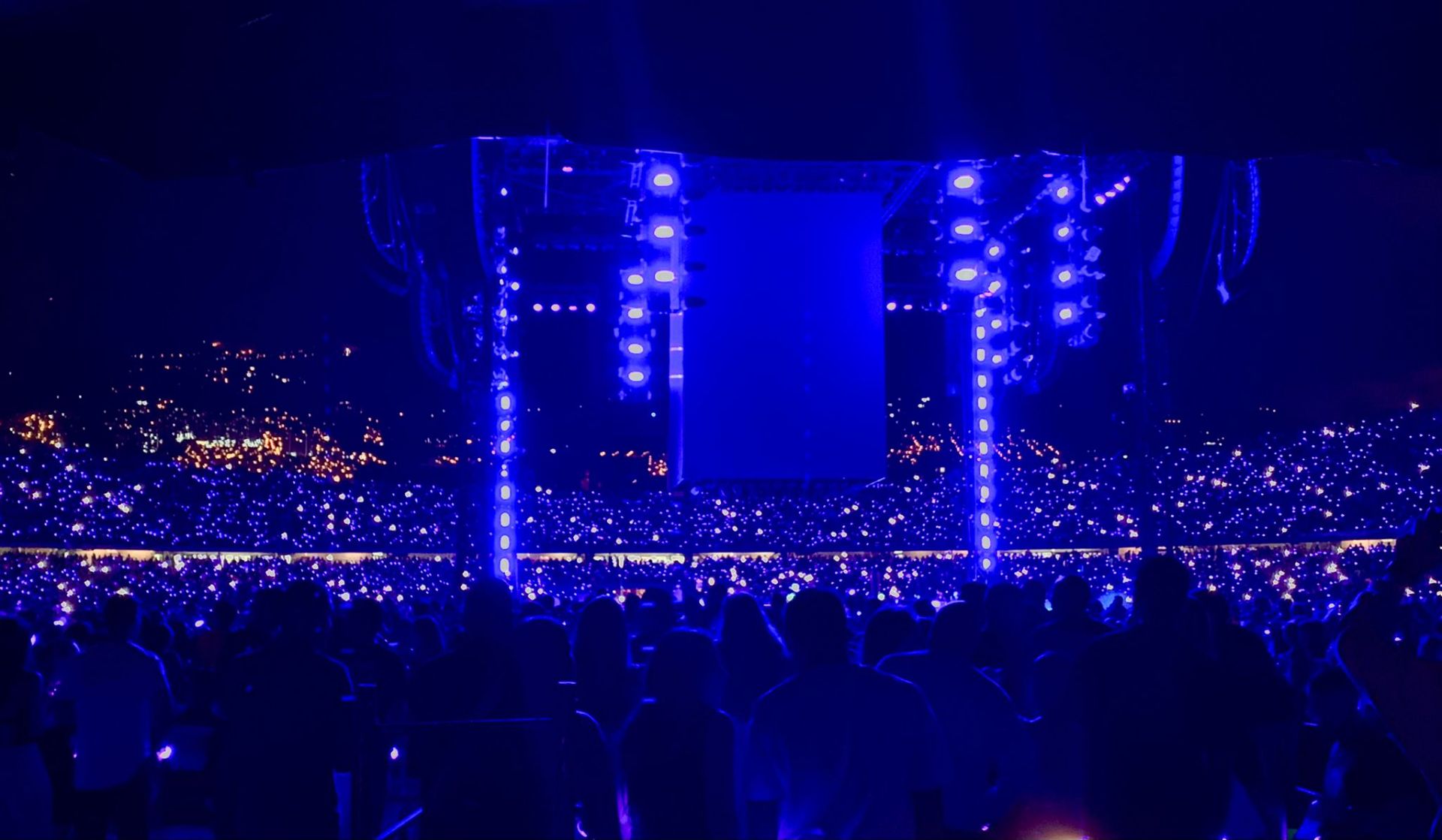
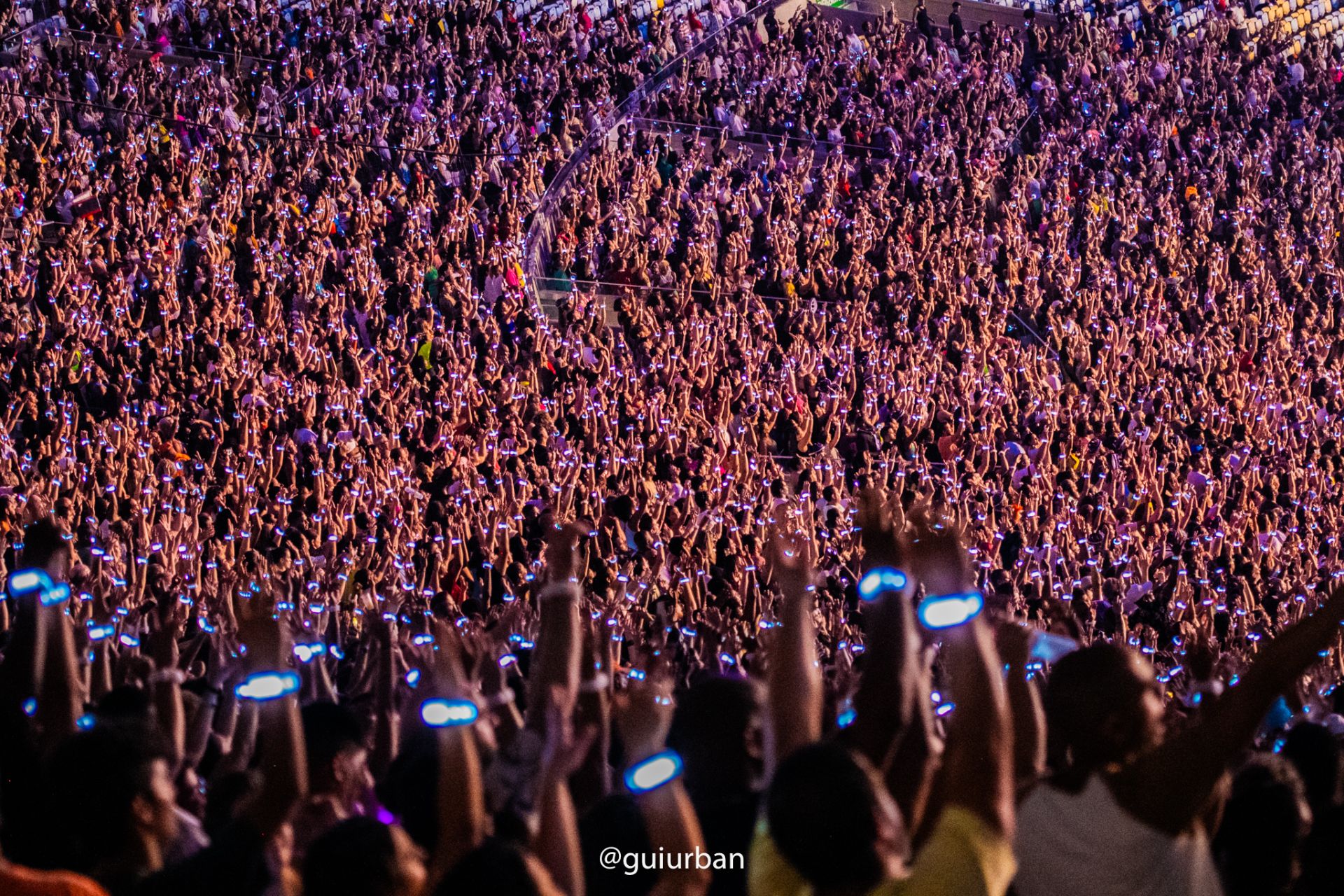
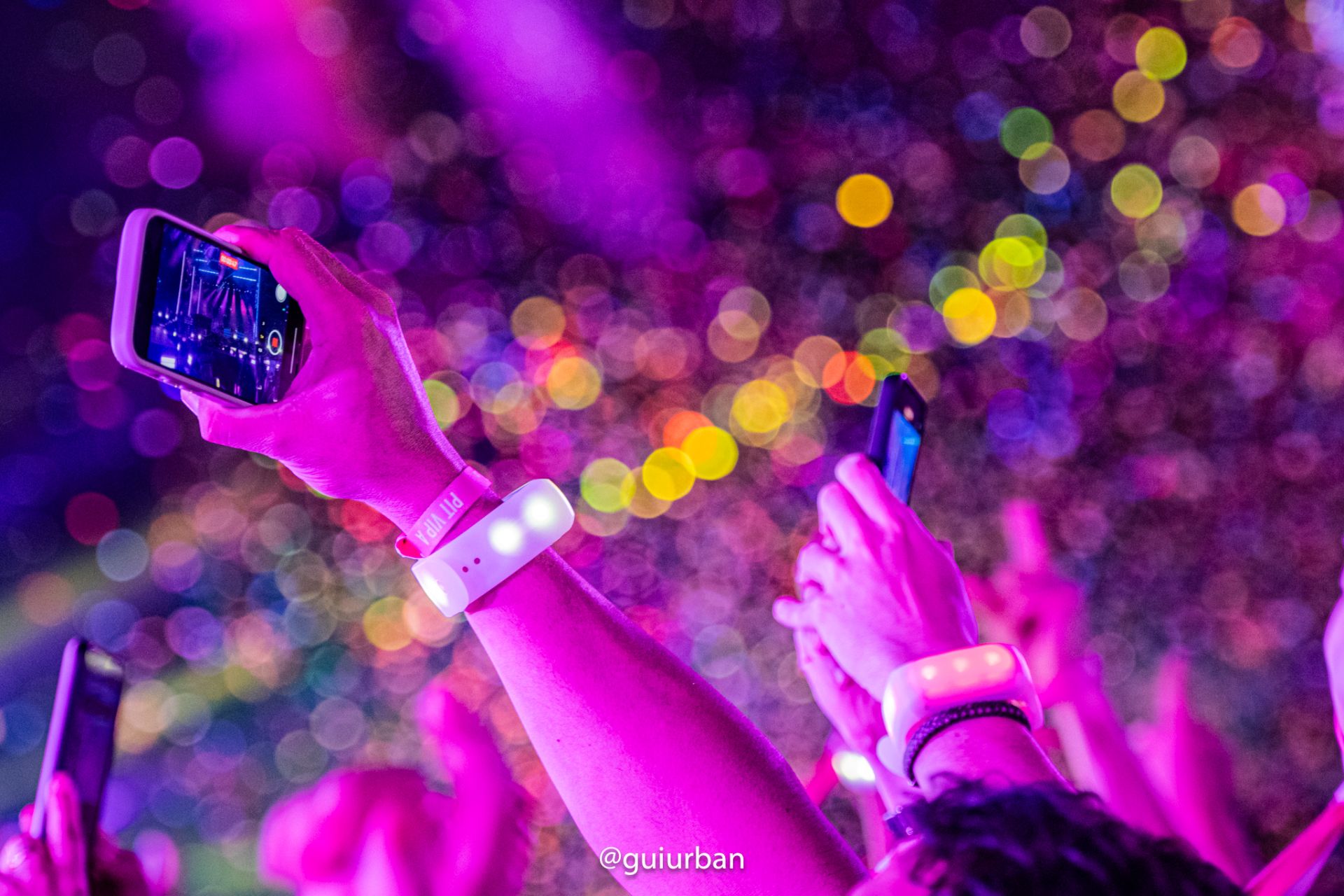
This is where modern, immersive event technology comes into play. By making the audience part of the lighting design, you can bridge the gap between the live and broadcast experiences. Wearable LED technology, such as Xylobands, transforms every individual into a pixel in a vast, dynamic light show. This achieves two critical goals simultaneously:
- For the Live Audience: It creates a profound sense of connection and participation. They are no longer passive observers but active participants in the spectacle, their collective energy visualized through synchronized pulses of light. This is the kind of immersive experience that makes an event unforgettable.
- For the Broadcast Audience: It provides spectacular, camera-friendly visuals. Sweeping shots of tens of thousands of lights flashing in unison create powerful, graphic moments that are made for television. It turns dark sections of the audience into a vibrant, living canvas, adding depth, scale, and excitement to the broadcast, as seen in major televised events from the Davis Cup to concerts by global artists like Maluma.
Case Study: The Technical Art of the Live Game Show
Nowhere is the balancing act between live and broadcast lighting more delicate than in the world of televised game shows. Shows like ITV’s ‘Beat The Chasers’ must create a tense, exciting atmosphere for the studio audience and contestants while delivering a polished, high-stakes programme for millions of viewers at home. The lighting has to be precise, reactive, and flawless, take after take.
In this environment, the audience isn’t just watching; they are part of the set. Using tools like radio-controlled LED wristbands allows production to integrate the audience directly into the show’s lighting cues. A correct answer can trigger a wave of green light across the crowd; a tense moment can be underscored by a pulsing red glow. This provides the lighting director with an entirely new layer of visual storytelling, enhancing the drama for the viewer at home while making the studio audience feel like they are truly part of the action.
The Future is Integrated
The line between a live event and a broadcast production is becoming increasingly blurred. The world’s biggest events, from the Formula One 75th Anniversary to the Eurovision Song Contest, are designed from the ground up as global television spectacles. The key to success is an integrated approach.
It’s no longer a matter of lighting for the stage and then separately lighting for camera. It’s about a single, unified design where every element serves both masters. It requires a deep understanding of broadcast engineering, a flair for creating live spectacle, and the right technology to bring it all together. By turning the crowd into a canvas, we can create experiences that are equally powerful for those in the front row and those watching from thousands of miles away. The show is no longer just on the stage; it’s in the crowd, on the screen, and in the shared, illuminated moments that connect us all.