The Unseen Performance: Engineering Light for the Broadcast Audience
The Second Stage
In the world of live television, there are two audiences. There is the roaring, palpable energy of the in-venue crowd, the sea of faces reacting in real-time. Then there is the second audience: the quiet, unseen multitude watching through a lens, often millions strong and spanning continents. This broadcast audience experiences the show not with the raw, sensory input of the room, but through the curated, focused eye of the camera. For them, the spectacle is only what the lens captures. And what the lens captures is, above all, light.
This creates a dual challenge for producers and lighting designers. You must craft a breathtaking experience for the people in the room while simultaneously engineering a flawless, compelling visual narrative for the camera. The two are not always symbiotic. A lighting cue that feels electric in a stadium can appear blown-out or chaotic on a 4K television. An effect that looks stunning on a wide shot can become distracting or meaningless in a tight close-up. Mastering this balance is the art of the unseen performance.
The Camera Doesn’t Lie, But It Sees Differently
The human eye is a marvel of dynamic range, capable of processing immense contrast between light and shadow simultaneously. A camera sensor, however advanced, is not. It has finite limits. This fundamental difference is the starting point for any broadcast-ready lighting design. What feels atmospheric in person can translate to murky, noisy shadows on screen. A dazzling flash of strobes that energises a crowd can cause a camera to clip to pure white, losing all detail.
Modern live broadcasts, like ITV’s star-studded specials or the global stream of a Maluma concert, are exercises in technical precision. Every element, from the key light on a performer to the ambient light on the audience, must be considered for its on-screen impact. The goal is to preserve the energy of the live experience while translating it into a medium that is crisp, vibrant, and emotionally resonant for the at-home viewer.
"The live broadcast transforms audience members from spectators into a living, breathing set piece. Their collective reaction becomes a visible metric of the show’s success, and lighting is the tool that makes this reaction camera-ready."
Painting with a Living Canvas
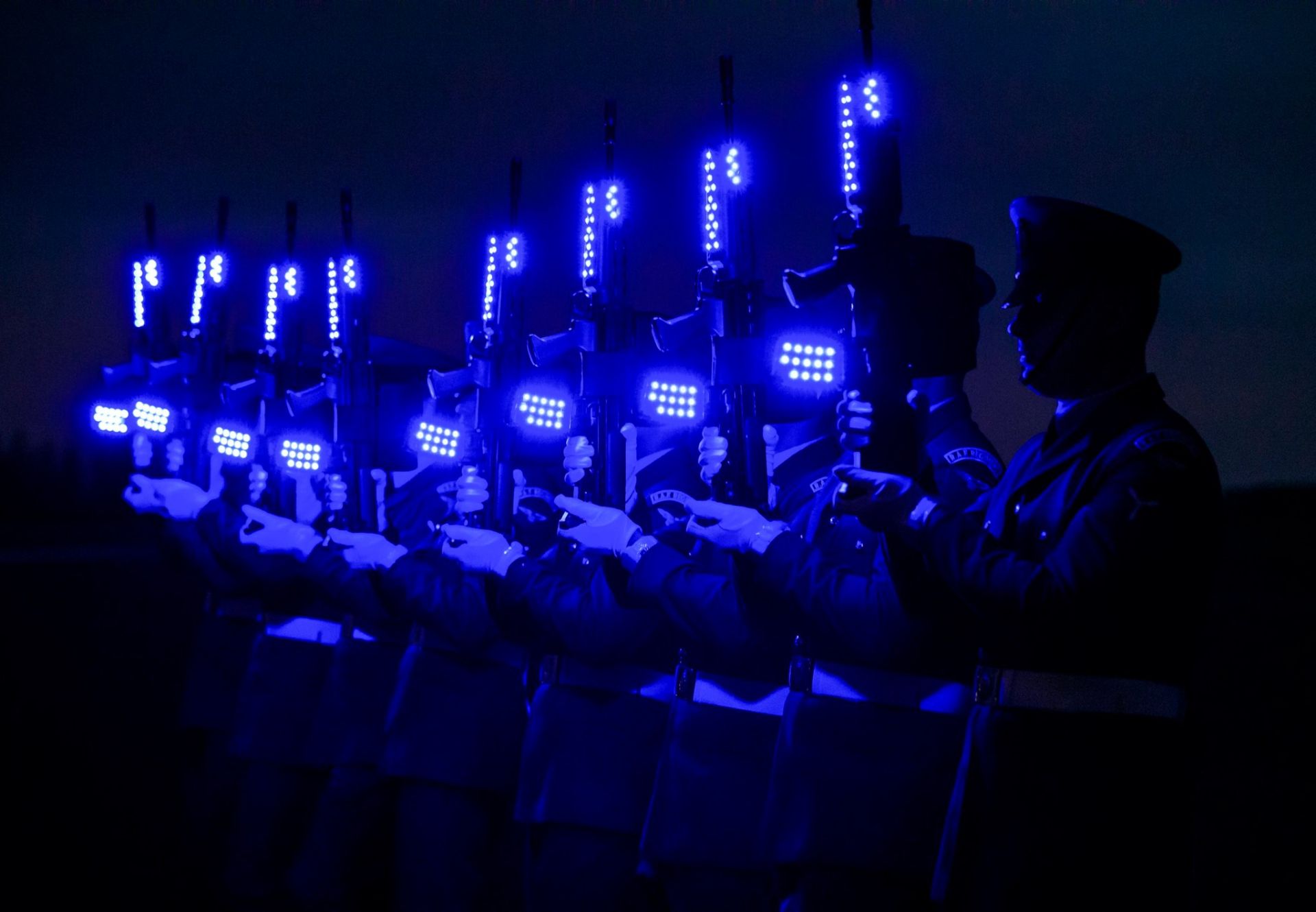
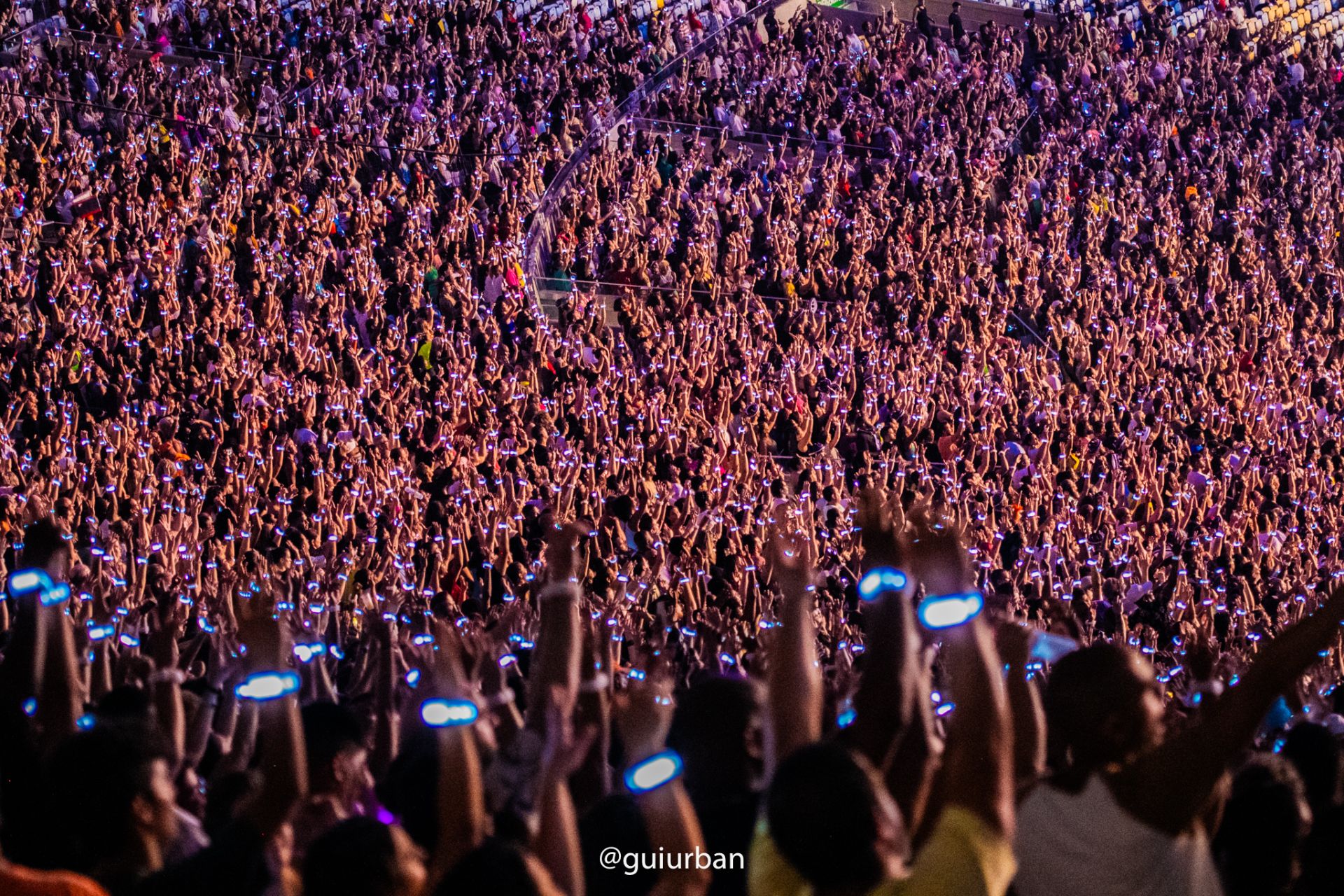
This is where wearable LED technology becomes an indispensable tool. It bridges the gap between the in-venue atmosphere and the broadcast narrative. By making the audience an integral part of the lighting design, you give the camera a dynamic, large-scale visual element to capture. Suddenly, a wide shot of the crowd is not just a passive sea of people; it’s a living canvas, pulsating in perfect sync with the performance.
When we work with clients like ITV for shows such as Beat The Chasers, the challenge is precise: create a dynamic studio environment that feels tense and exciting for the studio audience but also translates into clean, visually engaging television. The audience’s LED wristbands are not just a gimmick; they are programmable pixels in a larger picture. We can:
- Segment the crowd into coloured zones, creating backdrops for specific camera angles that support the show’s branding or competitive format.
- Create sweeping, synchronised patterns, turning a simple audience reaction shot into a moment of broadcast spectacle.
- Pulse with the show’s rhythm, reinforcing key moments of tension or triumph for the viewer at home.
This level of control transforms the crowd from a passive observer into an active component of the broadcast set. For a global event like the Formula One 75th Anniversary show, this capability is paramount. When Take That performs, the arena isn't just filled with fans; it’s filled with 13,000 points of light, choreographed to amplify the energy for the millions watching worldwide. The crowd becomes part of the show’s core visual identity.
From In-Venue Moment to Global Spectacle
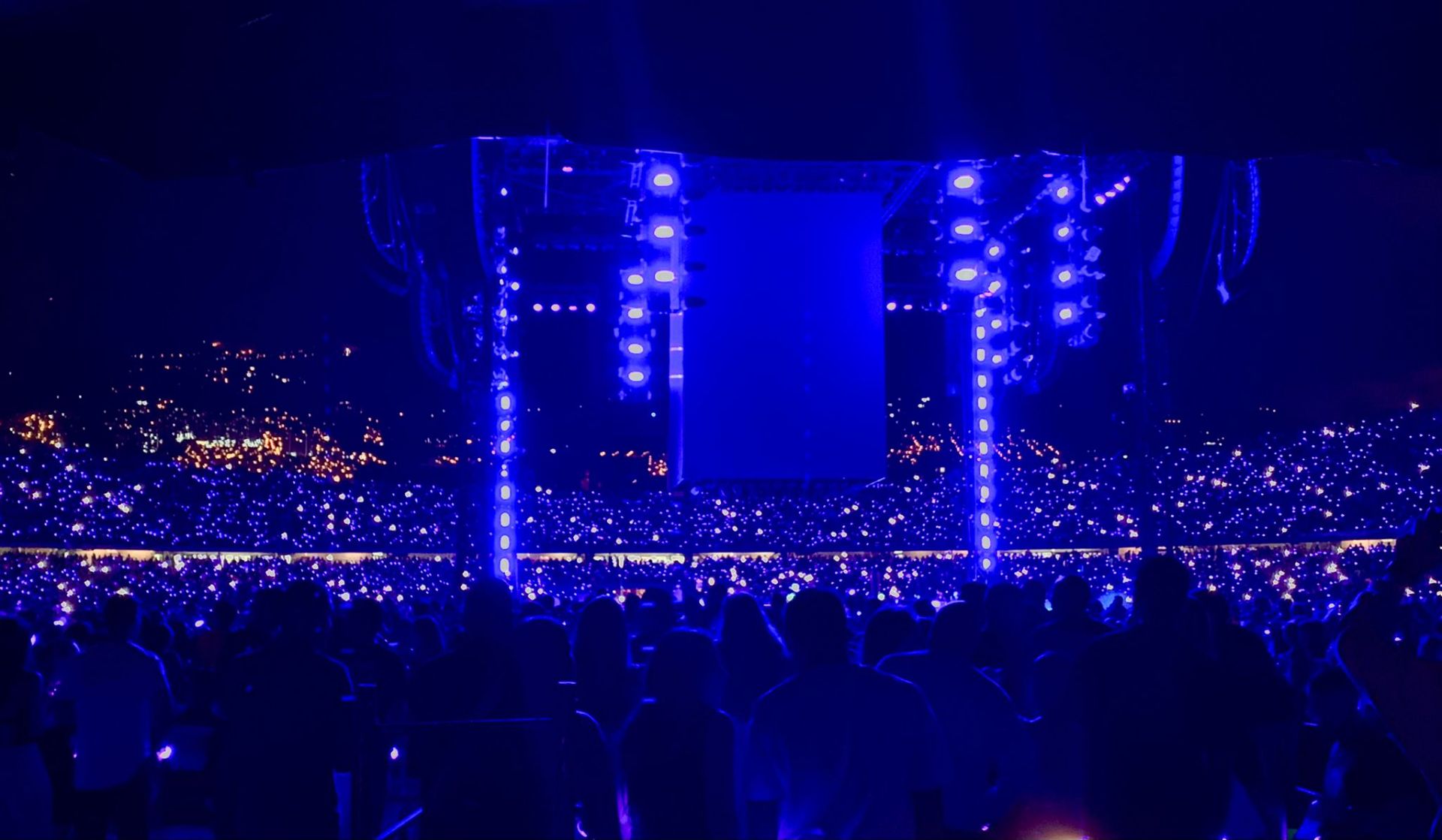
Consider the logistical and creative undertaking of Maluma’s Medellín En El Mapa concert. With 54,000 fans in the stadium and a live broadcast streaming to over 240 countries, the lighting had to serve two masters. The electrifying energy inside the venue needed to be palpable to someone watching on a screen thousands of miles away. Xylobands helped achieve this, extending the concert’s visual themes deep into the crowd and creating a unified spectacle that was as powerful on a wide-angle camera shot as it was from the front row.
This is the new frontier of immersive events. It’s no longer just about creating a moment, but about creating a moment that is inherently shareable and broadcastable. The technology must be robust, the control instantaneous, and the effect undeniable. Radio controlled LED wristbands offer a level of precision that allows lighting directors to "play" the audience like an instrument, ensuring that every lighting cue lands with maximum impact, both in the room and on the screen.
The Technical Details That Matter
For event producers, the key is collaboration between the lighting director, the broadcast director, and the technology provider. Factors to consider include:
- Flicker Rate: Ensuring any LED technology used has a high refresh rate to avoid flickering or banding on camera.
- Colour Fidelity: Matching LED colours to the specific colour science of the broadcast cameras to ensure brand colours and artistic palettes are rendered accurately.
- Dynamic Range: Programming lighting states that work within the camera’s dynamic range, avoiding clipped highlights or crushed blacks.
The rise of global live events, from the Eurovision Song Contest to the Davis Cup, has cemented the broadcast audience as a primary stakeholder. The spectacle is no longer confined to the walls of the venue. It lives on in the frame of the broadcast, in the pixels of a stream, and in the shared experience of millions. Engineering light for this reality is not just a technical necessity; it is a creative imperative. It’s about ensuring that no matter where the audience is, they all see the same unforgettable show.