Vision, Translated: A Collaborative Blueprint for Modern Tour Production
The Anatomy of a Vision
Every global tour begins not with a spreadsheet or a travel itinerary, but with a vision. It’s a concept that lives in the mind of the artist, a narrative that underpins a new album, an emotional arc they want their audience to feel. The creative director’s job is to sketch that vision into a tangible blueprint—a world of light, sound, and stagecraft. The tour manager’s mandate is to make that world a reality, night after night, in city after city. In this high-stakes ecosystem, technology is no longer a tertiary element; it is a creative partner. But for that partnership to succeed, there must be a seamless, trust-based framework for translating creative intent into flawless technical execution.
This is the space we occupy. It’s a process that goes far beyond supplying hardware. It’s about becoming a temporary, integrated extension of the artist’s creative and production team, unified by a single goal: to realize the vision and create unforgettable LED crowd experiences. This requires a unique blueprint for collaboration, built on deep listening, technical translation, and absolute logistical reliability.
Decoding the Narrative: The First Conversation
The most critical phase of any collaboration happens before a single piece of equipment is packed. The first conversation is never about our technology; it’s about the artist’s story. When we work with a team, our first questions are fundamental: What is the narrative of this show? What are the key emotional moments in the setlist? What do you want the audience to feel when the house lights go down?
For a historic, hometown stadium show like Maluma’s ‘Medellín En El Mapa,’ the emotional stakes were monumental. The lighting and visual design needed to match the scale of his achievement and the energy of 54,000 adoring fans. Similarly, when Wizkid became the first African artist to sell out three consecutive nights at London’s O2 Arena, it was a cultural milestone. The energy in the room was electric, and our role was to provide a visual language that amplified that collective euphoria, turning the audience itself into a pulsating canvas of light. Our custom LED wristbands, branded with his logo, became part of the fabric of that historic moment.
Understanding this context is everything. It informs whether a show needs subtle, ambient pulses of light or explosive, full-stadium strobes. The goal is to use wearable LED technology not as a gimmick, but as a narrative device that serves the artist’s performance, creating moments of intimacy and spectacle in equal measure.
The Blueprint: Translating Creative Intent into Technical Reality
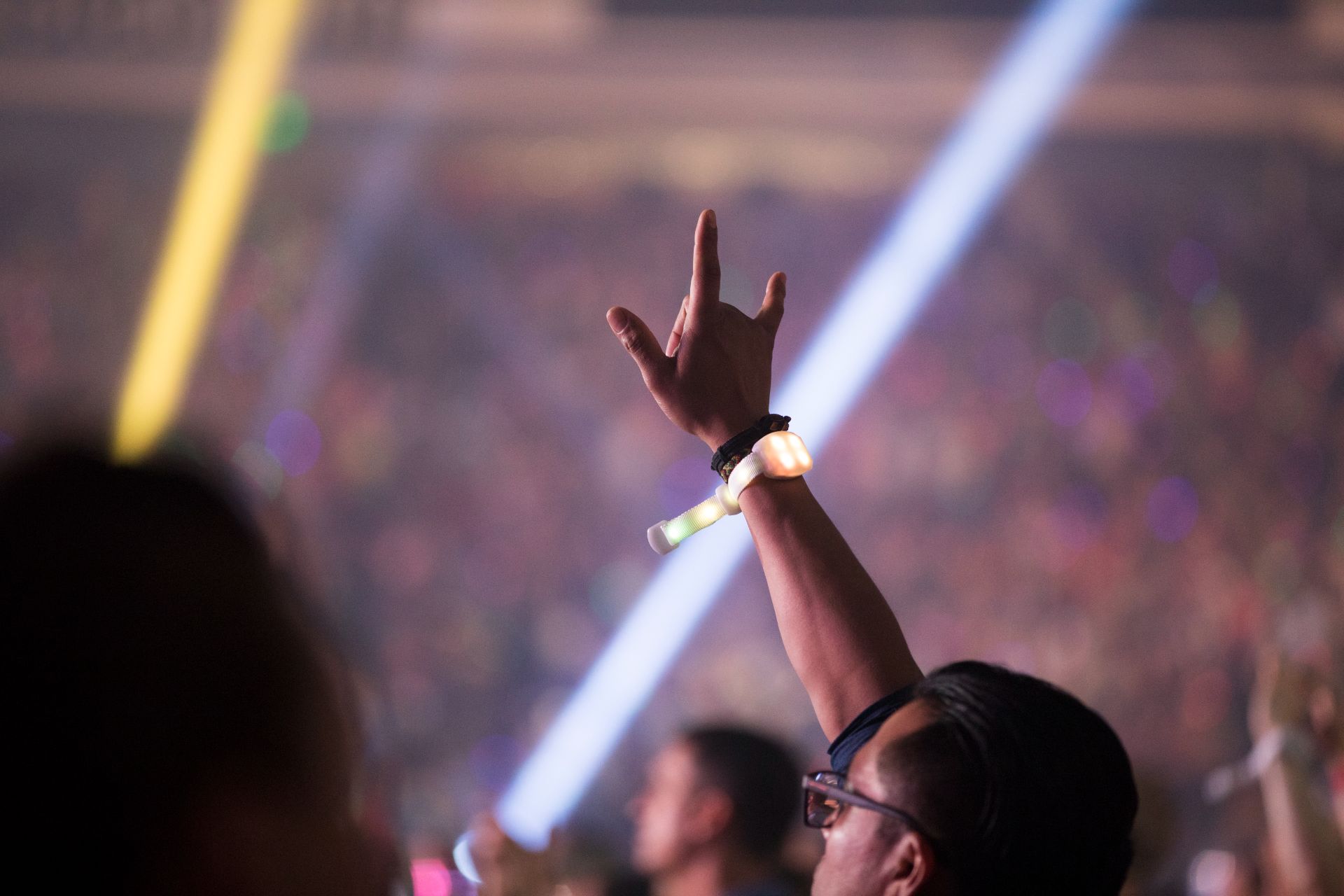
Once the creative vision is understood, the translation process begins. This is where a mood board becomes a technical rider and an abstract idea becomes a programmable sequence. A creative director might ask for a "shattering glass" effect or a "slow, rolling wave of colour." Our job is to translate that language into precise commands for thousands of individual radio controlled LED wristbands.
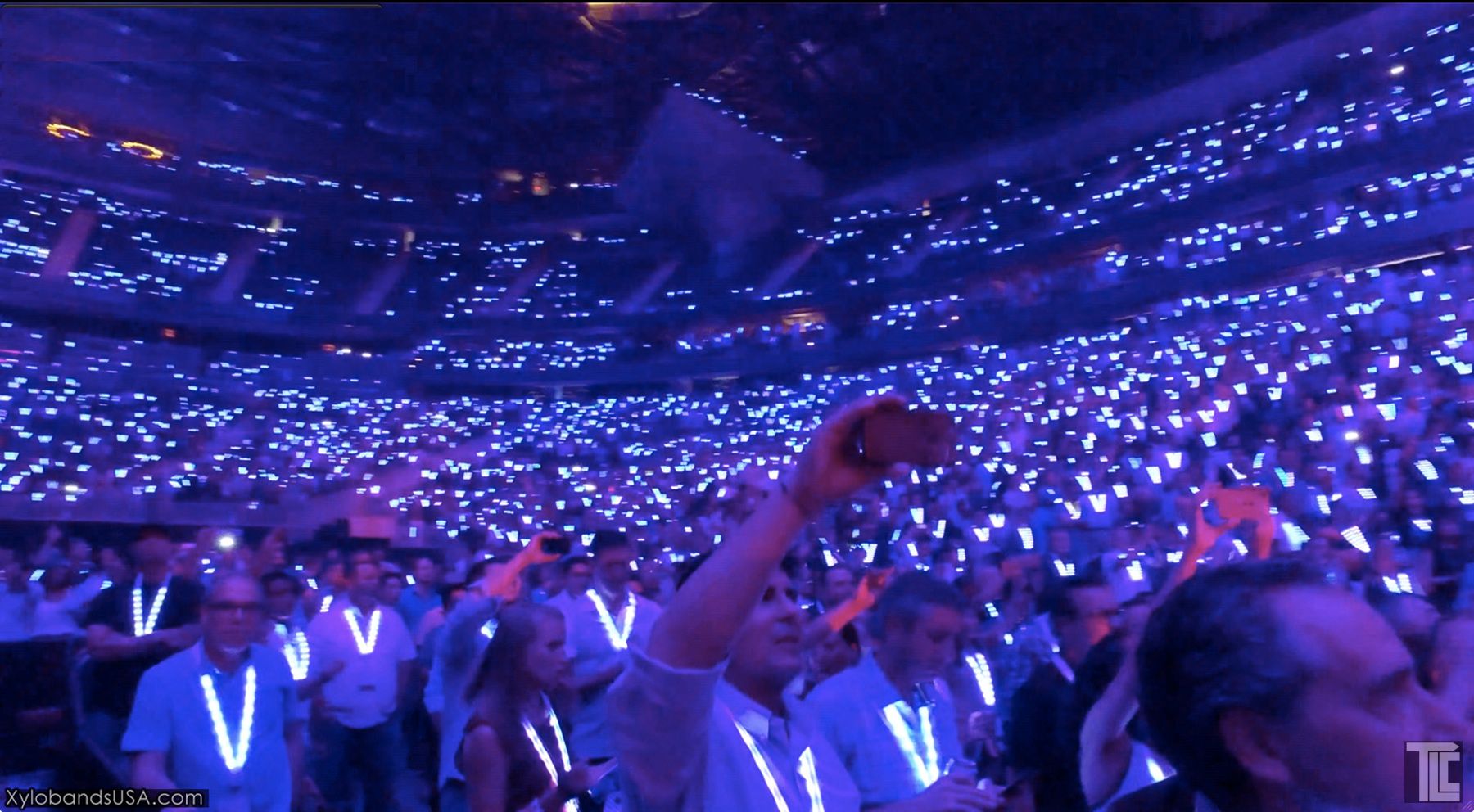
This process was front and centre during our collaboration with Formula 1 for their 75th-anniversary celebration. The creative team envisioned a show where different sections of the arena would light up to represent the ten iconic racing teams. This required more than just wristbands; we developed custom LED Lanyards—the Xylo Pendant—branded for each team and guest category. The success of the effect depended entirely on meticulous pre-show mapping and logistics, positioning tens of thousands of pendants in specific seating blocks. When the cues were triggered live, the arena transformed into a mosaic of team colours, perfectly executing the creative team’s vision for a fan-centric, immersive spectacle.
This is the core of effective collaboration: integrating our systems with the show’s master lighting and video design. It requires a deep understanding of programming, signal flow, and venue architecture to ensure our LED event technology feels like an organic extension of the main production, not an afterthought.
The Human Engine: Trust and Reliability on the Road
A global tour is a complex logistical ballet. For a tour manager, whose job is to mitigate risk and ensure consistency, trust in their partners is non-negotiable. Technology that is unreliable, or a team that is unresponsive, is a liability they cannot afford. This is why the human element of collaboration is as important as the technical one.
From a festival field in Greece for PRIMER Music Festival to a stadium in Colombia for Maluma, our technical teams integrate directly with the local and touring crews. They become part of the daily rhythm of load-in, programming, and show execution. This on-site presence ensures that any creative adjustments from the artist or lighting designer can be implemented immediately. It’s a fluid, responsive relationship built to withstand the pressures of a live production environment. The artist's team knows there is a dedicated specialist on hand whose only focus is ensuring the crowd lighting is flawless, freeing them to focus on the countless other elements of the show.
This is about more than just service; it’s about shared ownership of the outcome. Whether it's deploying festival wristbands for a multi-day event or managing the reuse and recycling of concert wristbands over a multi-date arena run like Wizkid’s, the commitment is the same: flawless execution, every single time.
The Shared Climax: When the Crowd Becomes the Canvas
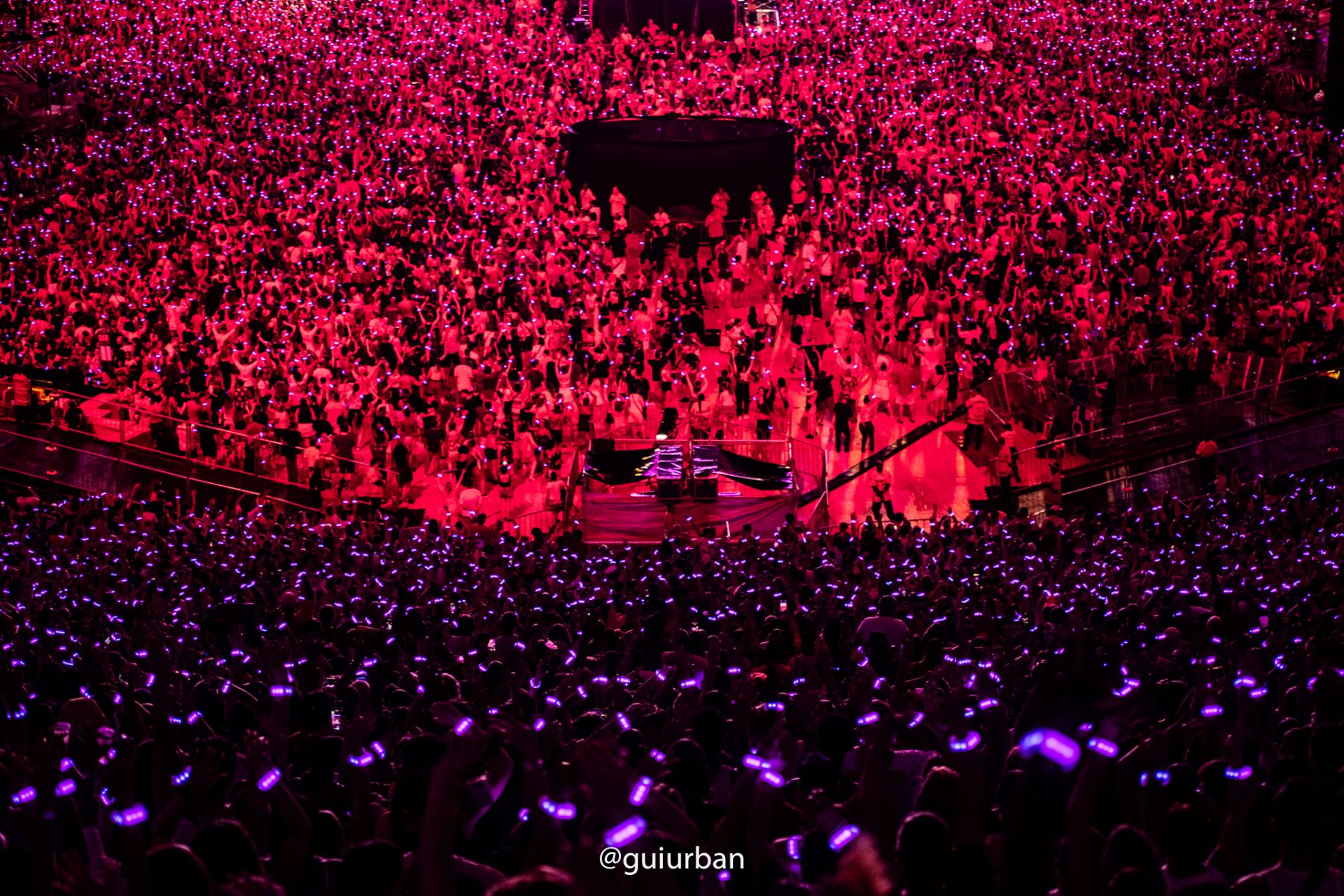
Ultimately, all the meetings, planning, and programming point to a single moment: when the artist and 50,000 fans are unified in a single, shared experience. The true power of this technology was the initial inspiration for Xylobands, born from a moment at Glastonbury watching Coldplay perform "Fix You." The idea of turning the audience into the light show—of making them a visible, integral part of the spectacle—remains our guiding principle.
That is the ultimate payoff of a successful creative collaboration. It’s the moment a tour manager sees a year of planning come to life. It’s the moment a creative director sees their vision unfold at a breathtaking scale. And most importantly, it’s the moment the artist looks out from the stage and sees not a dark sea of faces, but a living, breathing extension of their own performance, alight with energy. This is the goal of creating truly immersive events—transforming passive spectators into active participants.
This collaborative blueprint—built on decoding the vision, translating it into a robust technical plan, and executing it with an unwavering commitment to reliability—is how the world’s most ambitious live spectacles are brought to life. It’s a partnership of trust between the artist, the crew, and the tech, all working in concert to create something far greater than the sum of its parts.