The Double Lens: Engineering Light for Live and Broadcast Audiences
The Challenge of the Two-Fold Audience
In the world of live event production, a broadcast event is a unique beast. Unlike a standard concert or festival, the audience isn’t just the thousands of people in the room; it’s the millions watching from their homes, on screens of all sizes. This creates a fundamental challenge for lighting designers and creative directors: how do you serve two masters? How do you craft a visual experience that feels electric, dynamic, and immersive for the live attendees while also being technically perfect for the broadcast cameras?
The human eye is a remarkably forgiving instrument. It can process immense dynamic range, from the deepest shadows to the brightest, most piercing strobes. A camera sensor, however, is far less lenient. It demands controlled, consistent, and carefully managed light. Uncontrolled flare, blown-out hotspots, or chaotic strobing that might feel exciting in person can translate into a messy, unwatchable broadcast. This is the tightrope every broadcast production must walk: balancing the raw energy of a live show with the technical precision required for a flawless on-screen product.
The Science of Camera-Friendly Light
Engineering a camera-friendly spectacle requires a deep understanding of broadcast technology. Key considerations include:
- Color Temperature and Rendering: Cameras are highly sensitive to the color temperature of light, measured in Kelvin. Mismatched color temperatures from different fixtures can create an inconsistent, unprofessional look on screen. High-quality LED technology must not only produce vibrant colors but also boast a high Color Rendering Index (CRI), ensuring that skin tones, costumes, and sets appear natural and true-to-life for the broadcast audience.
- Flicker-Free Operation: Many LED products exhibit a flicker that is imperceptible to the naked eye but can cause havoc for cameras, resulting in distracting bands or strobing in the recorded footage. Professional-grade equipment, like the systems we deploy for clients such as ITV and Formula One, is engineered for high-frequency, flicker-free operation, guaranteeing a clean image even under the scrutiny of high-speed cameras and slow-motion replays.
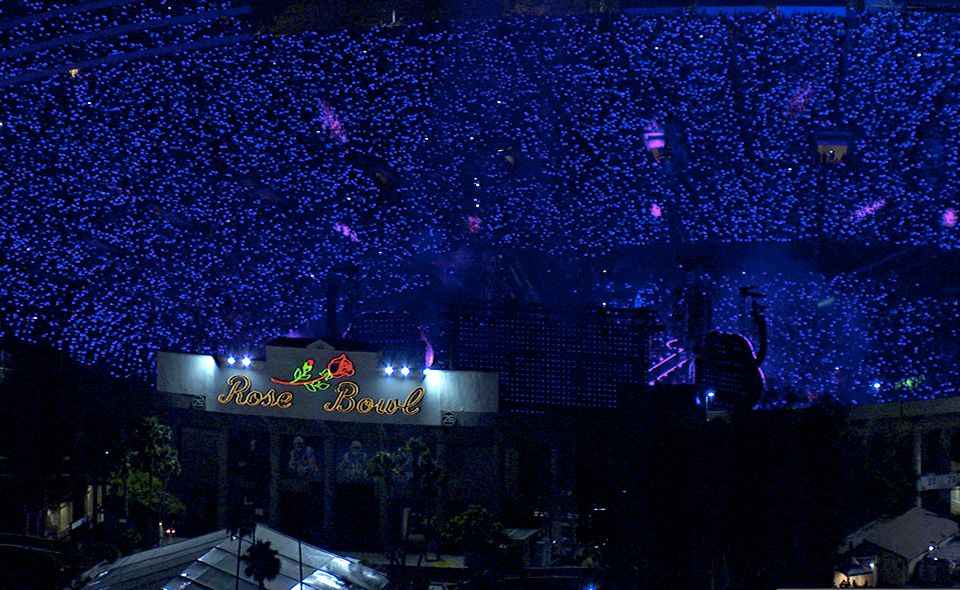
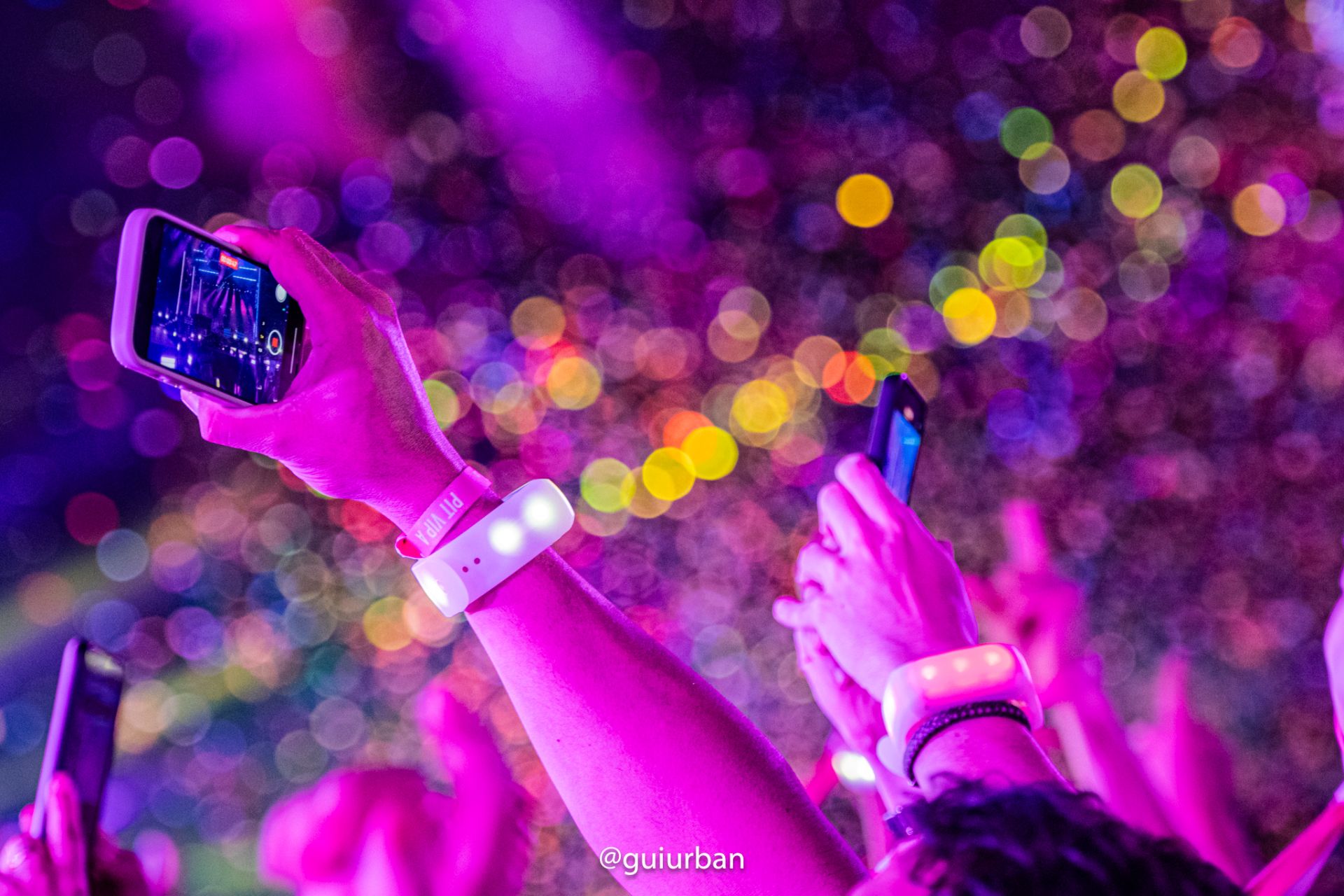
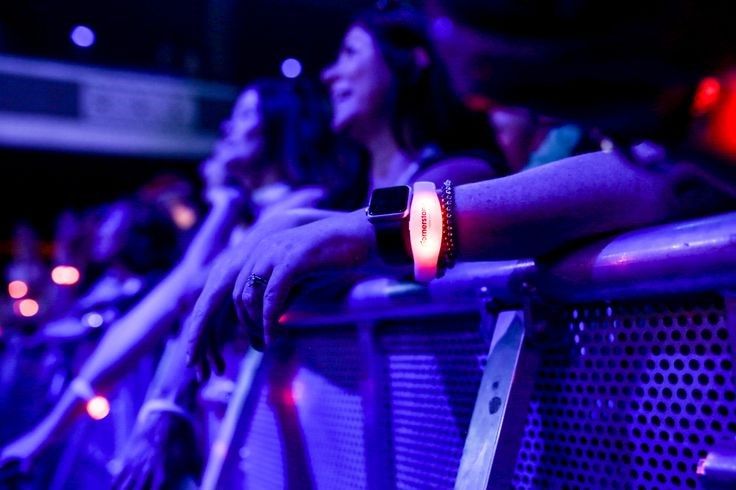
- Intensity and Dynamic Range Management: The core of the broadcast balancing act lies in managing light intensity. A blast of light that dazzles the live crowd can overwhelm a camera sensor, causing “clipping” or a complete loss of detail in the highlights. The solution lies in creating systems with granular control. This is where radio controlled LED wristbands and other forms of wearable LED technology come into play. By making the audience part of the lighting rig, we can create vast, sweeping visual moments without pointing a single, harsh spotlight at a camera.
Case Study: The Crowd as a Digital Canvas
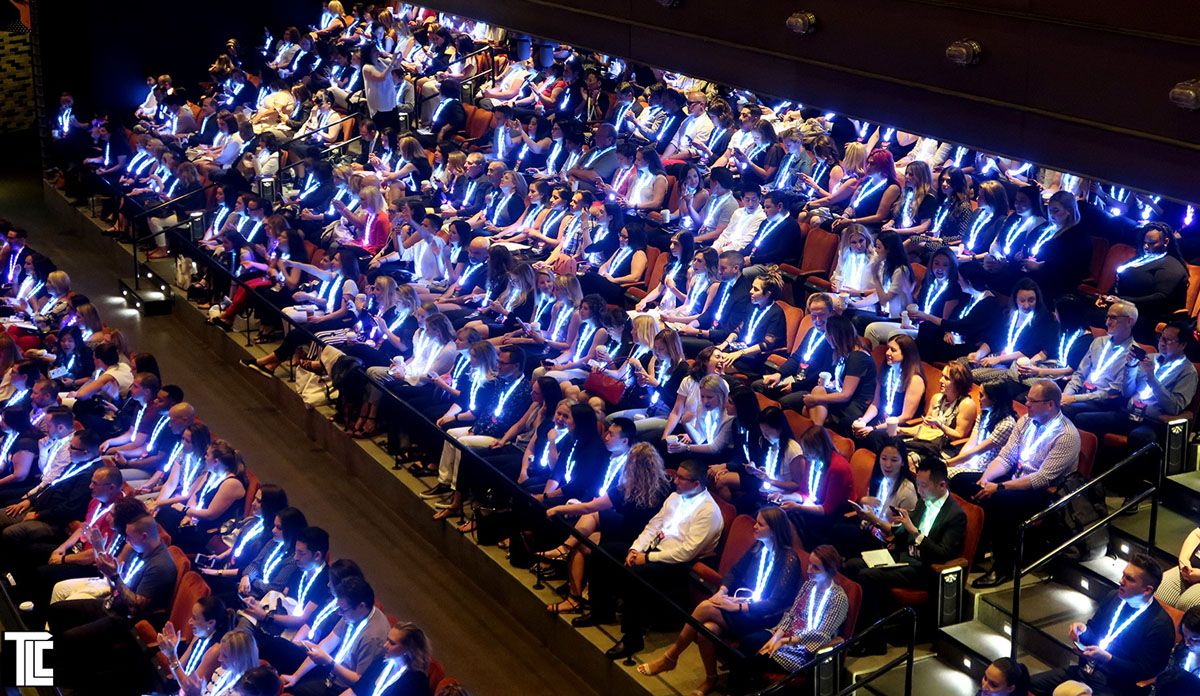
The challenge of lighting for broadcast is one we’ve tackled for numerous high-profile events, from the fierce competition of the Davis Cup to game shows like Beat The Chasers UK. A prime example is our work with major broadcasters like ITV. For these productions, the studio audience is an integral part of the set. Their reactions and energy contribute to the show’s atmosphere, and they are constantly in the camera’s view.
Instead of flooding the audience with harsh, generic fill light, we integrate them into the visual design. Using Xylobands, the crowd itself becomes a dynamic, controllable light source. We can trigger subtle, ambient glows during tense moments, energetic pulses to celebrate a win, or sophisticated, multi-color chases that flow across the seating banks. For the camera, this creates a rich, textured background full of life and depth, eliminating the flat, washed-out look that can plague audience shots. For the people in those seats, it transforms them from passive observers into active participants in the spectacle—an embodiment of immersive event technology.
This principle extends far beyond the television studio. For Maluma’s historic 2022 concert in Medellín, streamed live to over 240 countries, the 54,000-strong crowd became a canvas. The synchronized LED wristbands ensured that the massive scale of the event translated to the screen, painting the stadium in light and conveying the electric atmosphere to viewers worldwide.
The Future of Broadcast Experiences
The line between a live event and a broadcast production is blurring. The most successful events are those that recognize they are no longer just creating moments, but creating content. The rise of live-streamed concerts, global sporting events like the Formula One 75th Anniversary show, and interactive television formats demand a new, more integrated approach to lighting design.
By transforming the crowd into a controllable, camera-friendly light source, we solve the essential broadcast challenge. We create stunning visual drama for the lens while simultaneously deepening the sense of connection and participation for the live audience. The result is a more powerful, more memorable experience for everyone, whether they are in the front row or on their couch thousands of miles away. It’s not about dimming the lights for the camera; it’s about making the light smarter, more dynamic, and more immersive for everyone. The future of live broadcasts is one where the audience is not just watching the spectacle—they are the spectacle itself.