The Two-Fold Spectacle: Mastering Light for Broadcast and Live Audiences
The Unseen Audience: More Than Just a TV Show
For any major live broadcast, the audience at home vastly outnumbers the one in the room. Whether it’s a global sporting event like the Davis Cup, a high-stakes game show like ITV’s Beat The Chasers, or a sold-out arena concert, the broadcast viewer is the silent majority. This simple fact fundamentally changes the calculus of event production, especially lighting. The goal is no longer just to create atmosphere in the venue, but to craft a pixel-perfect experience for the camera lens.
This presents a unique challenge: how do you light for two fundamentally different audiences simultaneously? The human eye is a marvel of dynamic range, capable of processing immense contrast between light and shadow. A camera sensor, however, is far less forgiving. What appears as dramatic, atmospheric lighting to a live attendee can translate into blown-out highlights, crushed blacks, or noisy, under-lit chaos on screen. The task for the production team is to serve two masters—the visceral, emotional experience of the people in their seats, and the pristine, technical requirements of the broadcast feed.
The Science of Light for the Lens
Mastering broadcast lighting is a science. Key considerations include:
- Color Temperature & Rendering: Cameras are highly sensitive to the color temperature of light, measured in Kelvin (K). Mismatched color temperatures from different fixtures can create an inconsistent, unprofessional look on screen. Furthermore, the Color Rendering Index (CRI) of a light source determines how accurately it reveals the true colors of people and objects—a critical factor for team jerseys, artist wardrobes, and sponsor branding.
- Flicker-Free Operation: Many LED fixtures have a refresh rate that, while invisible to the naked eye, can create distracting flicker or banding when filmed with high-speed or broadcast-standard cameras. Sourcing professional, flicker-free lighting is non-negotiable for any televised event.
- Managing Dynamic Range: The core of the balancing act lies here. Lighting directors must carefully manage the contrast ratio—the difference between the brightest and darkest parts of the scene. They must illuminate the action for clarity on screen without washing out the ambient effects that give the live event its soul. This often involves using softer, more diffuse key lighting on performers or athletes than one might use for a purely theatrical show.
Closing the Gap: The Crowd as a Light Source
For decades, the live audience was a passive element in the broadcast equation—a dark, anonymous mass to be lit from the outside. Modern immersive event technology has completely inverted this dynamic. By turning the crowd itself into a canvas of light, we can solve many of the inherent challenges of broadcast production.
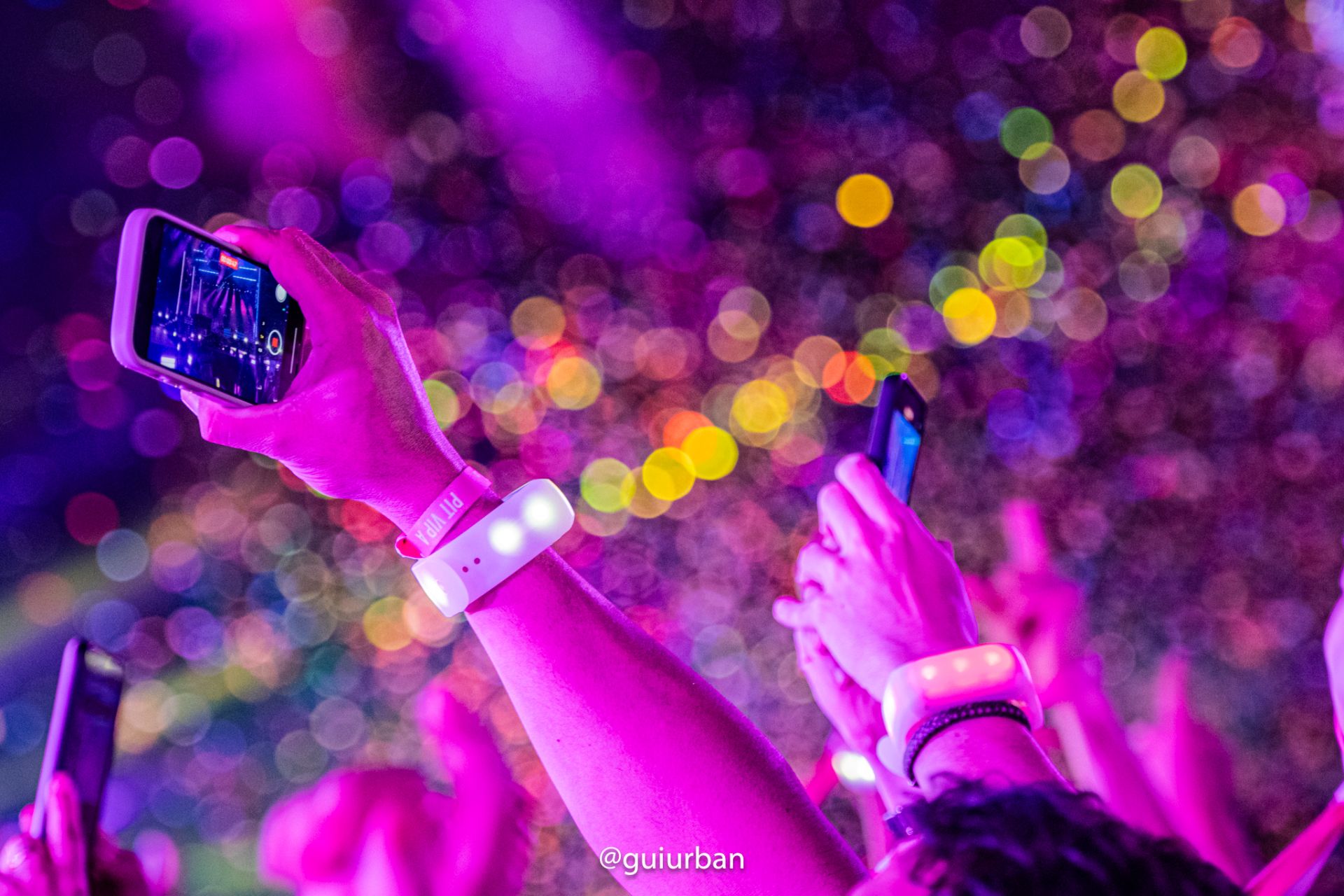
This is where the power of wearable LED technology, like Xylobands, becomes a game-changer. When thousands of attendees are equipped with radio-controlled LED wristbands, the audience is no longer a lighting problem to be solved; they are an active part of the solution. They become a dynamic, controllable light source that can be choreographed to serve both the in-venue atmosphere and the broadcast picture.
Imagine a championship tennis match. As a player hits the winning shot, the entire stadium erupts in a flash of light, perfectly synchronized and in the team’s colors. For the camera, this provides a vibrant, active background that enhances the drama of the moment. For the fans, it creates a powerful feeling of unity and participation. We’ve seen this power firsthand at events like the Davis Cup, where the crowd becomes an integral part of the spectacle.
Case Study in Action: From Concerts to Corporate Stages
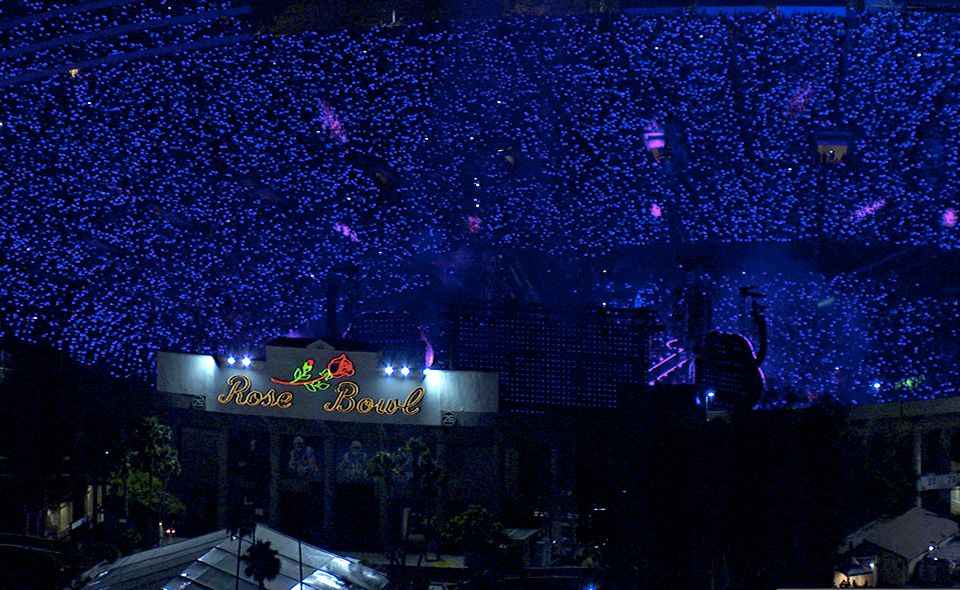
The applications extend far beyond sports. At Maluma’s historic 2022 concert in Medellín, streamed live to over 240 countries, a stadium of 54,000 fans became a living, breathing part of the broadcast. The synchronized light show created by the LED bracelets didn’t just look good in the arena; it provided stunning, wide-angle visuals for the global streaming audience, translating the incredible energy of the live show for viewers at home.
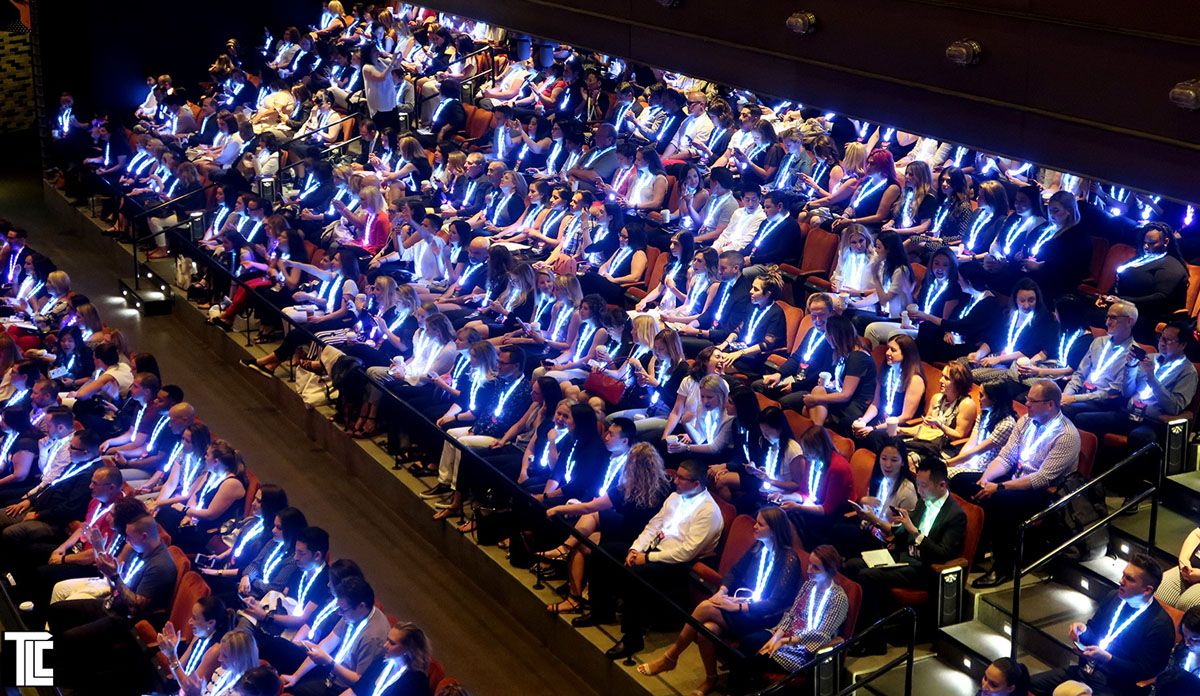
Similarly, for high-profile corporate event activations and product launches, such as the 75th-anniversary celebration for Formula One, the ability to integrate branding and dynamic lighting effects across the audience is invaluable. When every attendee wearing a custom LED pendant becomes a pixel in a larger design, the broadcast feed is filled with compelling, brand-centric visuals that are impossible to ignore. These immersive events transform passive viewers into active participants in a story being told on a global stage.
The Two-Fold Future
The art of lighting for a dual audience is no longer about compromise. It’s about synthesis. By leveraging immersive event technology, producers can create a singular, unified spectacle that is both emotionally resonant for the live attendee and visually flawless for the broadcast viewer. The crowd is no longer in the dark. They are the light—a responsive, intelligent element of the show that bridges the gap between the room and the rest of the world.