The Invisible Network: An Inside Look at RF, DMX, and Infrared-Powered LED Experiences
The Unseen Architecture of Light
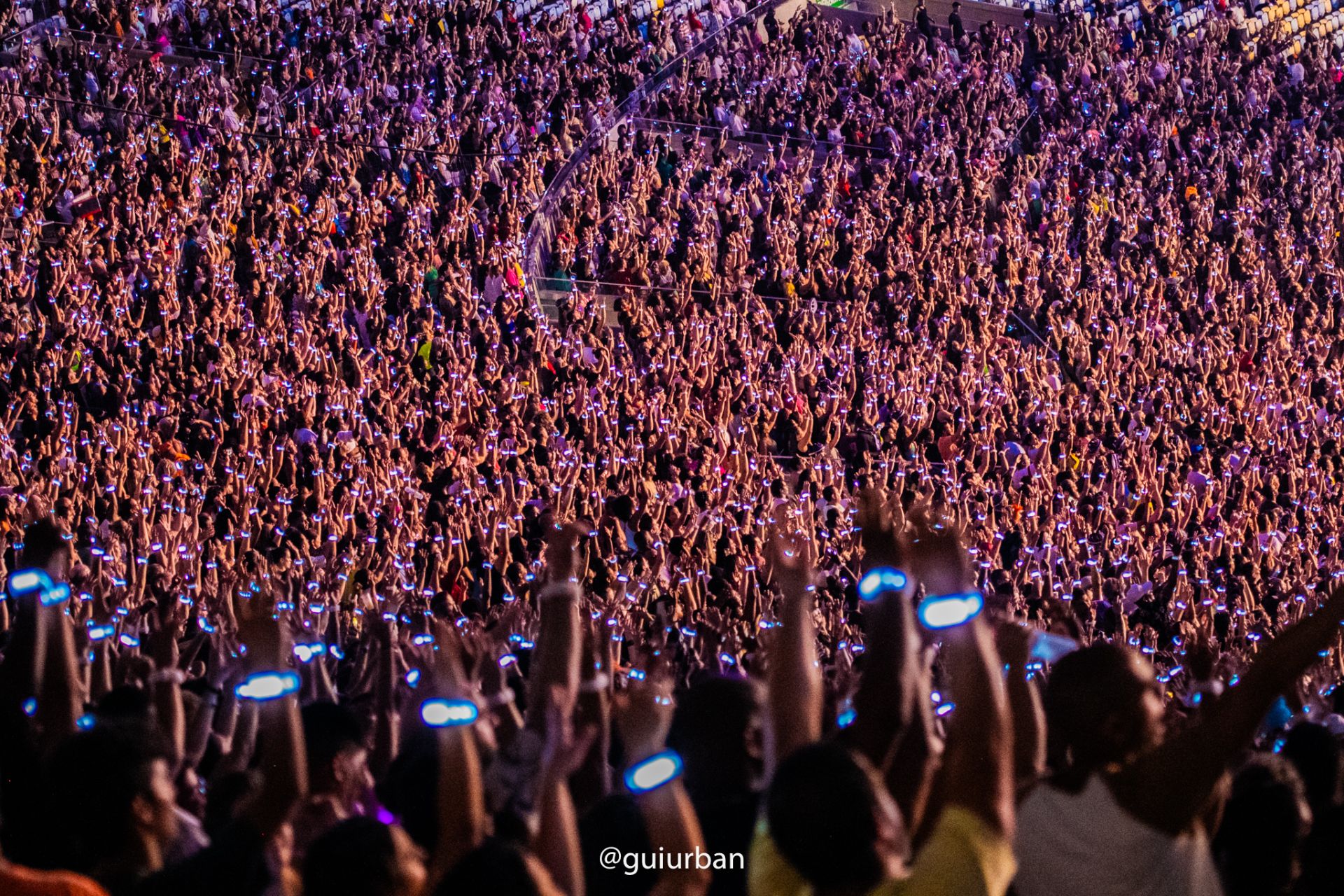
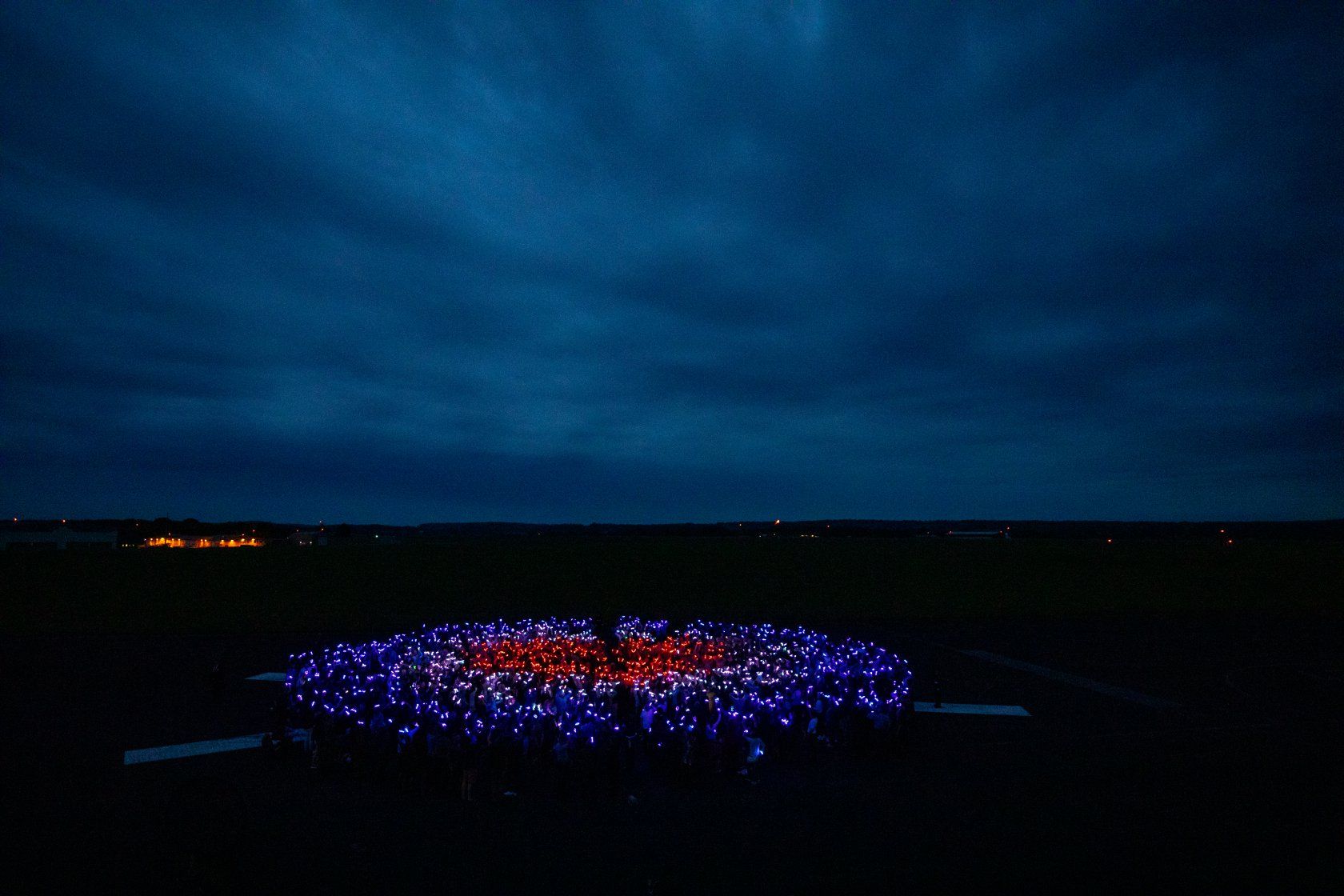
In the world of live events, the most powerful moments often feel like magic. A stadium of 50,000 fans suddenly illuminated in a wave of synchronized color, a corporate audience transformed into a canvas of light that mirrors a brand’s new logo, a festival crowd pulsing in perfect time with the beat. These are the moments that define Immersive Events. But behind the magic is a sophisticated architecture of technology, an invisible network of signals that connects every single person to the creative vision. This is the world of Wearable LED Technology, and it’s powered by a trio of core technologies: Radio Frequency (RF), DMX, and Infrared (IR).
At Xylobands, we pioneered the use of Radio Controlled LED Wristbands, starting with Coldplay’s Mylo Xyloto tour. Since then, the technology has evolved, branching into different systems to meet the unique demands of diverse environments—from global music tours and major sporting events like the Davis Cup to intimate corporate activations and live television broadcasts. Understanding the nuances of RF, DMX, and IR is essential for any event producer or creative director looking to harness the full potential of an audience.
The Workhorse: Radio Frequency (RF) Control
Radio Frequency is the original and most widely used technology for controlling LED wristbands on a mass scale. It’s a robust and reliable system designed for large venues, making it the go-to for arena tours, festivals, and stadium shows.
How It Works
An RF system consists of two main components: a transmitter and the receivers (the wristbands themselves). The operator uses a controller, often a laptop connected to a transmitter box, to send signals over a specific radio frequency. Each wristband is programmed to listen on that frequency. The transmitter sends out commands—like "turn red," "fade to blue," or "strobe at 120 BPM"—and every wristband in range executes the command instantly and simultaneously. The result is perfect synchronization across crowds of tens or even hundreds of thousands.
Our proprietary software allows for granular control. We can divide the audience into multiple zones based on seating blocks or sections of a field. This enables us to create complex, dynamic effects, like sweeping colors from one side of a stadium to the other or isolating specific groups to highlight them. For global artists like Maluma, whose audiences fill vast arenas, this ability to paint with light across different sections of the crowd is a powerful creative tool.
Key Strengths:
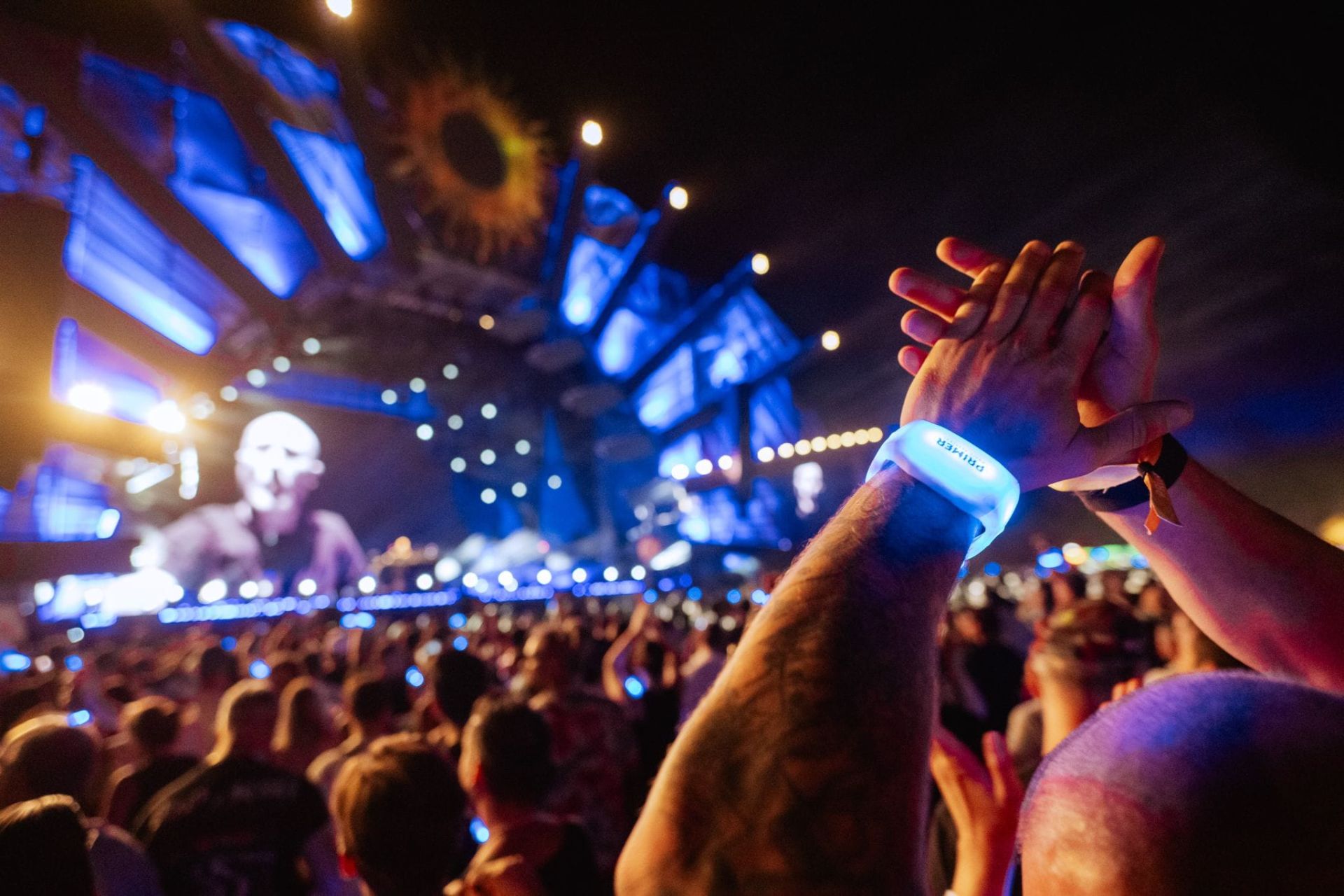
- Scale and Range: RF transmitters can cover enormous areas, with a standard range of 400-800 meters, making them ideal for stadiums and large outdoor Festival Wristbands like those at Greece's PRIMER Music Festival.
- Reliability: RF is less susceptible to line-of-sight issues than other technologies. The signal can pass through people, flags, and most temporary structures, ensuring a consistent experience for every audience member.
- Flexibility: Zoning capabilities allow for sophisticated, layered lighting designs that turn the audience into a living, breathing part of the show’s choreography.
The Theatre Master: DMX Integration
While RF is the master of scale, DMX is the master of precision. DMX (Digital Multiplex) is the industry-standard protocol for controlling professional stage lighting, from moving heads and lasers to smoke machines. When we talk about DMX in the context of LED crowd experiences, we are talking about integrating wearable LEDs directly into a show’s master lighting design.
How It Works
Instead of using a separate controller, our system can be patched directly into the lighting designer’s console (like a GrandMA or Avolites). We provide a DMX-to-RF interface that acts as a bridge. The lighting designer can then program the wristbands as if they were just another set of fixtures in their rig. This gives them frame-accurate, real-time control over every lighting effect. The wristbands don’t just sync with the music; they sync with the entire production, creating a seamless, unified visual experience.
For a live broadcast event like the Formula One 75th Anniversary show, where every cue must be perfect for both the 13,000 people in The O2 Arena and the millions watching at home, DMX integration is non-negotiable. It ensures the Custom LED Wristbands and Pendants are perfectly harmonized with the on-stage action and broadcast graphics.
Key Strengths:
- Perfect Integration: Unifies crowd lighting with stage lighting, ensuring a cohesive and professional aesthetic.
- Creative Power: Puts control in the hands of the lighting designer, allowing them to use their existing tools and workflow to create intricate, layered looks.
- Broadcast-Ready: Essential for television productions and live-streamed events where timing and precision are paramount.
The Precision Tool: Infrared (IR) Triggers
If RF is for macro-level control and DMX is for theatrical integration, Infrared (IR) is for micro-level, location-specific activation. It’s a powerful tool for creating interactive zones and triggering unique content for smaller, defined groups within a larger event.
How It Works
We use small, discreet IR transmitters placed strategically throughout a venue. These transmitters continuously emit a unique signal in a localized area—perhaps around a sponsor’s booth at a conference, at the entrance to a VIP lounge, or in front of a specific art installation. When a guest wearing an IR-enabled wristband walks into the transmitter’s field (typically a few meters), their wristband receives the signal and triggers a pre-programmed effect. It might light up in a specific color, pulse in a unique pattern, or even store data indicating the guest has visited that zone.
This technology is transformative for Corporate Event Activations. Imagine a trade show where a guest’s wristband glows green when they approach the correct breakout room, or a product launch where LED Lanyards illuminate with the brand’s colors the moment a visitor steps into the demo area. It adds a layer of personalization and gamification that deepens engagement.
Key Strengths:
- Hyper-Localization: Triggers effects based on precise location, enabling interactive and personalized experiences.
- Data & Gamification: Can be used to track footfall, manage access, or create game-like experiences for attendees.
- Discreet & Focused: Unlike RF, IR signals are contained, preventing interference and allowing for many different zones to operate independently within the same space.
The Right Tool for the Vision
The choice between RF, DMX, and IR isn’t about which is "best"—it’s about which is right for the creative vision and the operational reality of an event. Often, the most powerful Immersive Event Technology deployments use a hybrid approach. A music festival might use RF for the main stage, DMX for a theatrical indoor performance, and IR triggers for sponsor activations across the site.
From the sweeping, unified waves of light at a Coldplay Xylobands show to the intricate, broadcast-ready cues for clients like ITV, the underlying technology is the unseen engine of connection. It’s the invisible signal that turns a crowd of thousands into a single, cohesive canvas, creating shared moments of wonder that resonate long after the lights go down.