The Two-Audience Problem: Engineering Light for Live and Broadcast
The Two-Audience Problem
In the world of live broadcast, the audience is not a monolith. It’s a hydra-headed entity, existing simultaneously in two separate dimensions: the electric, kinetic energy of the live studio, and the vast, distributed viewership watching from home. For producers and showrunners, this presents a fundamental challenge—what we call the “two-audience problem.” How do you create a single, cohesive spectacle that captivates both the people in the room and the millions seeing it through a lens?
The studio audience craves visceral, sensory engagement. They are part of the set, their energy a tangible force that feeds the performers and shapes the show's atmosphere. The broadcast audience, on the other hand, experiences the event through a meticulously framed and curated perspective. Their world is the screen, a canvas where every pixel matters. A lighting effect that feels explosive and immersive in person can appear chaotic or distracting on camera. An intimate, subtle cue for the cameras might be completely lost on the live crowd.
This is the tightrope that broadcasters like ITV walk with every major production. From high-stakes game shows like Beat The Chasers to spectacular live events, the goal is to engineer an experience that is simultaneously grand and granular, shared and personal. It requires a deep understanding of two very different modes of perception and a technological toolkit that can bridge the gap between them.
Lighting for the Lens and the Living Room
Solving the two-audience problem begins with acknowledging a simple truth: light behaves differently on a sensor than it does on the human eye. The camera is an unforgiving critic. It sees hotspots, color imbalances, and flickering that the live audience might never notice. Traditional studio lighting is, therefore, an exercise in control and precision, designed to paint a perfect picture for the broadcast feed.
But what about the people in the stands? An environment lit purely for broadcast can feel sterile and detached. The very techniques used to create a flawless on-screen image—flat, even lighting and carefully controlled contrast ratios—can strip the life from a room. The studio audience needs more. They need to feel like participants, not just spectators. They need to be part of the visual narrative.
“The challenge is to make the studio feel as dynamic and alive as the event itself. You want the energy of the crowd to translate through the screen, and that requires making them a visible, vibrant part of the show.”
The Audience as Canvas
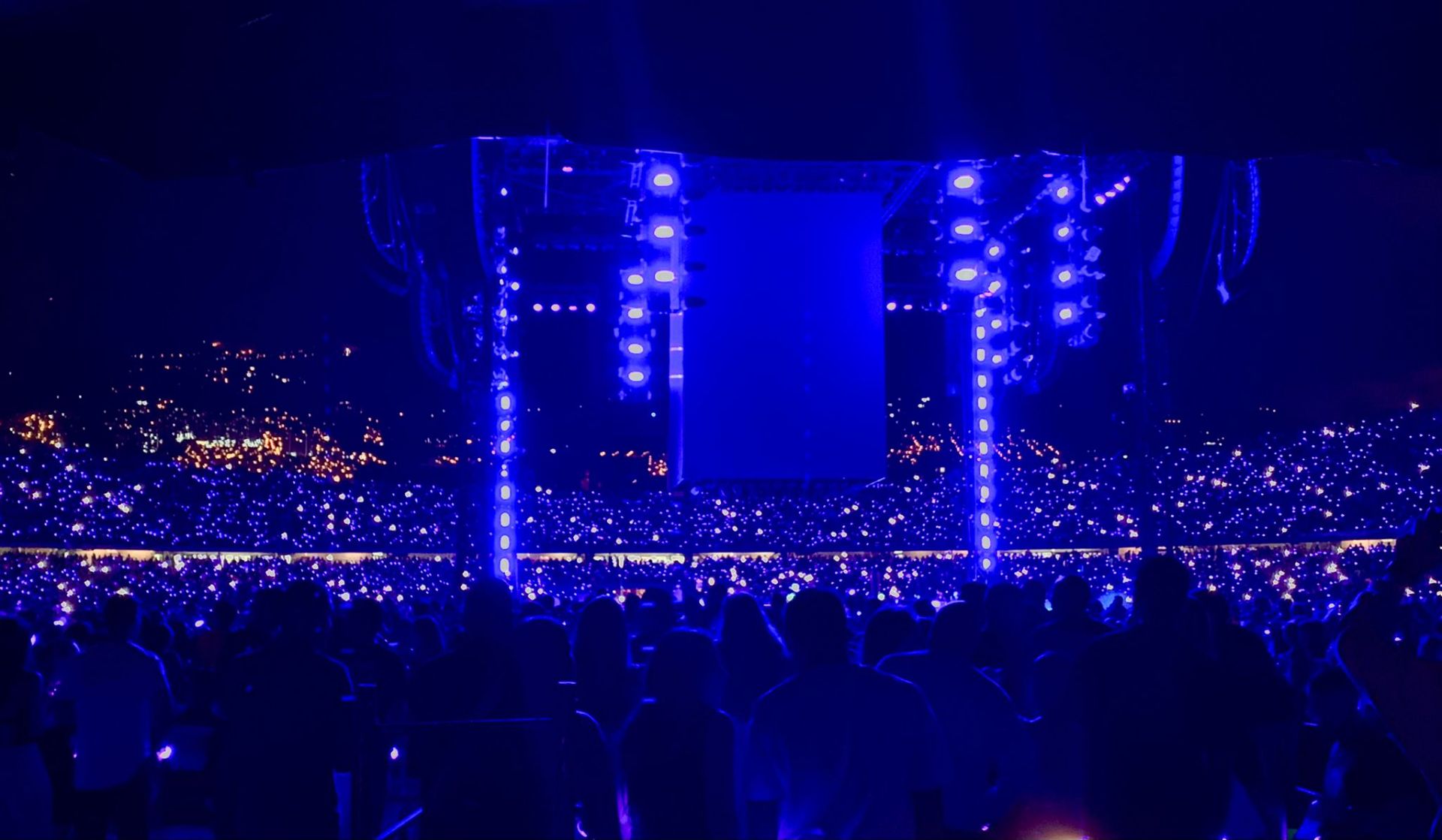
This is where wearable LED technology becomes a game-changer. By transforming the audience itself into an intelligent, programmable canvas of light, we can create a solution that serves both masters. For the live audience, the experience is immediate and deeply personal. They are no longer passively watching the show; they are in it. Their LED wristbands or LED lanyards connect them to the key moments on stage—a contestant winning, a musical crescendo, a dramatic reveal—in a way that is both individual and collective.
For the broadcast audience, this human canvas becomes a stunning visual element. It adds depth, scale, and texture to the frame. Wide shots of the studio are transformed from a collection of dark silhouettes into a dynamic, pulsating grid of light, all perfectly synchronized with the on-air graphics and show lighting. Our work with ITV on shows like Beat The Chasers UK demonstrates this principle in action. The 500 audience members aren't just watching the tense showdown; their synchronized Xylobands raise the visual stakes, mirroring the on-screen drama and creating a pressure-cooker atmosphere that translates directly to the viewer at home.
Precision Engineering for Spontaneous Moments
Unlike a stadium tour or a music festival, where lighting cues are often pre-programmed and locked to a timeline, live television is unpredictable. The technology must be able to react in real-time to the unscripted drama of the moment. This requires a robust and flexible control system, one that can be integrated seamlessly into the broadcast production workflow.
Our systems are designed to speak the language of the broadcast world. Using industry-standard DMX and Art-Net protocols, our lighting operators can work hand-in-glove with the show’s lighting director. This allows for a level of granular control that is essential for live TV:
- Instantaneous Triggers: A sudden victory or a surprise elimination can be punctuated with a specific lighting effect across the entire audience, triggered directly from the lighting desk.
- Zoned Control: The audience can be mapped into specific zones, allowing for complex visual chases, patterns, and gradients that complement the on-stage action or on-screen graphics.
- Seamless Integration: Our radio controlled LED wristbands operate on a proprietary frequency, ensuring zero interference with the complex RF environment of a modern television studio.
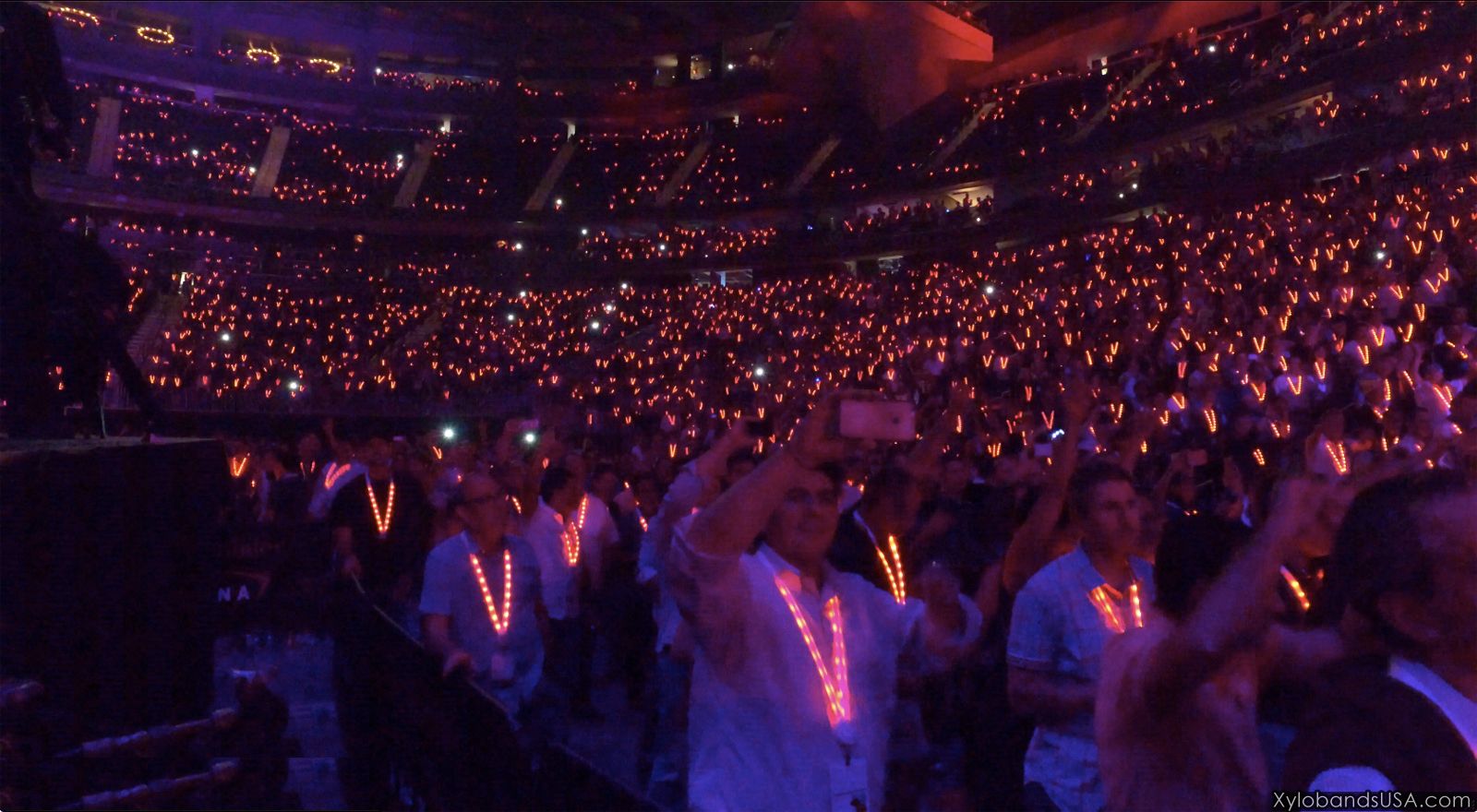
This technical synergy was on full display at the Formula 1 75th-anniversary event at The O2 Arena. While a live broadcast, it was also a complex celebration with multiple stakeholders. We created custom Xylo Pendants for 13,000 attendees, with unique branding for each of the 10 teams and various hospitality tiers. Our deployment team meticulously positioned each guest based on the creative team's lighting design, enabling dynamic, targeted effects that gave both the arena audience and the broadcast viewers a spectacular and immersive experience. This is the precision required to deliver powerful corporate event activations on a global stage.
The Future of Broadcast Immersion
As broadcast technology continues to evolve, with 4K, 8K, and HDR becoming the norm, the demand for high-quality, camera-ready immersive event technology will only grow. The two-audience problem isn't going away; it’s becoming more complex. The expectation for spectacle is higher than ever, both in the venue and on the screen.
The solution lies in creating a unified experience, where the boundary between the stage and the seats disappears. It’s about designing light that not only illuminates but also connects and engages. For broadcasters like ITV, creating these shared moments is the key to captivating both the studio audience and the millions watching from their living rooms, ensuring that no matter where you are, you feel like you’re part of the show. By turning the crowd into a canvas, we are not just solving a technical challenge; we are engineering the future of LED crowd experiences.