The Language of Light: Deconstructing RF, DMX, and Infrared for Immersive Events
The Moment of Ignition
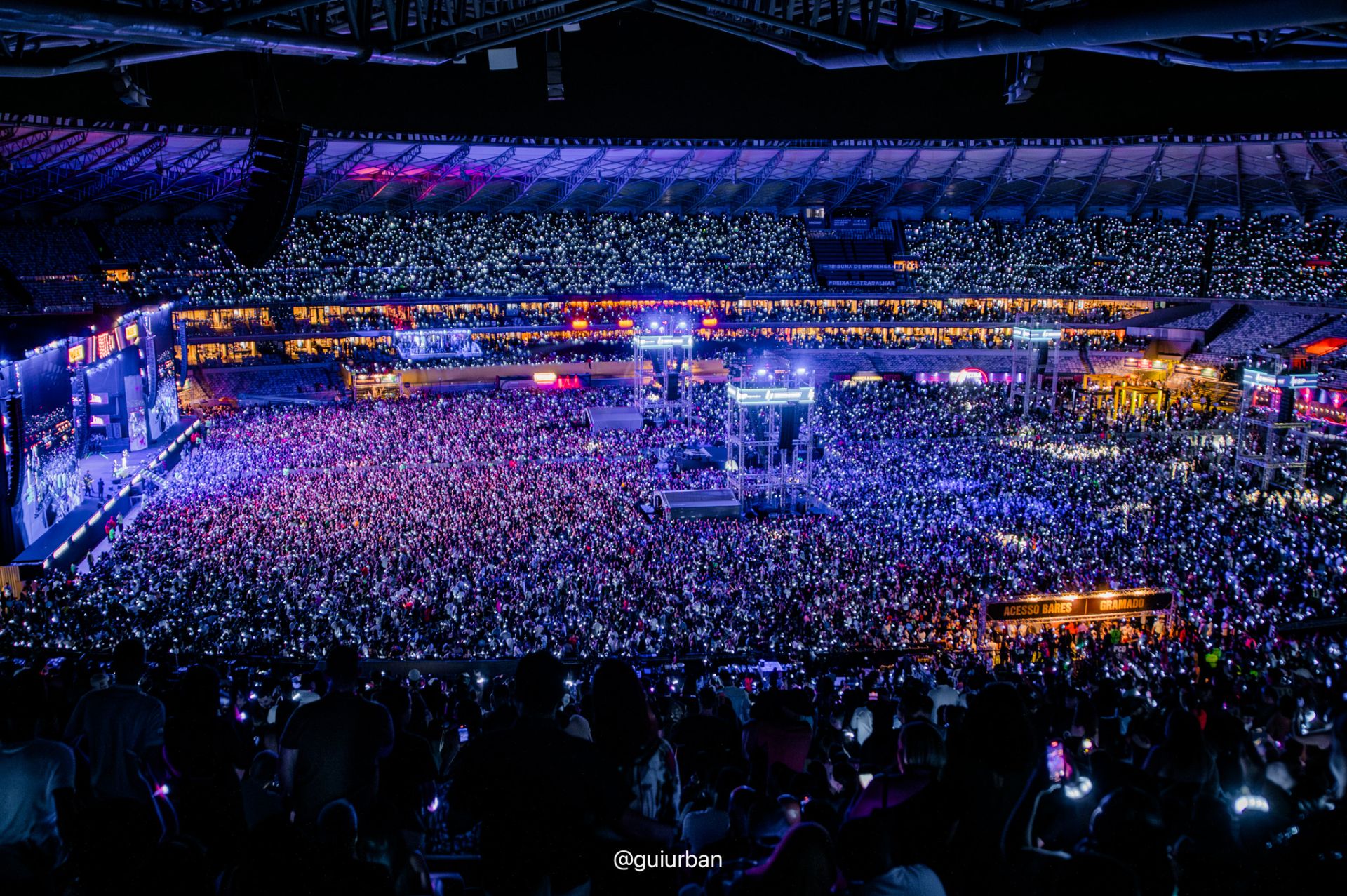
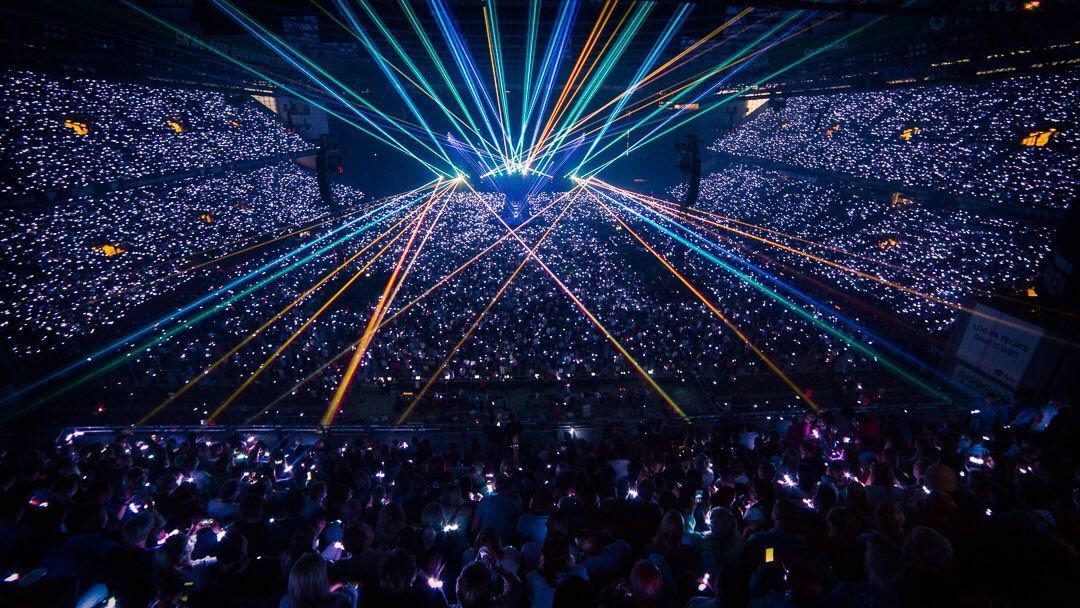
It’s a moment of collective alchemy. A stadium, arena, or festival field plunges into darkness, holding its breath in the silent space between heartbeats. Then, in a single, coordinated flash, a hundred thousand individual points of light ignite—not on stage, but in the hands and on the wrists of every person in the audience. The crowd is no longer just watching the show; they are the show. This is the visual signature of modern immersive events, a spectacle powered not by magic, but by a sophisticated, invisible language of light.
For event producers, tour managers, and brand marketers, understanding this technology is key to unlocking its full creative potential. The synchronized glow of Xylobands and other LED wearables is the result of a carefully orchestrated symphony of signals. The principal conductors of this symphony are three core technologies: Radio Frequency (RF), Digital Multiplex (DMX), and Infrared (IR). Each has a distinct role, and mastering their application is the difference between a simple lighting effect and a truly transformative crowd experience.
RF: The Unifying Broadcast
Radio Frequency is the workhorse behind the industry’s most large-scale LED crowd experiences. Think of the Coldplay Xylo Band effect that started it all, or the pulsating fields of light at Greece’s PRIMER Music Festival. RF technology is built for mass broadcasting, allowing a single transmitter to send commands to tens or even hundreds of thousands of LED bands simultaneously over vast distances.
The system comprises two main components:
- The Transmitter: This unit, controlled by a lighting operator, converts commands into radio signals. Our proprietary system operates on a powerful frequency, ensuring robust and reliable signal delivery across challenging environments, from concrete stadiums to open festival grounds.
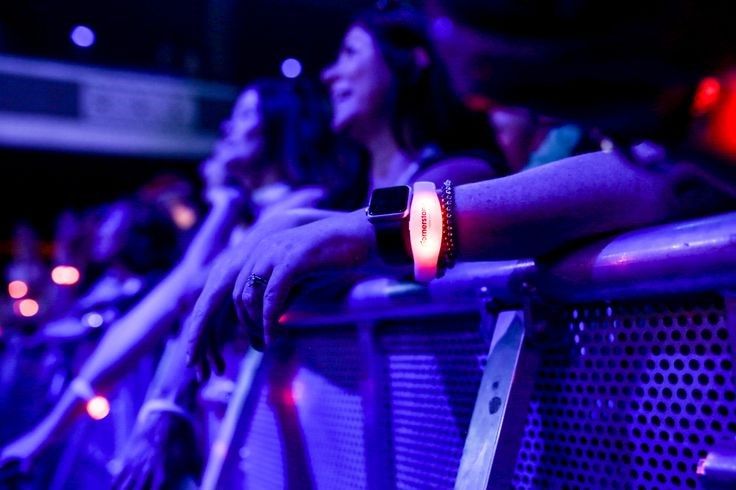
- The Receiver: Housed within each wristband, this tiny chip constantly listens for signals from the transmitter. Once a command is received—be it to flash, fade, or change to a specific color—it executes the instruction instantly.
The power of RF lies in its ability to create massive, unifying moments. It’s the tool for turning an entire stadium into a single, pulsing entity, synchronized perfectly to a song’s crescendo or a dramatic brand reveal. For wide-area events like marathons or city-wide celebrations, radio controlled LED wristbands are the undisputed standard for creating a blanket of cohesive, moving light.
DMX: The Artist’s Brushstroke
Where RF excels at scale, DMX provides precision and artistry. DMX is the long-established industry standard for controlling stage lighting, moving heads, and atmospheric effects. At Xylobands, we’ve harnessed this powerful protocol and integrated it into our wearable LED technology, turning the crowd itself into a high-fidelity lighting fixture.
Unlike an RF signal, which broadcasts the same command to all, DMX allows for granular control. The system works by assigning each wristband (or small groups of them) to a specific "channel" within a DMX "universe." A lighting designer can then program these channels independently, painting with light across the audience. This unlocks a new level of creative possibility:
- Complex Color Gradients: Imagine a wave of color washing over a specific seating block, or a brand’s logo rendered in light across the stands.
- Dynamic Chases and Patterns: Pulses of light can be programmed to race across an arena, perfectly synced with on-screen content or musical rhythms.
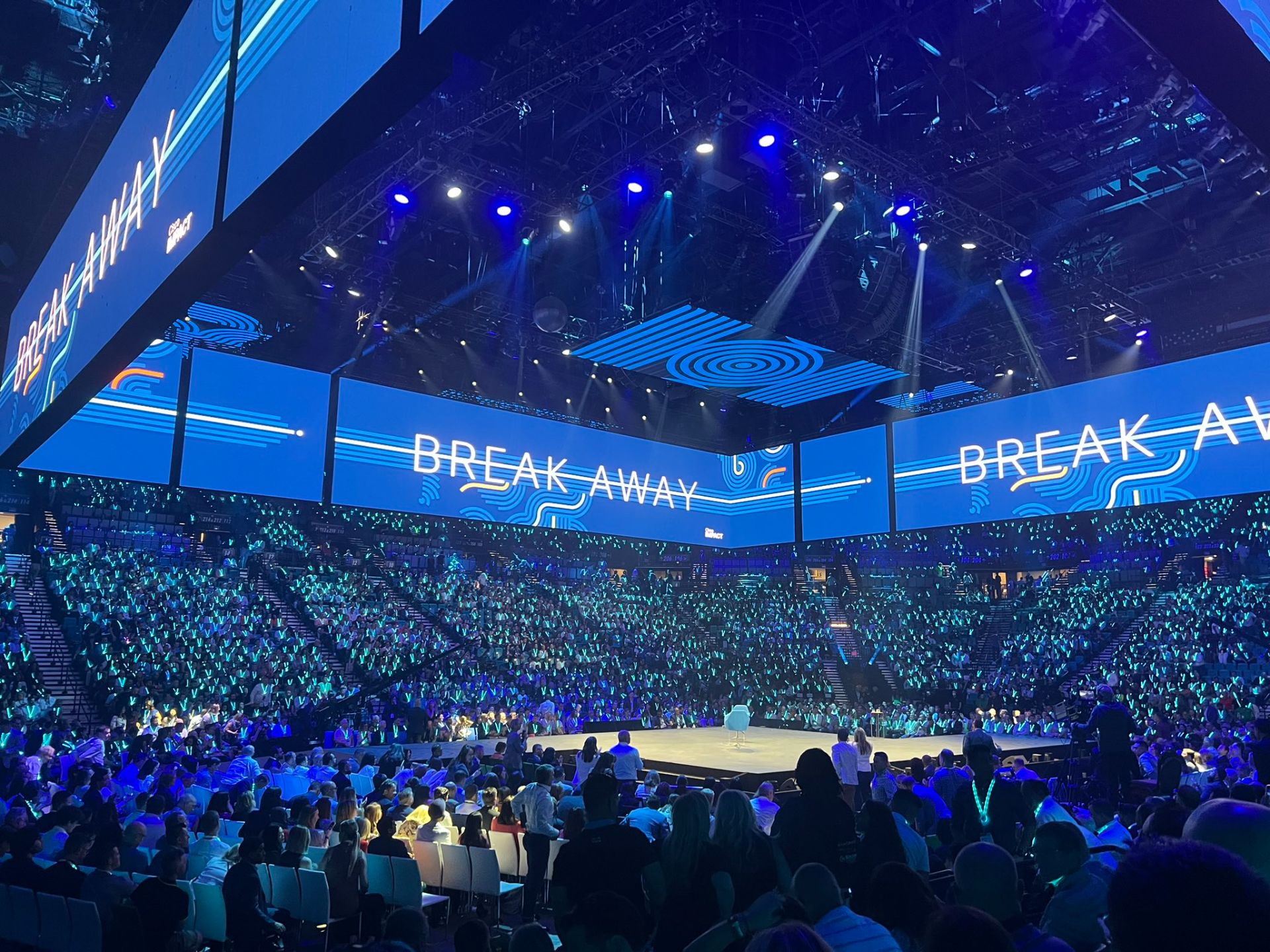
- Targeted Effects: DMX allows for surgical precision. For the F1 75th anniversary event at The O2 Arena, this control was used to segment the audience. Fans for each of the 10 teams, located in specific sections, were illuminated with their team’s branding, creating a dynamic visual tapestry that celebrated each unique identity as part of the whole. It was a masterclass in targeted LED event technology.
This level of detail is essential for live broadcasts and high-stakes corporate event activations, where every pixel is under scrutiny. DMX control transforms the audience from a single canvas into a living, high-resolution video display.
Infrared (IR): The Interactive Trigger
If RF is the broadcast and DMX is the brushstroke, Infrared (IR) is the trigger for personalized interaction. IR technology uses focused beams of light (invisible to the human eye) to transmit data over short, line-of-sight distances. In an event context, this allows for the creation of smart "zones" that trigger wristbands to react as people move through a space.
Imagine an attendee walking through the entrance to a product launch. As they pass through the threshold, their custom LED wristband or LED lanyard instantly flashes the host brand’s color. Or, at a music festival, a sponsor’s tent could be an activation zone where wristbands illuminate with a special pattern upon entry, signaling a prize or a unique photo opportunity.
This technology is the key to gamification. It adds a layer of discovery and personal engagement to large-scale events, making each attendee’s journey unique. It’s a powerful tool for driving traffic, encouraging exploration, and creating memorable, one-on-one digital handshakes between a brand and its audience.
The Integrated Symphony
The most powerful immersive event technology strategies rarely rely on a single system. True mastery lies in the seamless integration of RF, DMX, and IR, using each to its greatest strengths. A world tour might use RF for the show’s biggest, all-in moments, while leveraging DMX for a technically complex, broadcast-ready performance piece. Meanwhile, IR zones in the concourse could be creating interactive experiences for VIPs or sponsors before the show even begins.
This multi-layered approach allows for a dynamic and responsive event narrative. The technology fades into the background, becoming an invisible conductor that guides the audience through a journey of unity, artistry, and personal interaction. It’s a language spoken in light, and its vocabulary is limited only by the creative vision of the production team. By understanding the syntax of these signals, we can move beyond simply lighting up a room and begin to craft truly unforgettable collective experiences.