The Macroscope: A New Framework for Stadium & Arena Lighting
The Challenge of Scale
Designing a lighting experience for a stadium or arena tour is fundamentally different from designing for a theater or club. The sheer scale changes everything. We’re not just talking about more lights or a bigger power draw; we’re talking about a paradigm shift in creative and technical strategy. At this level, you’re not just lighting a stage—you’re building a temporary universe. The stage is the sun, but the entire venue, from the front row to the highest seats, is the solar system it must illuminate and energize.
Traditional lighting design often focuses on the proscenium arch as its frame. In a stadium, there is no frame. The architecture of the venue itself—the sweeping curves of the stands, the cavernous ceiling, the miles of rigging—becomes part of the canvas. This is a world of macro-aesthetics, where the smallest gestures must be amplified to reach the back row, and the largest moments must feel cohesive, not chaotic. Forgetting this is the most common mistake: designing a brilliant stage show that feels disconnected from the 50,000 people watching it.
A New Framework: The Macroscope
To truly master stadium lighting, we need to move beyond micro-details and adopt a macroscopic view. Think of the entire venue as a single instrument. Every element—stage lights, video screens, architectural fixtures, and even the audience itself—is a component of that instrument. The lighting designer’s job is to be the composer, writing a symphony of light that plays across the entire space.
This "Macroscope" framework has three core principles:
- Unified Canvas: Treat every light source as part of a single, integrated system. This means the visuals on the LED screens should speak the same language as the beam fixtures sweeping the arena, and both should connect to the light emanating from the crowd.
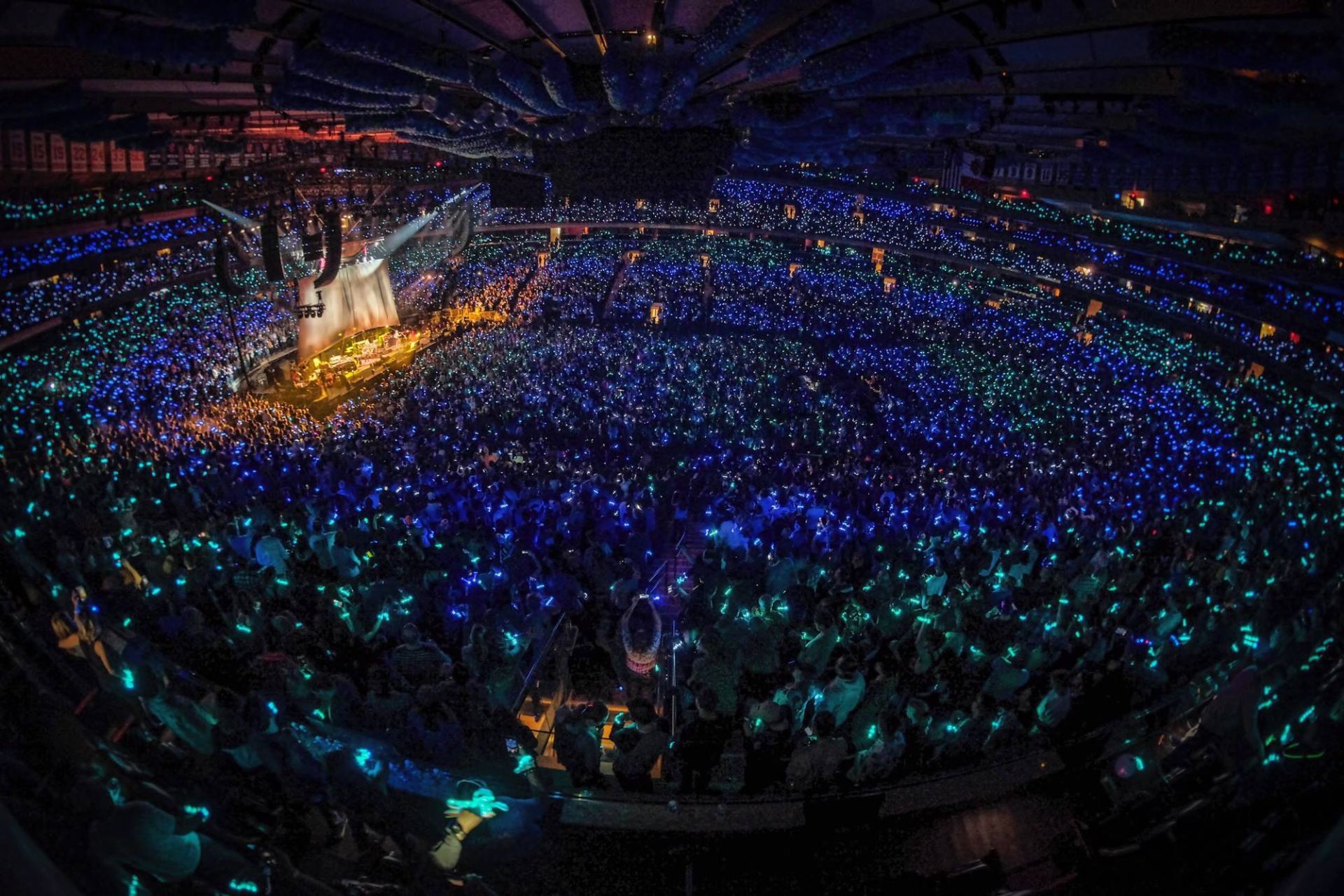
- Dynamic Topography: A stadium is not a flat surface. It has layers, depth, and a unique 3D geography. Great lighting design uses this topography, creating waves of light that crash over the stands or pillars of color that rise from the floor to the roof. The venue’s architecture isn’t a constraint; it’s an opportunity.
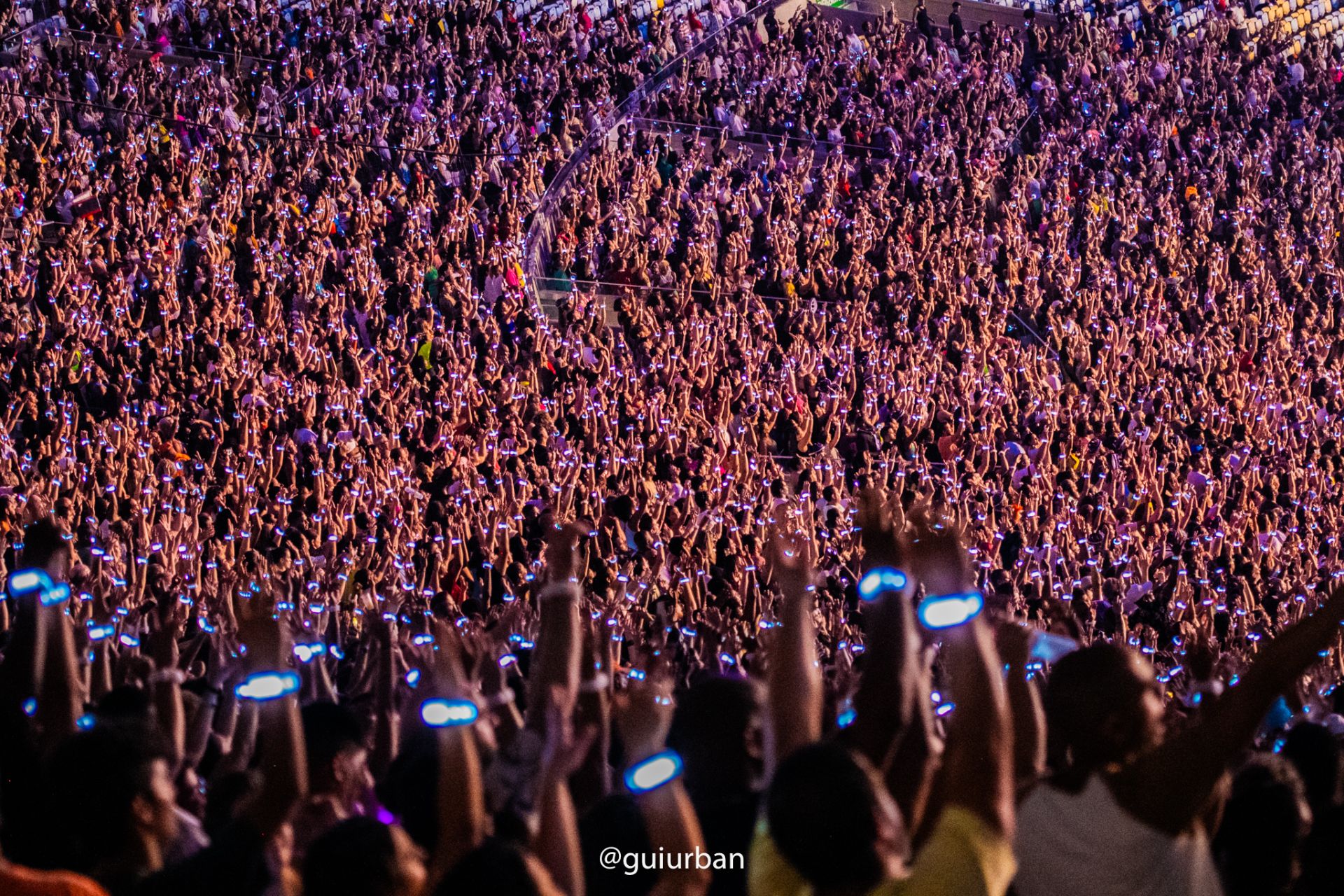
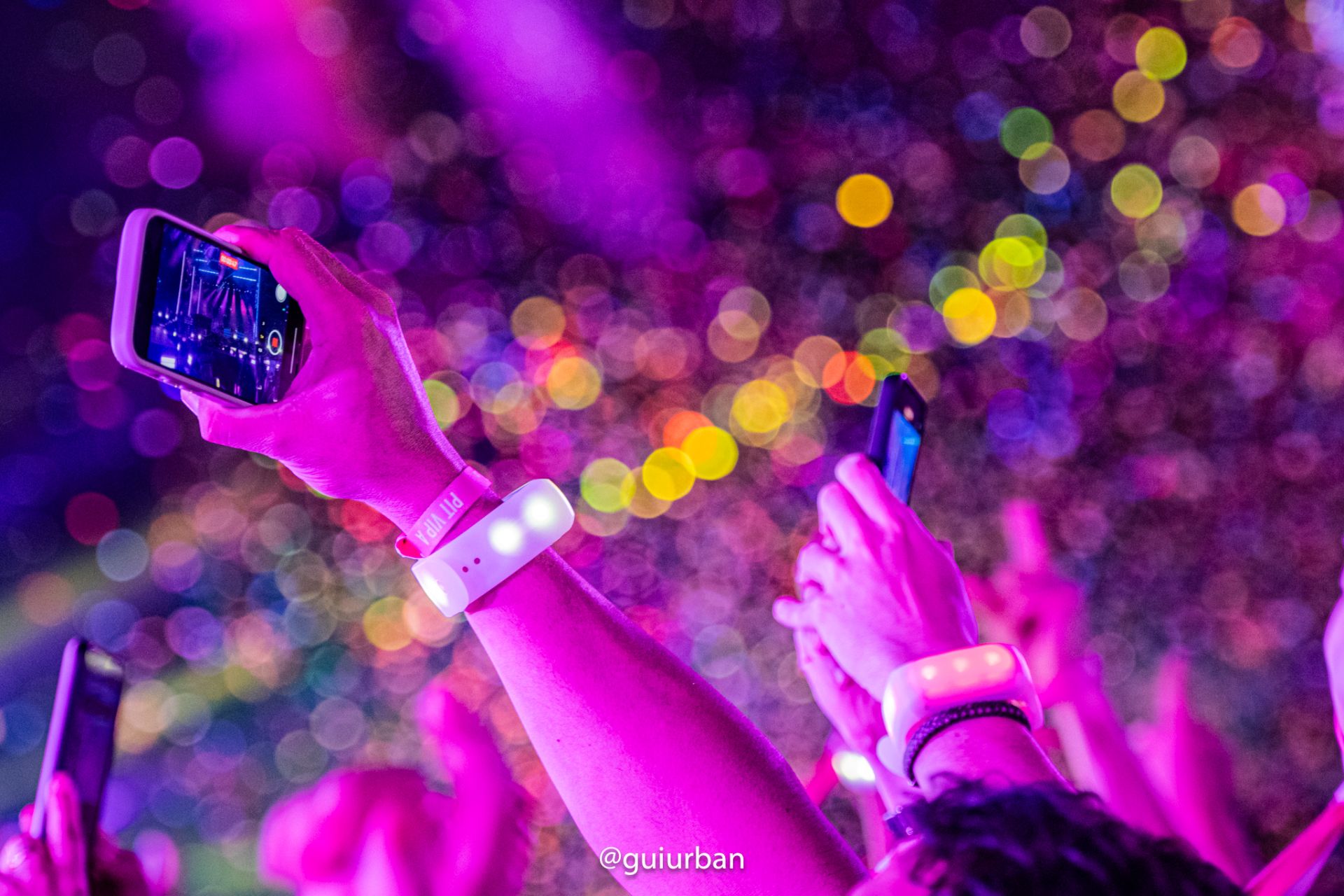
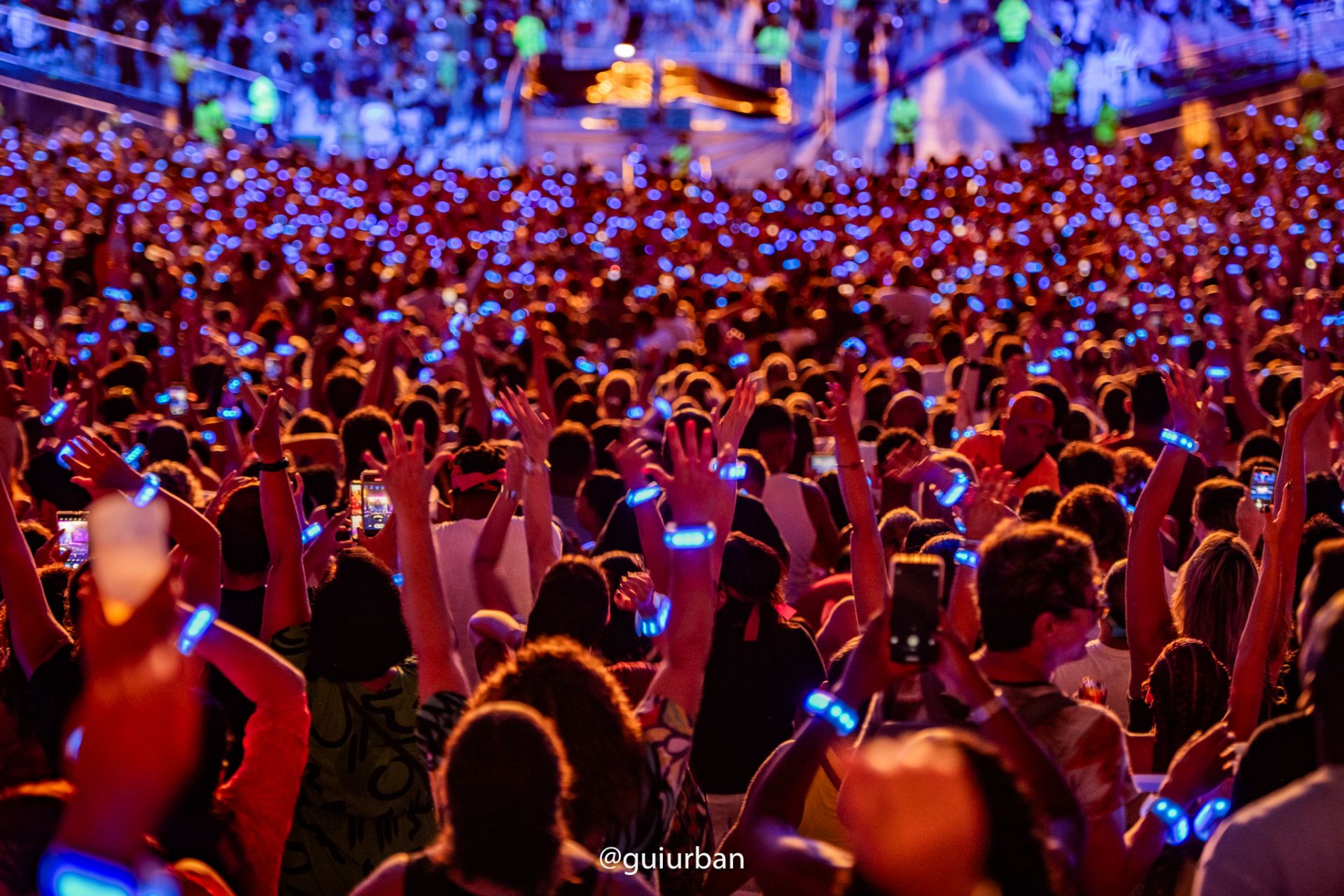
- The Human Element: The most dynamic and unpredictable element in the venue is the audience. Incorporating the crowd into the design is the final frontier of immersive event technology. This is where tools like radio-controlled LED wristbands become essential, turning thousands of individuals into a single, kinetic canvas of light.
The Audience as the Final Layer
For decades, the audience was a passive observer. The most they could contribute was the analog warmth of a sea of lighters. Today, with the advent of wearable LED technology like Xylobands, the crowd becomes the final and most powerful layer of the lighting design. Suddenly, the energy isn’t just flowing from the stage outwards; it’s a two-way conversation.
When Maluma played to 54,000 fans in his hometown of Medellín, the light from the stage was answered by the light from the crowd, creating a unified spectacle that translated powerfully both in person and for the millions streaming it live. The same principle applies whether it’s a historic three-night, sold-out run for an artist like Wizkid at London's O2 Arena or a high-energy electronic music festival like Primer in Greece. The technology allows designers to paint with a much broader brush, extending the story of the show to every seat in the house.
These LED crowd experiences are no longer a novelty; they are a fundamental component of modern tour design. They solve the problem of scale by decentralizing the light source. Instead of relying solely on a massive, centralized rig, the light emanates from thousands of points, creating an unparalleled sense of immersion and participation. The show is no longer something you just watch; it’s something you are a part of.
Designing for the Lens and the Eye
Another critical principle of the Macroscope framework is the dual-audience challenge: designing for the people in the room and the millions watching through a camera lens. A stadium show is also a broadcast. The lighting must be powerful enough to create atmosphere in a vast space but nuanced enough to look good on screen. This is where technologies like radio-controlled LED wristbands and pendants offer a distinct advantage.
For the 75th anniversary of Formula 1, we helped create a custom Xylo Pendant experience for 13,000 attendees. The creative team could then program specific lighting effects across different sections of the arena, ensuring that key moments were visually spectacular not just for the live audience but for the broadcast as well. The light emanating from the crowd provides texture and depth on camera, turning dark sections of the audience into vibrant, dynamic backdrops.
The Future is Cohesive
The future of stadium and arena tour lighting lies in integration. It’s about breaking down the silos between stage lighting, video content, and audience effects. It’s about seeing the entire venue as a living, breathing entity and using a macroscopic approach to bring it to life.
The goal is to create a singular, overwhelming sensory experience where every element works in concert. By embracing the Macroscope framework—unifying the canvas, leveraging the venue’s topography, and integrating the human element—we can move beyond simply lighting a concert. We can build worlds, tell stories, and create moments of collective effervescence that stay with an audience long after the last light fades to black.