The Double Act: Mastering Light for the Live Crowd and the Camera
The Two-Audience Challenge
The art of lighting a live broadcast event is a high-wire act. It’s a performance for two distinct audiences: the roaring crowd in the venue and the millions watching through the unforgiving lens of a camera. This is the new reality for event producers and lighting designers, a world where the emotional impact for those in the room must be perfectly balanced with the technical precision demanded by broadcast. Get it wrong, and you risk an event that feels flat to the live audience or looks washed out, noisy, or chaotic on screen. Get it right, and you create a seamless, electrifying experience for everyone, everywhere.
For the live audience, light is about atmosphere, emotion, and scale. It’s the sweeping beams that fill a stadium, the saturated colors that paint the stage, and the strobing flashes that punctuate a beat drop. It’s a visceral, physical experience. For the broadcast audience, however, the experience is mediated entirely by the camera. The camera sensor doesn't interpret light emotionally; it translates it into data. What feels immersive in person can become a flickering, overexposed mess on television without careful calibration.
The Unforgiving Lens: Technical Hurdles in Broadcast Lighting
When lighting for broadcast, several technical challenges come to the forefront. The primary goal is to deliver a clean, consistent, and visually compelling image to viewers at home, which requires a deep understanding of how cameras perceive light.
Key Technical Considerations:
- Flicker Rate: Many LED lighting fixtures have a refresh rate that, while invisible to the human eye, can be caught by a camera’s shutter, resulting in an distracting flicker on screen. Professional broadcast lighting must operate at a high enough frequency to eliminate this effect, ensuring a stable, solid image.
- Color Temperature & Rendering: Cameras are highly sensitive to the color temperature of light, measured in Kelvin. Inconsistent temperatures from different light sources can make whites appear too blue (cool) or too yellow (warm), and can render skin tones unnatural. A high Color Rendering Index (CRI) is crucial for ensuring that colors appear true-to-life on screen.
- Dynamic Range: The human eye can perceive a vast range of brightness, from deep shadows to brilliant highlights. A camera’s dynamic range is far more limited. A lighting design must control the contrast ratio to avoid “crushing the blacks” (losing detail in shadows) or “blowing out the highlights” (losing detail in bright areas).
These challenges are amplified in a live setting. An artist moving across the stage, a camera panning across a massive crowd, or a sudden pyro effect can instantly alter the lighting dynamics. The entire lighting ecosystem must be engineered for control and consistency.
The Audience as Light: A Modern Solution
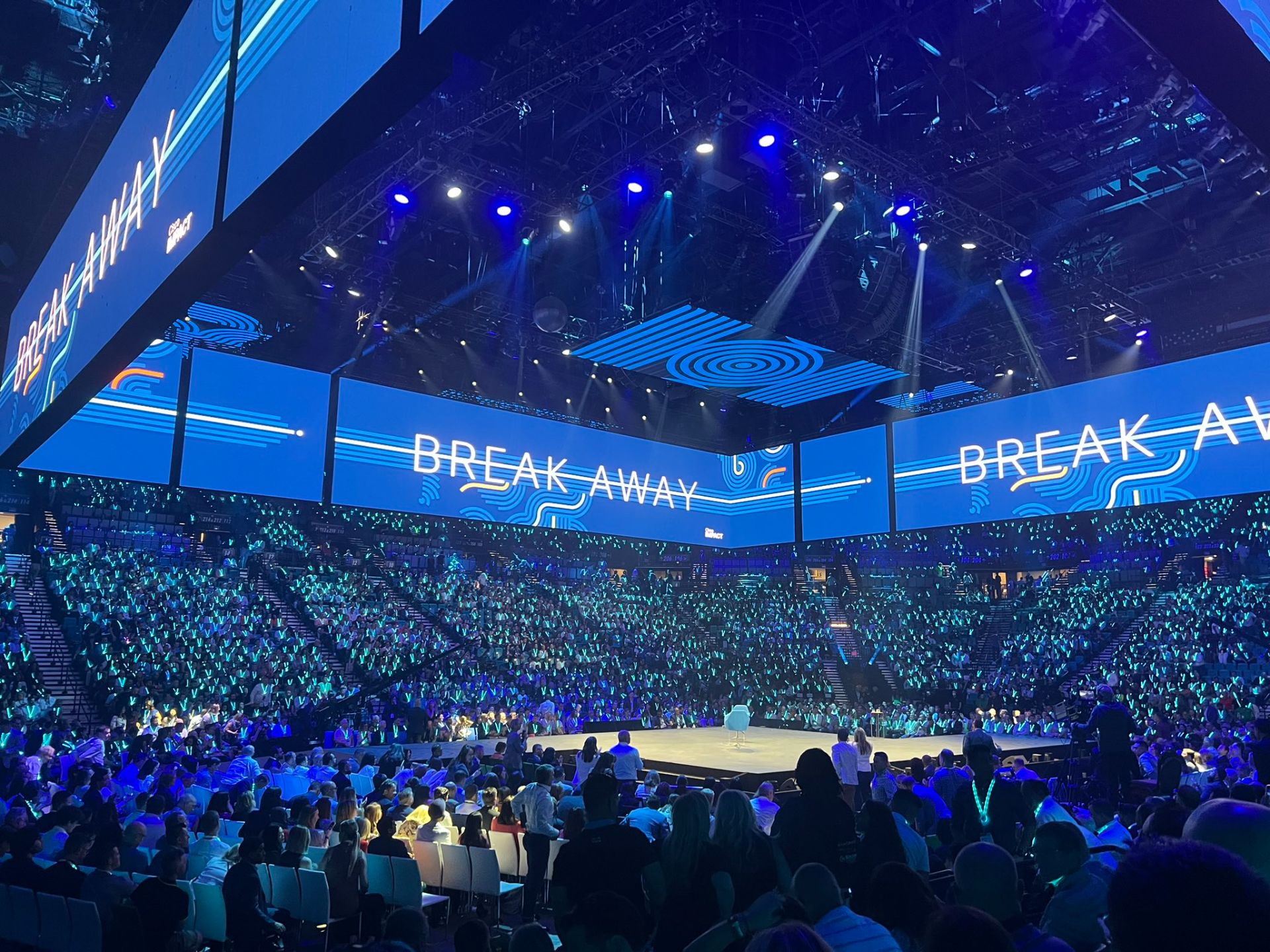
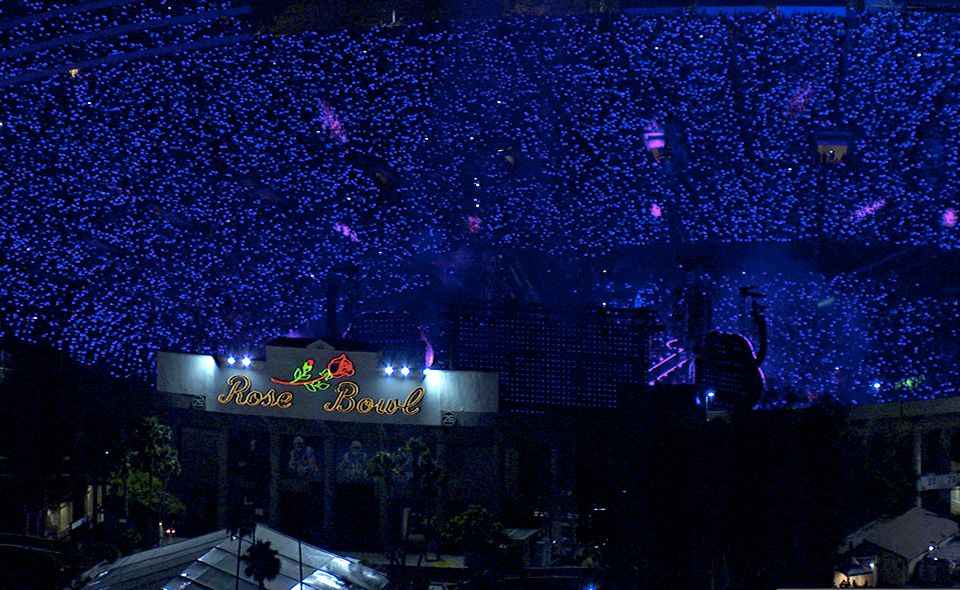
So, how do you create a spectacle that serves both the live and broadcast audience? The answer lies in designing layers of light—and one of the most effective modern layers is the audience itself. This is where wearable LED technology transforms a crowd from a passive observer into an active part of the broadcast canvas.
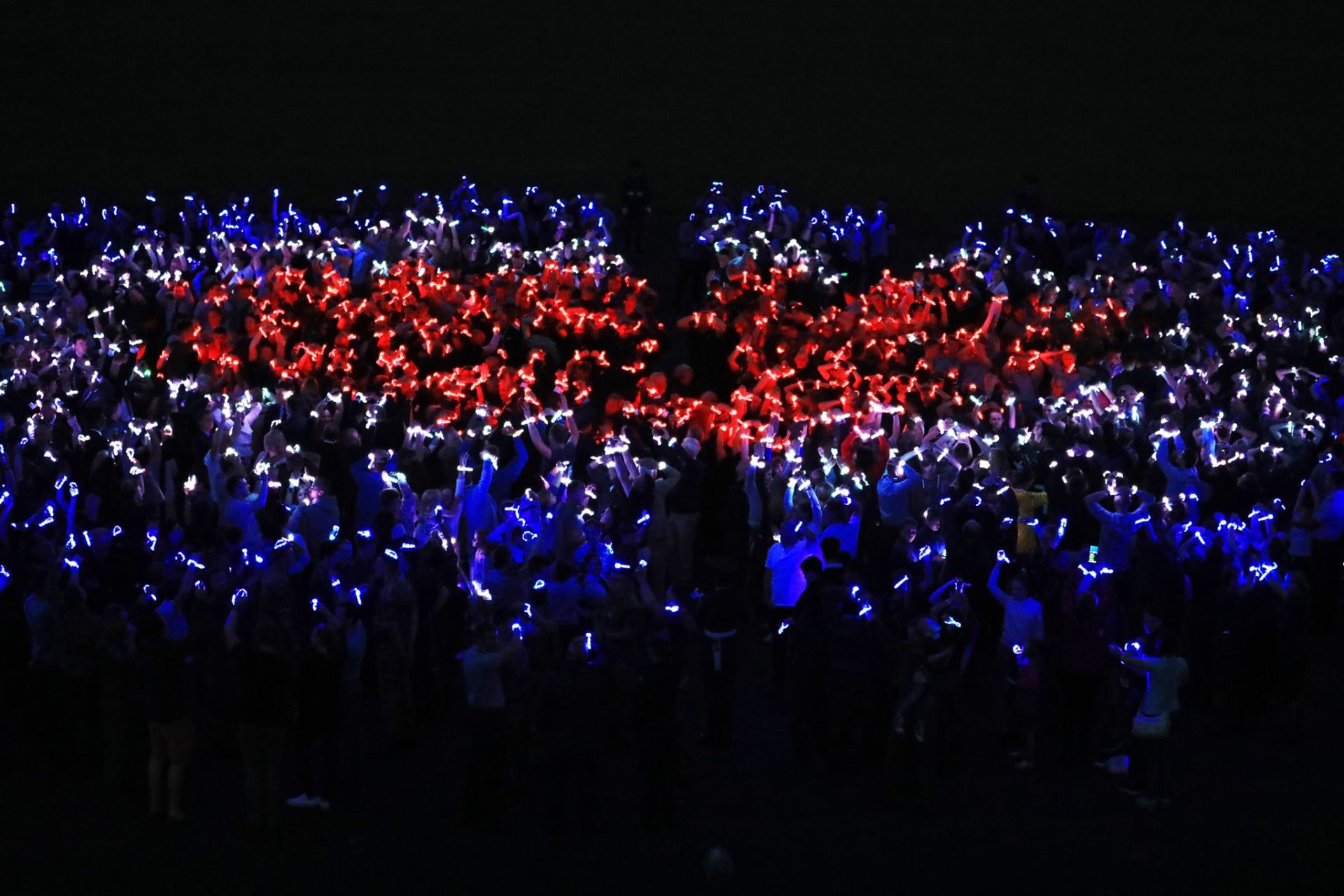
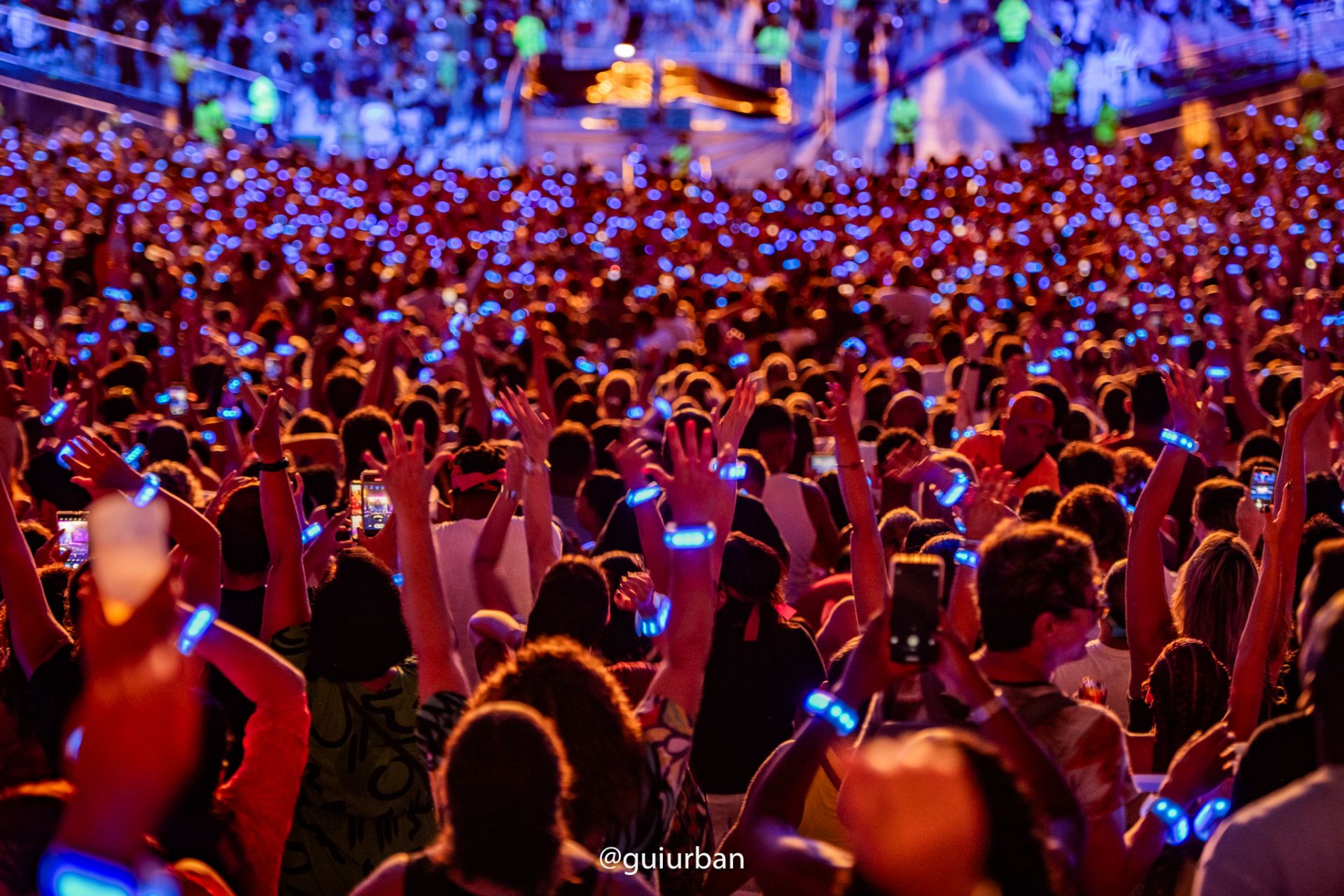
At Xylobands, we’ve engineered our systems with the broadcast environment in mind. By integrating radio-controlled LED wristbands or lanyards into the production, you create a dynamic, pixel-mapped backdrop that is inherently camera-friendly. Rather than pointing cameras into the dark void of an audience, you can fill the frame with synchronized, controllable light. This approach was powerfully demonstrated at Maluma’s historic “Medellín en el Mapa” concert, streamed live to over 240 countries, where the crowd became a living, breathing part of the show’s visual tapestry.
Our technology, used in high-stakes broadcasts for clients like ITV and the Eurovision Song Contest, is designed to meet the rigorous demands of the camera. The flicker-free operation of our LED wristbands ensures a clean signal, while the centralized control system allows a lighting director to paint the crowd with color, pattern, and movement that complements the stage design and translates beautifully to the screen.
Painting the Bigger Picture: From Game Shows to Global Sports
This principle extends far beyond music. Consider the high-pressure environment of a TV game show like ITV’s *Beat The Chasers*. Here, the studio audience isn’t just there for applause; they are a critical part of the set. Lighting them with custom LED wristbands adds visual depth and tension, creating reactions and color shifts that heighten the drama for the viewer at home.
The same logic applies to major sporting events. For the 75th anniversary of Formula 1, custom LED Lanyards (Xylo Pendants) were used to immerse the audience in the celebration, which was broadcast live. This turned the entire arena into a vibrant extension of the F1 brand, creating powerful wide shots that captured the scale and energy of the event for the broadcast. It’s no longer just about lighting the players or the stage; it’s about lighting the entire experience. These immersive events create a powerful sense of shared energy that unites the live and digital audiences.
Conclusion: A Unified Vision
The dual-audience challenge is no longer an obstacle but a creative opportunity. By embracing technologies that bridge the gap between the in-person experience and the broadcast feed, producers can create more cohesive and impactful shows. Integrating the audience into the lighting design through LED crowd experiences doesn't just solve a technical problem; it unlocks a new realm of storytelling. It ensures that whether your audience is in the front row or on their sofa, they are all part of the same spectacular, unforgettable moment. The light, once just for the stage, now truly belongs to everyone.