The Photon & The Pixel: Engineering Immersive Light for Live and Broadcast Audiences
The Duality of Perception: The Eye vs. The Lens
In the world of high-stakes live television, a fundamental duality governs every decision: the spectacle in the room, and the image on the screen. A tension exists between the thunderous, visceral reality of the live experience and its carefully mediated broadcast to millions of homes. At the heart of this tension lies the physics of light. The human eye and the camera sensor are two vastly different audiences, and they perceive the world through irreconcilably different rules.
The human eye is a marvel of adaptation, possessing an extraordinary dynamic range. It can process deep shadows and bright highlights simultaneously, constantly adjusting focus and white balance in a fluid, almost instantaneous process. It forgives imperfections, filling in gaps to perceive a coherent, emotionally resonant whole. The camera, by contrast, is a ruthless arbiter of precision. It operates within a much narrower dynamic range, demanding specific color temperatures and becoming notoriously unforgiving of subtle variations in frequency and intensity. A pulse of light that feels energetic to a live spectator can translate into an unsightly flicker or band on a broadcast feed—a digital artifact that shatters the illusion of the spectacle.
From Blackout to Backdrop: The Audience as a Canvas
For decades, television production treated the studio audience as a soundscape, an entity to be heard but not seen. They were consigned to the shadows, a dark void from which applause and laughter would emanate. Today, that philosophy is extinct. Modern broadcast design understands that the audience is not separate from the event; they are the event. They are the living, breathing backdrop that gives a show its sense of scale and energy. But lighting an arena of thousands for a global broadcast presents a monumental challenge.
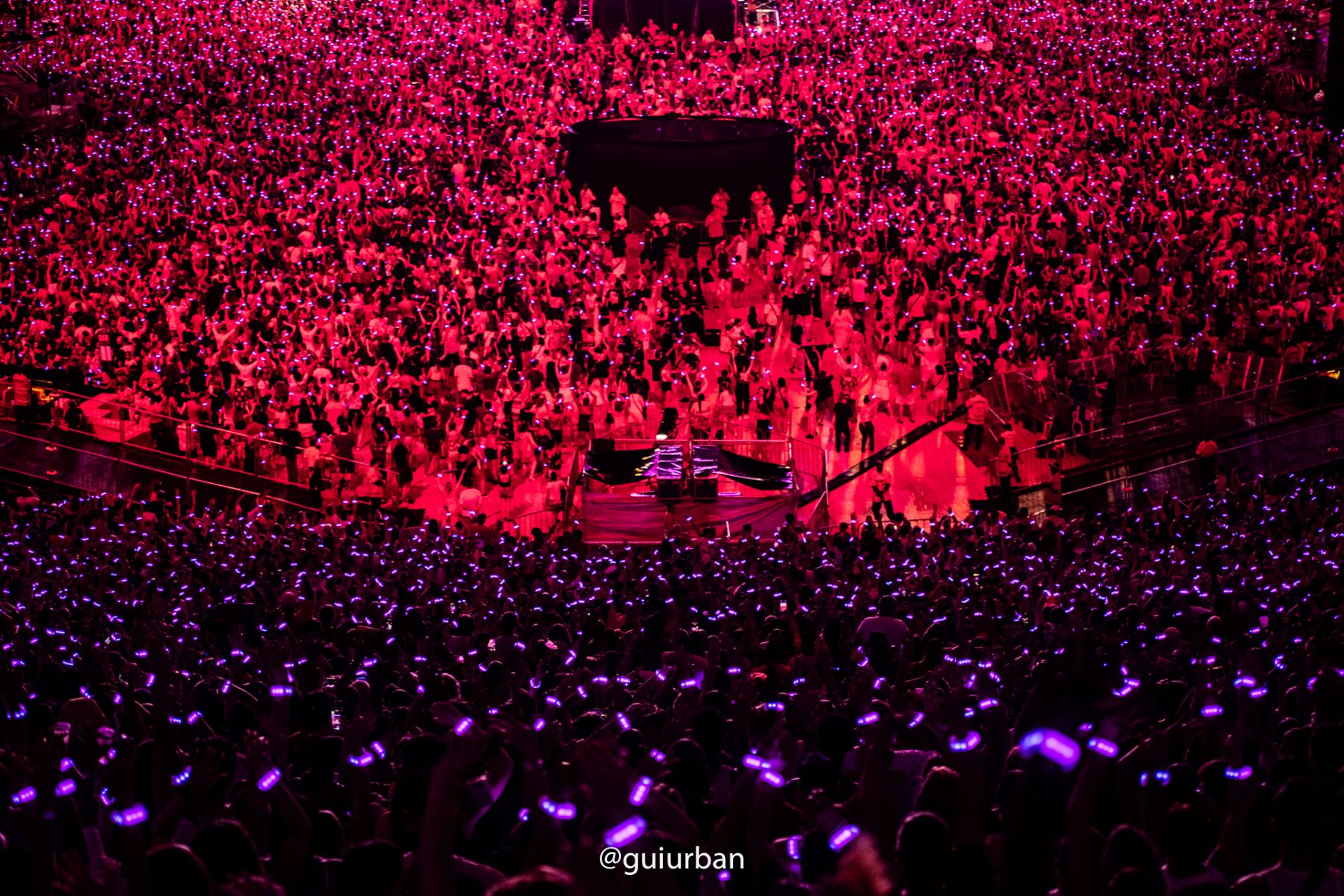
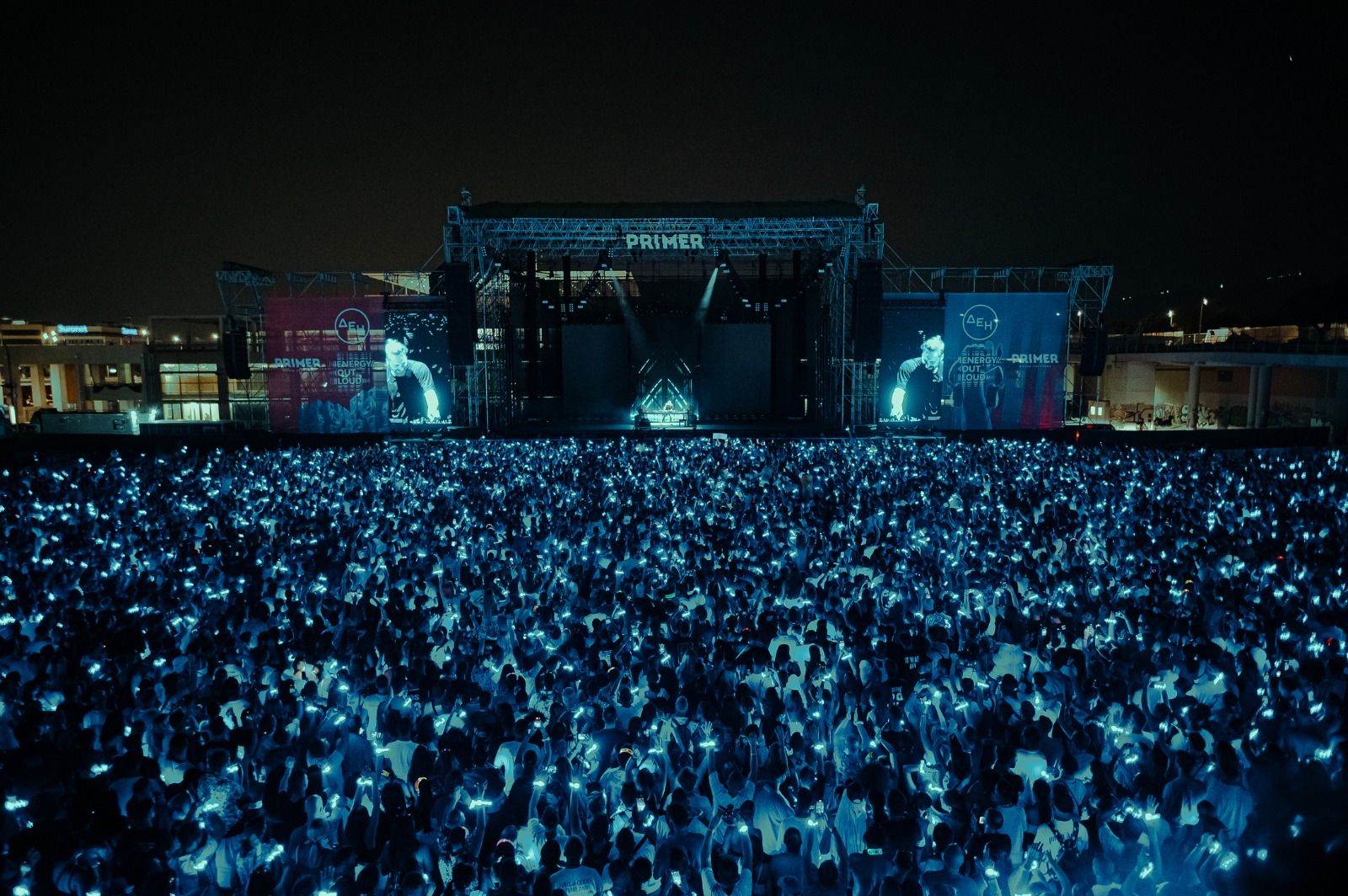
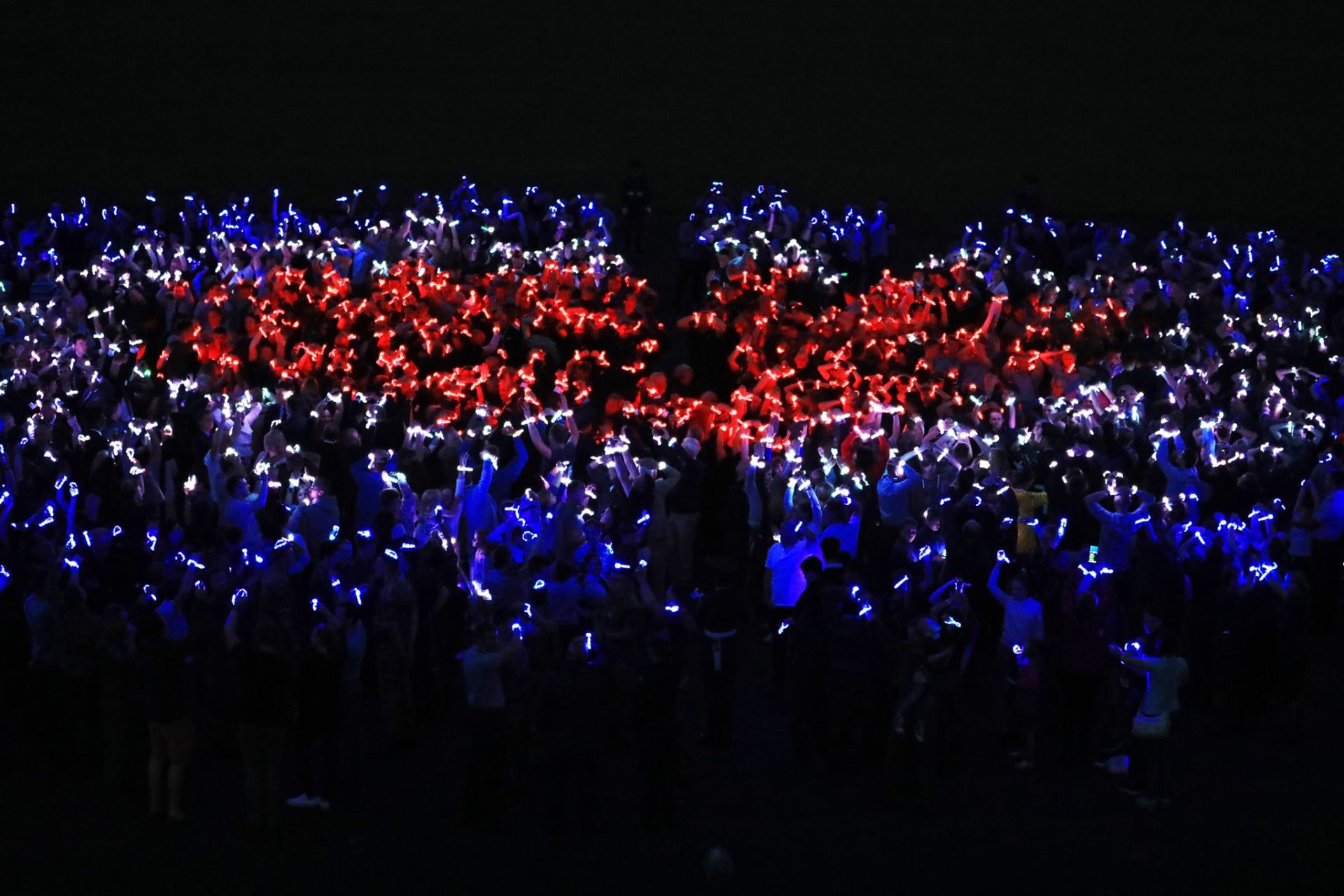
This is where Immersive Event Technology has rewritten the rules. By turning the audience into an extension of the lighting design, we transform a passive crowd into a dynamic, interactive canvas. This is a principle we at Xylobands have deployed for major broadcasters like ITV, powering experiences for shows like Beat The Chasers. When the studio audience is equipped with precisely controlled LED Bands, they become a vital visual element. For the broadcast viewer, the effect is transformative. Instead of a static shot of a crowd, they see waves of color, synchronized pulses of light, and patterns that echo the drama unfolding on stage. The LED Crowd Experiences translate the energy of the room into a visual language the camera can understand and convey.
Engineering the Unblinking Spectacle
Creating a seamless experience for both the human eye and the camera lens is an engineering challenge. It requires a deep understanding of light, broadcast technology, and human perception, baked into the very design of the hardware and software.
The Flicker-Free Mandate
The single greatest enemy of broadcast-ready LED technology is flicker. Many consumer-grade LEDs use a technique called Pulse-Width Modulation (PWM) to control brightness, essentially turning the light on and off at high speed. While imperceptible to the naked eye, high-frame-rate broadcast cameras can capture this cycling, resulting in the dreaded flicker or rolling bands across the screen. Professional-grade Wearable LED Technology is engineered from the ground up to be flicker-free, ensuring a clean, stable image under the unforgiving scrutiny of the broadcast lens. This non-negotiable technical standard is the foundation of camera-friendly lighting.
Precision in the Ether: RF and DMX Control
The ability to paint with light across a crowd of thousands depends on the robustness and precision of the control system. Our systems harness the power of RF (Radio Frequency) and integrate seamlessly with industry-standard DMX lighting protocols, allowing a show’s lighting director to control the audience’s LED Bracelets as if they were another fixture in the rig. These Radio Controlled LED Wristbands can be segmented into thousands of zones, programmed with complex sequences, and triggered in perfect synchrony with music, video, and pyrotechnics. This level of granular control ensures that the effects are always camera-ready, capable of producing subtle, elegant fades or sharp, dramatic impacts as the broadcast demands.
Scaling the Spectacle: From Studio to Stadium
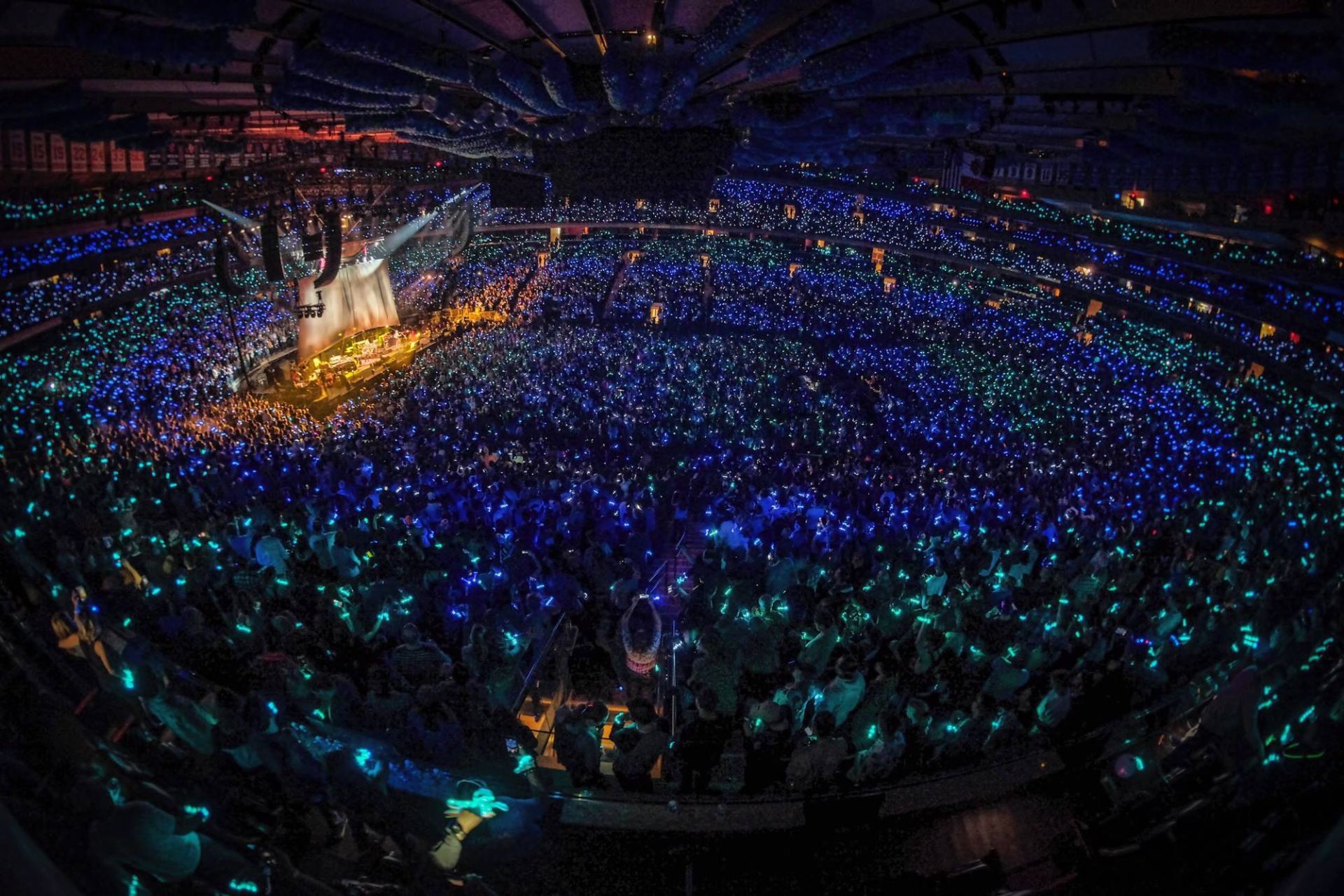
While the principles are born in the controlled environment of the television studio, they find their most breathtaking expression in the vast expanse of arenas and stadiums. The challenge of the dual audience is magnified exponentially at large-scale broadcast events, where a spectacle must be created for 60,000 screaming fans and 60 million viewers at home.
Consider the Formula 1 75th anniversary event at The O2 Arena. Broadcast live, the show brought together teams, drivers, and fans in a celebration of the sport. We deployed 13,000 custom Xylo Pendants, which were pre-positioned to create specific dynamic effects for the camera, turning the entire arena into a canvas that could highlight specific teams or react to moments in the broadcast. It was a textbook example of using Immersive Event Technology to serve the dual needs of a live and broadcast program.
The same principle applies to global music events. When Maluma played to a sold-out stadium of 54,000 in his hometown of Medellín, the concert was streamed live to over 240 countries. The synchronized Concert Wristbands created a powerful visual signature for the show, ensuring the immense scale and energy of the crowd translated through the screen to the global audience, making them feel part of a monumental event.
The Unified Frame: A New Vision for Live Events
The gap between the live and broadcast experience is closing. No longer are they two separate entities, but two facets of a single, unified spectacle. Technology now allows us to create a cohesive visual language that speaks to the fan in the back row and the viewer on their sofa with equal fluency. The audience has been given a new role, transforming from spectator to spectacle, their collective energy harnessed and turned into light.
By mastering the interplay between the photon and the pixel, we are engineering a new, more holistic era of Immersive Events. We are creating a world where the camera is not just a passive observer, but an integrated participant, capturing a 360-degree experience that is as breathtaking on the screen as it is in the room. The future of live broadcasting is not just about showing the event; it's about making the world feel like they are part of it.