The Canvas of Giants: A Modern Guide to Stadium and Arena Tour Lighting
The Challenge of Scale, The Mandate for Intimacy
An arena tour is not just a scaled-up club show. A stadium production is not just a bigger arena tour. Each leap in venue size represents an exponential jump in complexity, demanding a fundamental shift in how we approach the physics and psychology of light. The core challenge is a paradox: how do you create a cohesive, electrifying visual experience for 50,000 people while ensuring the fan in the last row feels as connected to the artist as the person in the front?
The traditional toolkit—trusses, moving heads, PAR cans, and video walls—remains the foundation. But today, the most innovative tour designs treat the entire architectural volume as a single, unified canvas. The stage is no longer a separate entity but the focal point of a much larger sensory environment. The goal is to dissolve the distance between the performer and the audience, using light to build bridges where physical space creates divides.
Principle 1: Master the Vertical Space
In a stadium, the sheer verticality is your greatest asset and biggest hurdle. A flat, stage-bound design gets lost in the cavernous space. Modern lighting design must think three-dimensionally, using light to draw the eye upward and outward.
- Layered Trussing and Structures: Beyond the main stage rig, designers use delayed towers, flown scenic elements, and architectural lighting to extend the show's visual footprint. These elements create depth and allow for complex, layered looks that fill the audience's entire field of vision.
- Volumetric and Aerial Effects: High-powered beams cutting through haze are essential for sculpting the air itself. These are not just for effect; they create a tangible sense of architecture and scale, making the vastness of the venue feel intentional and designed.
Principle 2: Light the People, Not Just the Stage
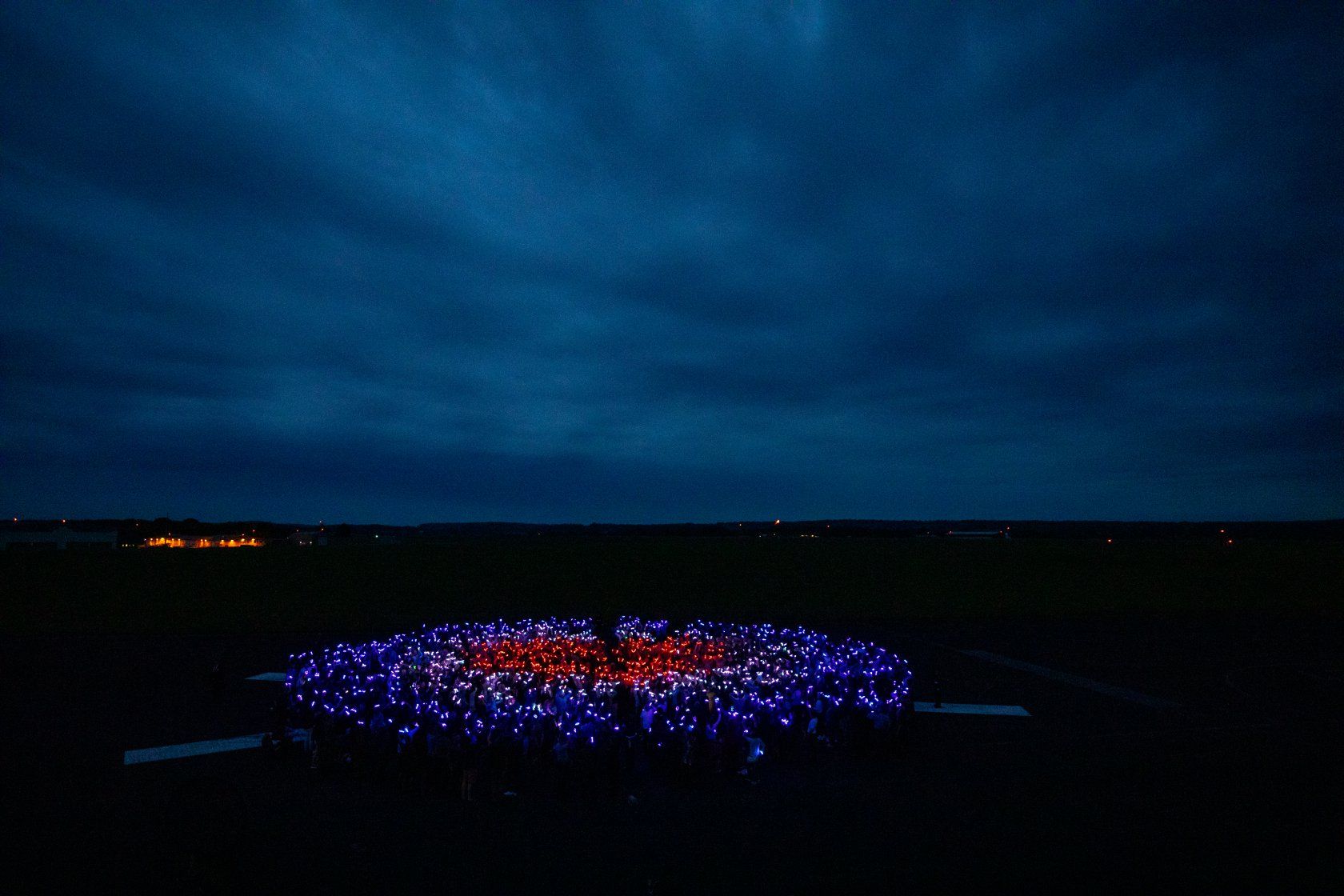
For decades, the audience sat in the dark. Today, they are an integral part of the show’s visual fabric. This is the most significant philosophical shift in modern tour lighting. Extending the lighting design into the crowd transforms tens of thousands of individuals into a single, dynamic entity—a human canvas.
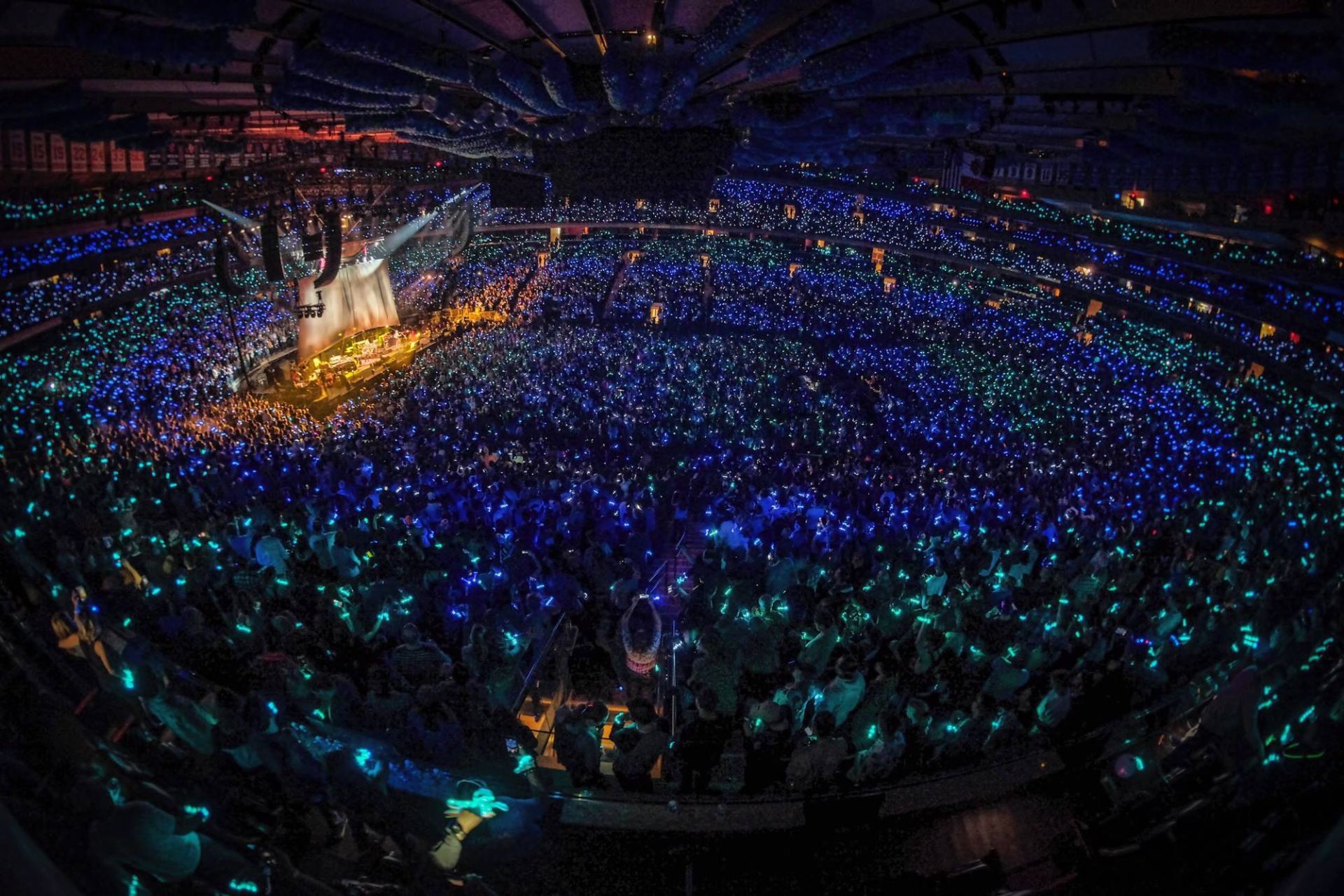
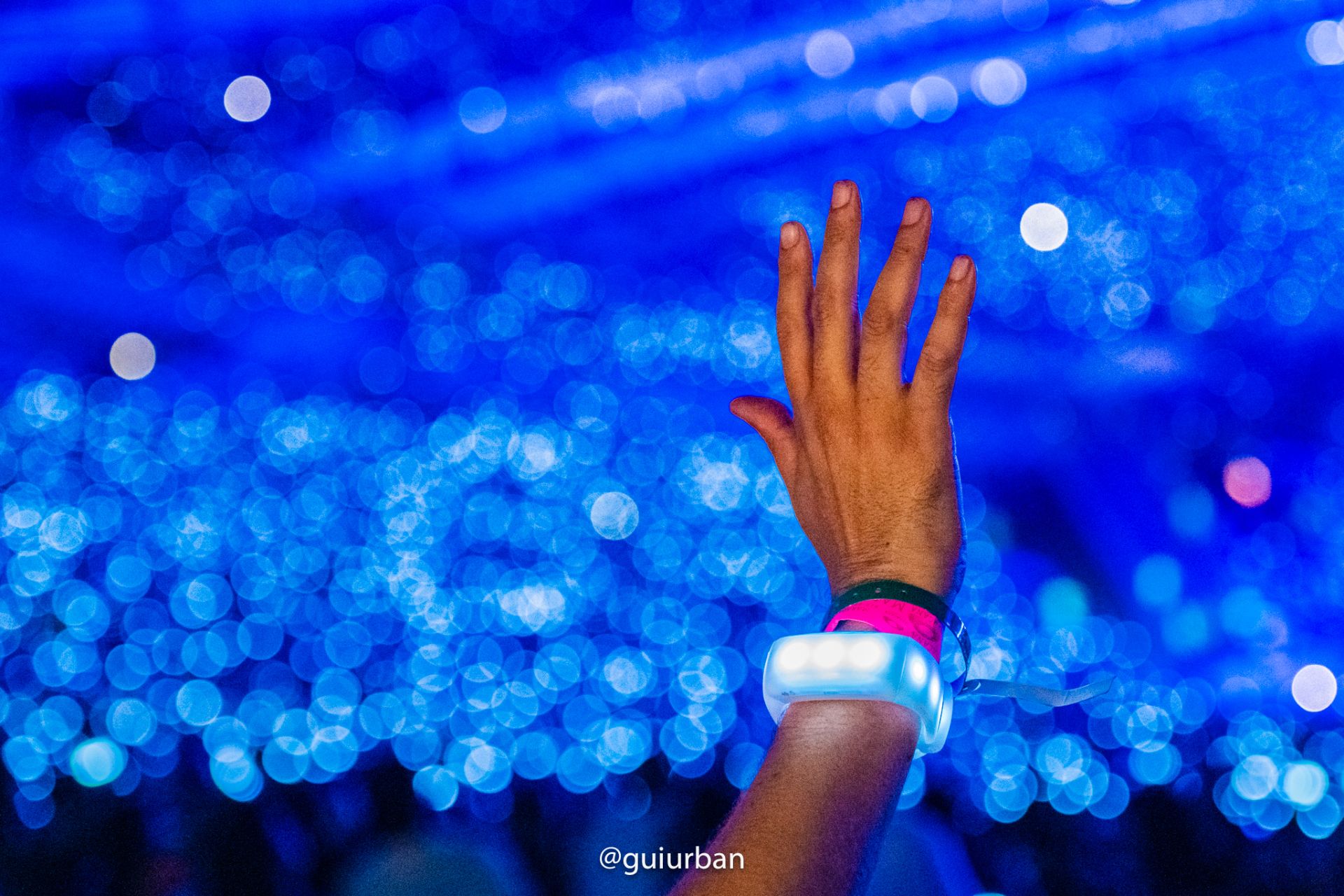
This is where wearable LED technology becomes a game-changer. By equipping each audience member with a radio-controlled device like a Xyloband, a designer gains thousands of new, mobile points of light. Suddenly, the emotional arc of a song can be painted across the entire bowl of a stadium. A chorus can erupt in a unified colour, a beat can pulse from the front to the back, and a quiet moment can be punctuated by a slow, collective fade to black.
When an entire stadium bowl lights up in perfect sync—as seen on global tours like Coldplay’s, or at massive one-off concerts like Maluma’s in Medellín—it creates a moment of profound collective identity. The technology facilitates a psychological shift, turning passive spectators into active participants.
Principle 3: Design for the Lens and the Eye
Every major tour is now a broadcast event. Whether for a planned livestream, a documentary, or the millions of phone screens capturing the show, the design must work for both the human eye in the last row and the camera sensor up close. This "two-audience problem" requires a delicate balance.
- Colour Temperature and CRI: Lighting that looks spectacular in person can appear muddy or washed out on camera. Designers must meticulously manage colour temperatures and use fixtures with a high Colour Rendering Index (CRI) to ensure that skin tones, costumes, and scenery translate accurately to the screen.
- Framing and Composition: The lighting must create compelling frames for the camera without blinding the live audience. This involves strategic placement of key lights, backlights, and even using elements like LED lanyards or wristbands to create a glittering, textured background that looks stunning on camera.
Principle 4: Integrate, Don't Decorate
The most powerful designs are born from deep collaboration where lighting is not an afterthought but a core component of the creative concept. Light should be woven into the scenic design, the video content, and the artist's choreography. It should feel inseparable from the music itself.
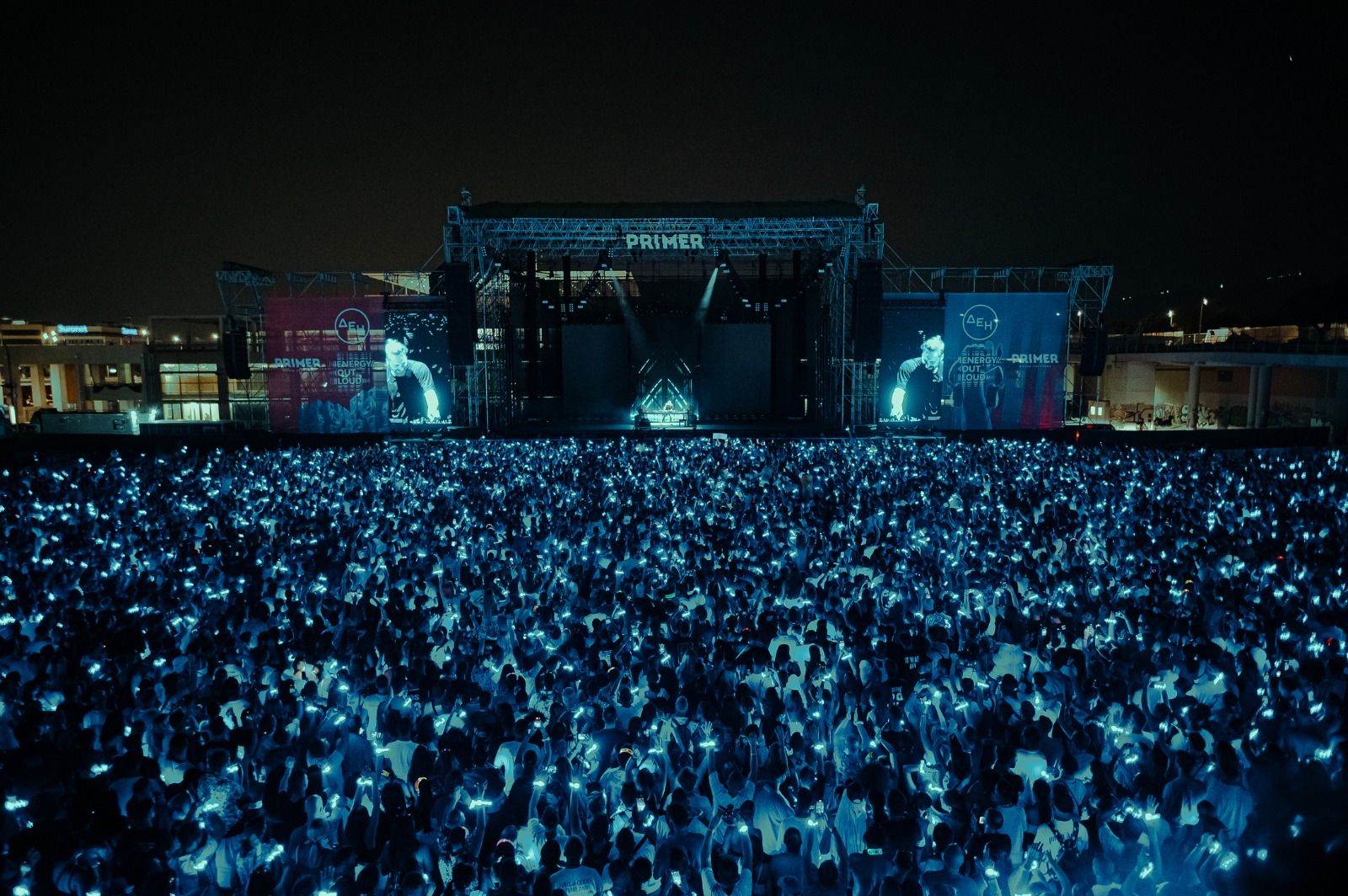
We see this in large-scale productions where video surfaces and lighting fixtures are part of the same physical structure, allowing content to flow seamlessly between them. We also see it in the use of immersive event technology that synchronizes lighting with other sensory inputs. For example, during a high-energy festival set, like those at Greece's PRIMER Music Festival, wristbands don’t just pulse to the beat; they can be programmed to complement the colours on the video walls, creating a truly unified and overwhelming sensory experience.
The Human Element: Orchestrating the Spectacle
Ultimately, the principles of stadium and arena lighting design are about more than just technology. They are about storytelling on a grand scale. It’s about creating moments of awe that an audience will remember for a lifetime. It’s about using light to guide emotion, build tension, and release it in a wave of collective euphoria.
From the initial creative brief to the final truck packing out of the venue, a tour is a monumental undertaking in logistics and artistry. But when the house lights go down and the first cue strikes, the goal is simple: to make 50,000 people feel like one. By mastering scale, embracing the audience as a canvas, designing for every viewer, and integrating technology with purpose, we create not just a show, but a genuine, shared experience.