The Pixel and The Pupil: Engineering Light for Cameras and Crowds
The Broadcast Conundrum: A Tale of Two Spectators
In the high-stakes world of live broadcast, the audience is twofold. There are the thousands of souls in the room, their energy a palpable force. Then there are the millions watching from afar, their experience mediated entirely by the camera lens. For an event producer or lighting designer, this creates a fundamental challenge: how do you create a visual spectacle that lands with equal impact for both? The human eye and the camera sensor are two profoundly different spectators.
The eye is beautifully forgiving. It has an astonishing dynamic range, seamlessly adjusting to intense brightness and deep shadow. It compensates for flickering lights so well that we often don’t perceive it. The camera, however, is a more demanding critic. Its sensor has a narrower dynamic range, struggling to capture detail in both the brightest and darkest areas of a scene simultaneously. More critically, it is brutally honest about flicker. An LED source with a refresh rate incompatible with the camera’s frame rate will produce distracting, unsightly banding on screen—a death sentence for a professional broadcast.
This technical disparity has long forced a compromise. Do you light for the visceral, in-person experience, risking a flat or technically flawed broadcast? Or do you design for the camera, potentially sacrificing the atmosphere in the venue? For years, this was a zero-sum game. Today, a new approach is dissolving the dilemma, transforming the audience from a passive backdrop into an active, camera-perfect light source.
Turning the Crowd into a Camera-Ready Canvas
The solution lies in taking control of the light *within* the audience. By embedding programmable, reliable light sources among the crowd, you create a dynamic canvas that solves the core broadcast challenges. This is the principle behind Xylobands and the science of modern Immersive Event Technology.
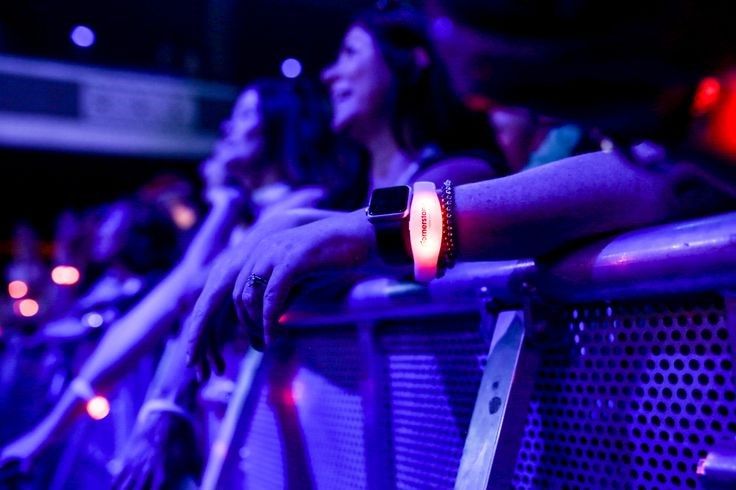
Professional-grade Radio Controlled LED Wristbands are engineered specifically for this dual reality. Here’s how they bridge the gap:
- Flicker-Free by Design: At Xylobands, our systems are built for the lens. The internal electronics of our LED Bands and other LED Wearables are modulated to ensure they are flicker-free at the standard frame rates used in professional television and film production. What the camera sees is a clean, stable, and vibrant source of light.
- Absolute Color & Intensity Control: A central operator using DMX or dedicated control software has granular command over every wristband. This allows for the creation of intricate, sweeping patterns and perfectly timed color shifts that complement the main stage design. You can paint the audience with light, ensuring the output is within the camera’s dynamic range, avoiding blown-out hotspots or murky shadows.
- A Source of Light, Not a Reflection: Traditional crowd lighting often involves blasting the audience with external light, which can create harsh reflections and an uncomfortable experience. Wearable LED Technology makes each person a pixel. The light emanates *from* the crowd, creating a visually rich texture that is both immersive for those in the room and captivating for those watching at home.
From the Intimate Studio to the Global Stadium
This methodology has proven its power across the full spectrum of broadcast events. In the compressed, high-energy environment of a TV studio, the audience is not just an observer; they are part of the set.
Case in Point: Lighting the Live Studio
For broadcasters like ITV, creating an electric atmosphere is key to a show’s success. On programs such as Beat The Chasers, the in-studio audience is an integral part of the drama. Using Xylobands, the production team can instantly unify the crowd, flashing colours to build tension, celebrate a victory, or underscore a key moment. For the camera, this transforms the dark space behind the contestants into a living, breathing part of the show’s visual brand, adding a layer of energy that static set lighting simply cannot match.
Scaling for the Worldwide Broadcast
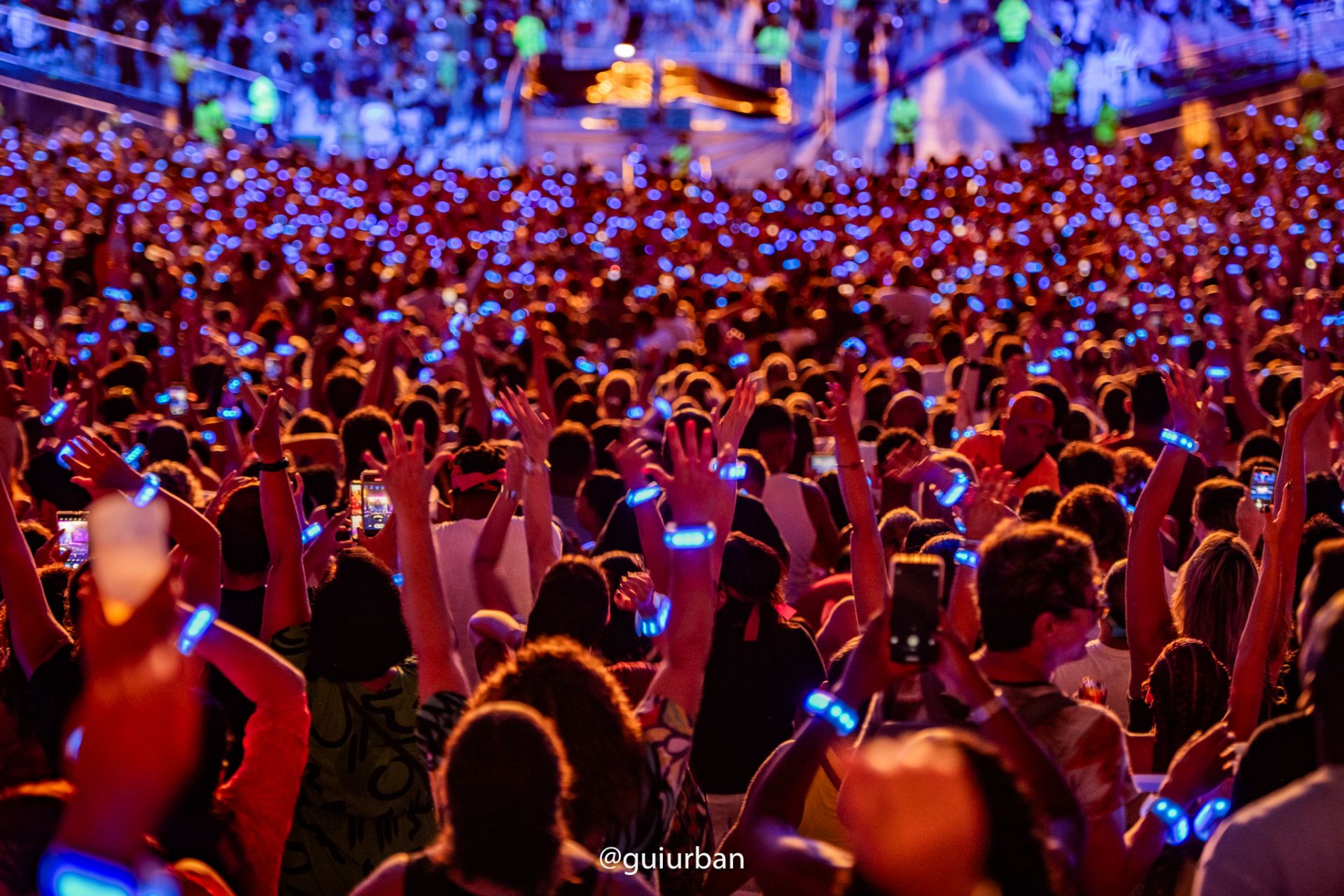
The same principle scales to the largest stages, where the broadcast element is paramount. When Maluma played to 54,000 people in his hometown of Medellín, the concert was streamed live to over 240 countries. The sea of synchronized LED Bracelets ensured that the scale and energy of the hometown crowd were translated through the screen, making viewers worldwide feel part of a historic moment.
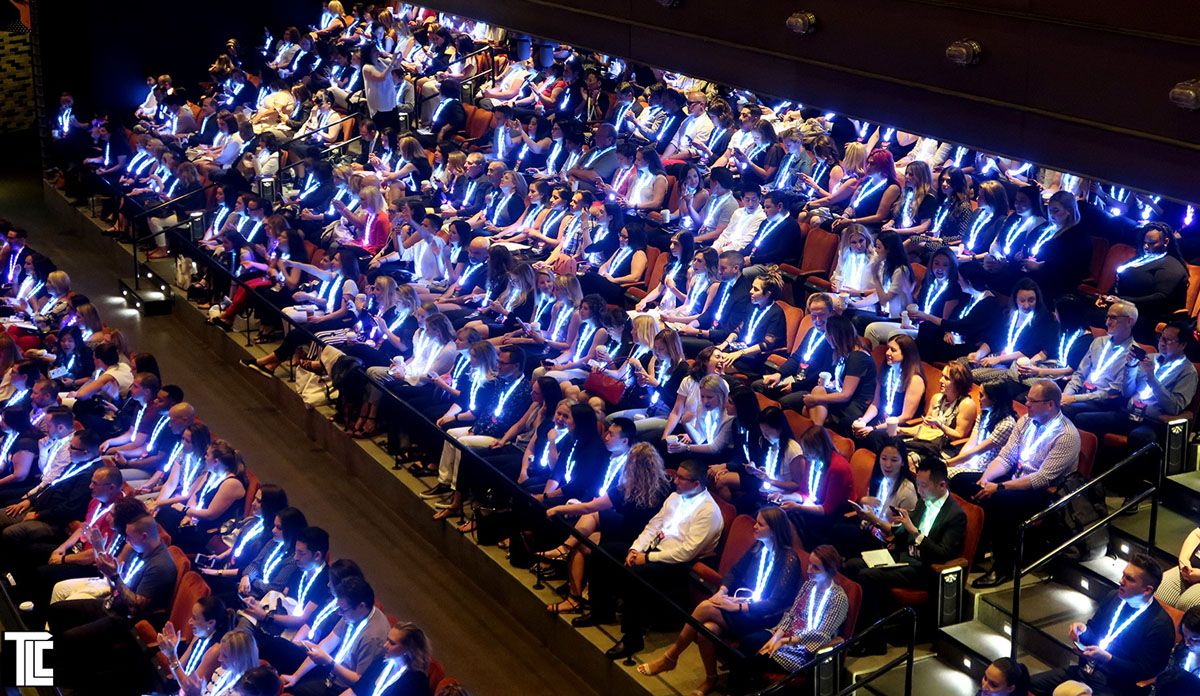
More recently, the Formula One 75th anniversary celebration in London was a 2-hour live broadcast spectacle. For this event, we deployed 13,000 custom LED Lanyards (Xylo Pendants). Crucially, the devices were meticulously pre-positioned by our team around the O2 Arena based on the creative team’s desired camera effects. The result was a stunning display of choreographed light, perfectly integrated into a broadcast seen by millions of F1 fans. It was a masterclass in designing LED Crowd Experiences for the camera’s eye first.
Conclusion: A Unified Vision for the Dual Audience
The old conflict between lighting for the pupil and the pixel is fading. Visionary producers no longer have to choose between the in-room experience and the broadcast feed. By instrumenting the audience with sophisticated, reliable, and camera-friendly LED Event Technology, they can achieve both.
This approach turns the crowd into the most compelling visual element of the show. It creates a unified spectacle where light, color, and emotion are shared by everyone, whether they are in the front row or on their couch thousands of miles away. It’s more than just a light show; it’s a shared experience, engineered for the modern age of entertainment. It’s a principle that was born from a simple idea at Glastonbury Festival—to make the audience part of the show—and has since evolved to meet the most demanding technical challenges of the global broadcast industry.