The Two-Team Game: Choreographing Light for the Modern Halftime Show
The Two-Team Game: Choreographing Light for the Modern Halftime Show
The whistle blows. The teams retreat. For the athletes, it’s a moment of recalibration. For the production crew, it’s a mad dash against the clock. The modern halftime show has evolved from a simple diversion into a full-blown, globally broadcast spectacle—a high-stakes performance where the choreography of light is as critical as the choreography of the performers themselves.
This is the two-team game. On one side, you have the live audience, tens of thousands of fans whose energy and engagement are vital to the stadium’s atmosphere. On the other, you have the broadcast audience, millions strong, watching a meticulously framed and curated version of the event on screens around the world. The challenge for today’s sports entertainment producers is to serve both masters simultaneously, creating a seamless, electrifying experience that translates flawlessly from the bleachers to the broadcast.
Act I: The Audience in the Arena
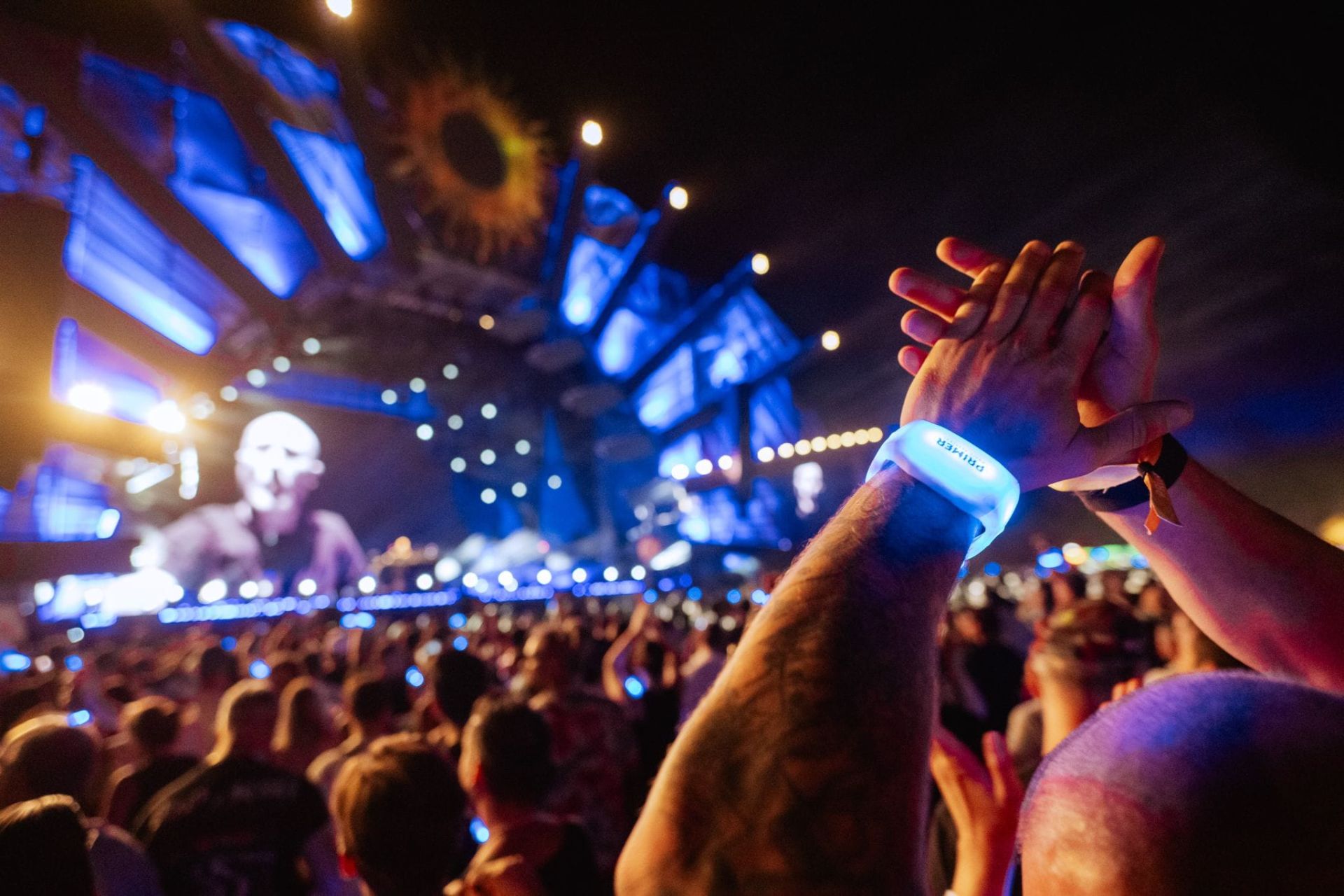
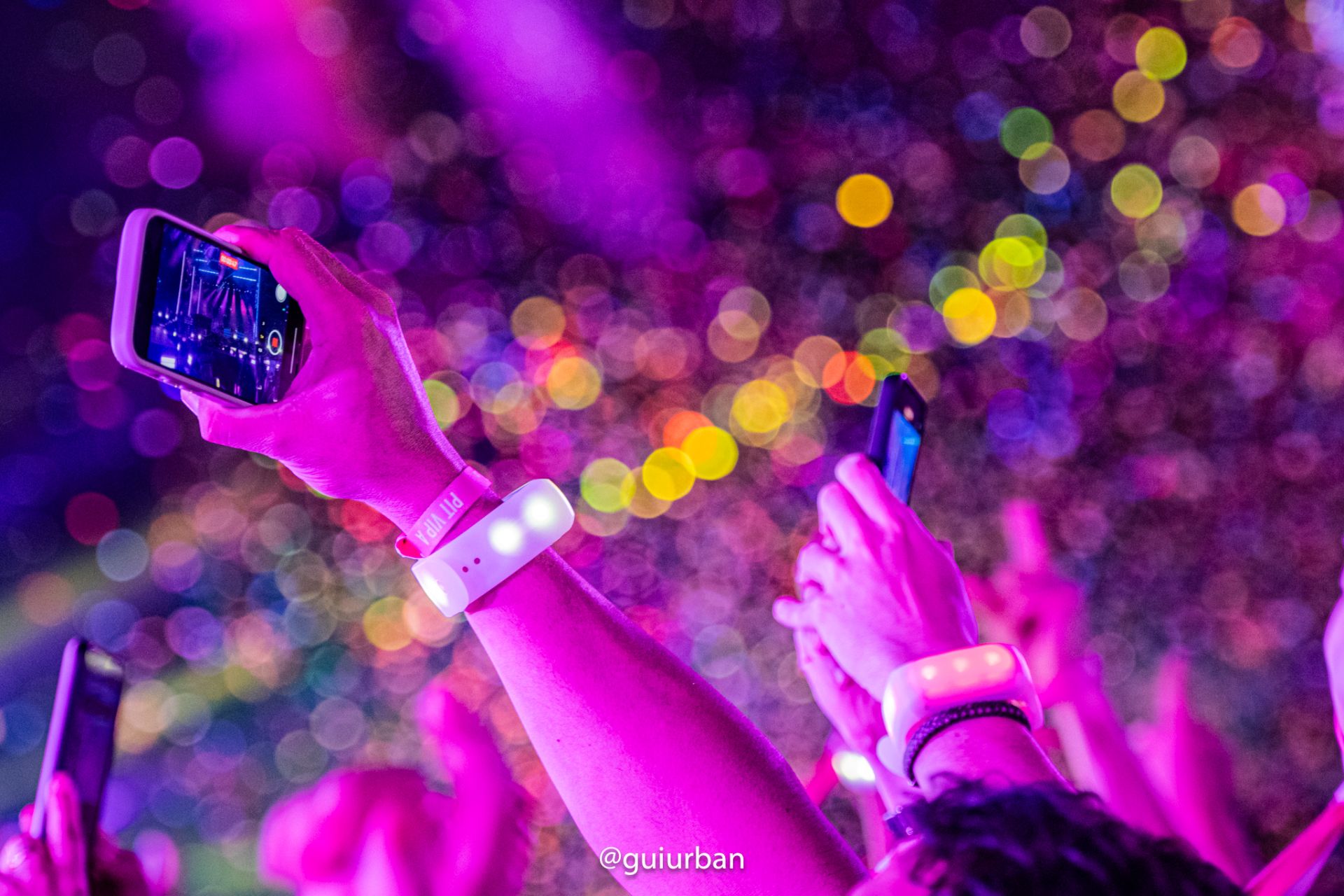
In the stadium, the goal is immersion. It’s about transforming a crowd of individual spectators into a single, unified entity. While pyrotechnics and on-field talent command attention, the most effective tool for forging this connection is light—specifically, light that emanates from the audience itself. This is where wearable LED technology comes into play.
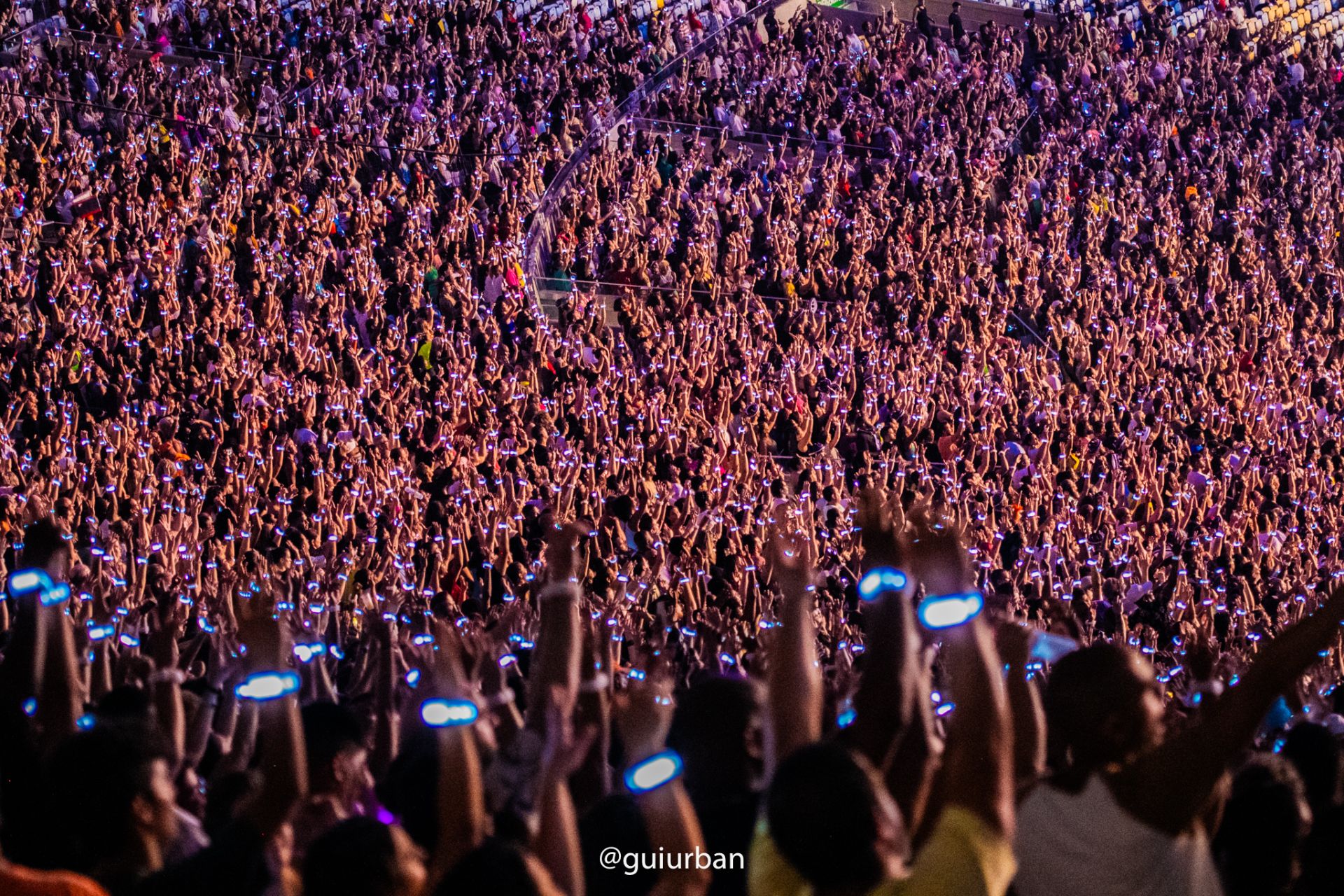
When each fan is given an LED wristband or lanyard, they are no longer just a spectator; they become a pixel in a vast, dynamic canvas. The upper decks, often lost in the shadows of traditional stage lighting, are suddenly brought into the show. A wave of colour can now ripple through 80,000 people, a pulse of light can echo a drum beat, and entire sections can flash in team colours to celebrate a moment. This is the core of creating powerful LED crowd experiences.
This transformation is more than just visual. It’s psychological. The light in a fan’s hand is a physical link to the performance, a tangible piece of the show’s energy. It fosters a sense of belonging and direct participation that traditional lighting rigs, focused solely on the stage, can never achieve. From the Davis Cup to Formula One events, we’ve seen how this technology turns passive crowds into active participants, making the live experience profoundly more memorable.
Act II: The Audience on the Screen
The broadcast audience sees a different show. Their experience is governed by the frame of the camera lens. A wide shot of the stadium that shows a crowd shimmering with synchronized light is exponentially more compelling than a dark, static sea of people. It provides a sense of scale and energy that tells a story far beyond what the on-field performance alone can convey.
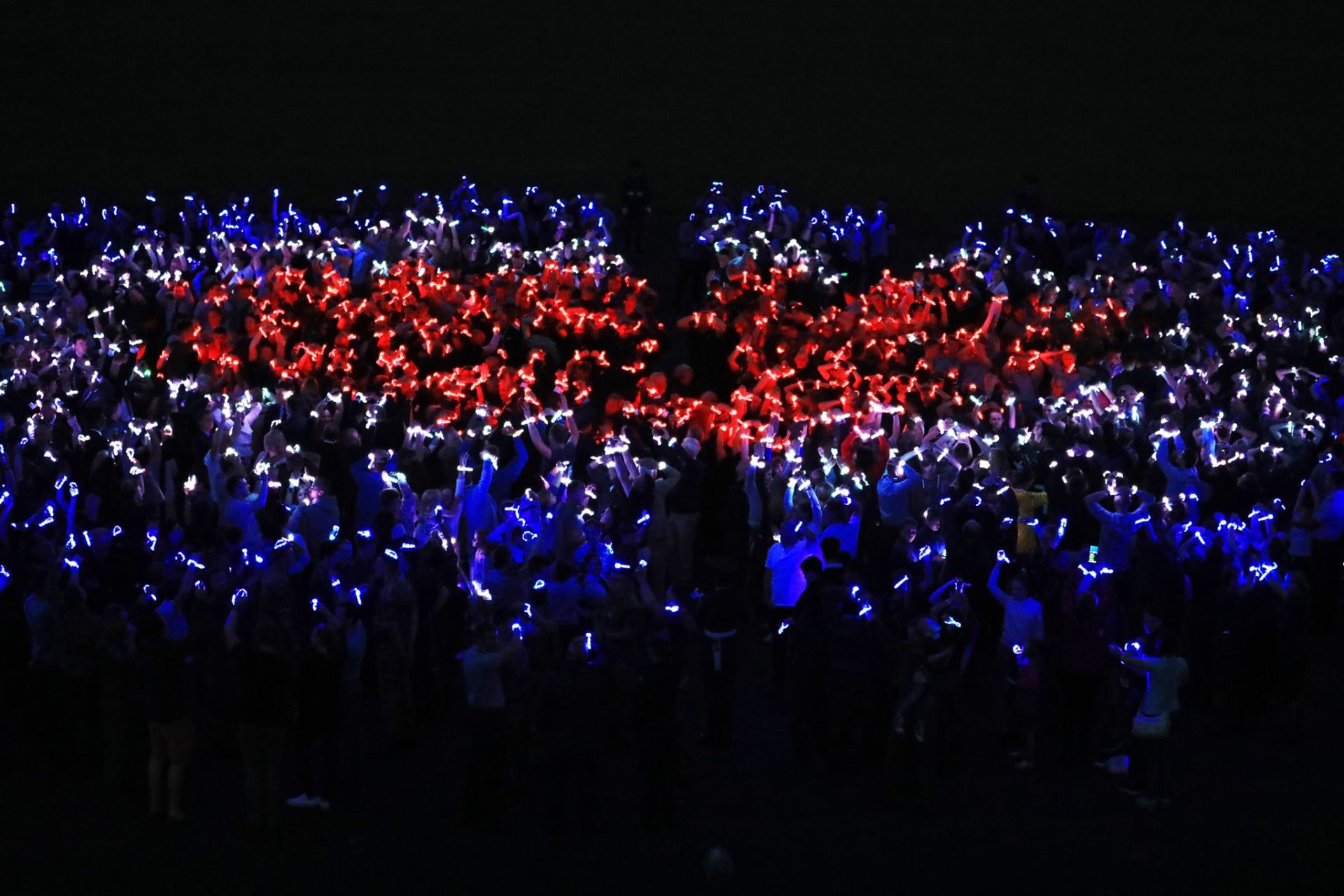
For broadcast directors, this is a game-changer. The crowd becomes a controllable graphic element. We can design precise, camera-ready moments: a flash of light timed to a specific camera cut, a colour chase that follows a performer across the field, or a venue-wide blackout that snaps to a dramatic reveal. This is the art of engineering for the lens.
At a recent Formula One anniversary event, we deployed 13,000 custom LED Lanyards (Xylo Pendants) throughout The O2 Arena. Our team pre-positioned every pendant based on the creative team’s desired effects, ensuring the visual choreography was optimized for the live broadcast. The result was a stunning tapestry of light that elevated the viewing experience for millions at home, proving that the crowd itself can be the most powerful lighting fixture in the building.
The Technical Playbook: RF, DMX, and a Zero-Failure Mentality
Executing a flawless halftime show across two audiences requires robust, reliable technology. The backbone of these immersive events is a combination of RF (Radio Frequency) and DMX lighting control protocols. Our proprietary software allows a single lighting designer to control the entire system—from the stage lights to every individual radio controlled LED wristband in the stadium—from one console.
This integration is key. It allows for perfect synchronization and seamless storytelling. An effect can start on the stage, leap into the crowd, and paint the entire stadium in a matter of seconds. But with thousands of devices and millions of viewers, the margin for error is zero. The system must be resilient, with built-in redundancies and a team on the ground capable of troubleshooting in real-time. There are no second takes in live sports.
Beyond the Game: The Future of Fan Engagement
As sports and entertainment continue to converge, the role of the audience will only grow. The halftime show is no longer just an intermission; it’s a headline act. It’s a critical touchpoint for fan engagement, brand activation, and broadcast ratings.
By treating the crowd as an integral part of the lighting design, producers can unlock new levels of creative expression and emotional resonance. They can ensure that the fan watching from the nosebleeds and the fan watching on a smartphone in another hemisphere both feel the same surge of adrenaline. In the high-stakes world of sports entertainment, mastering this two-team game isn’t just an advantage—it’s how you win.