The Stadium as a Canvas: Principles of Modern Tour Lighting
The Architecture of Awe
A stadium tour is more than a concert; it’s a spectacle. When an artist steps onto that stage, they aren’t just playing to the front row—they’re commanding a space the size of a city block, filled with tens of thousands of people. In this vast environment, light is the primary architectural tool. It’s what transforms an anonymous concrete bowl into a dynamic, emotional, and intimate space. The fundamental challenge of stadium and arena lighting is one of scale versus intimacy. How do you create a cohesive visual statement that reaches the furthest seat in the upper deck while still forging a personal connection with every single attendee?
The process begins not with a fixture, but with a philosophy. A lighting designer must first understand the artist's narrative for the show. Is it a story of defiance, of celebration, of introspection? Every lighting choice—from the color palette to the speed of a strobe—must serve that narrative. This is where the initial concepts are born, often as simple sketches or digital renderings that map out the core visual moments of the performance. It’s about creating a visual language that complements the music, building worlds of light that can be torn down and rebuilt in the space of a single song.
Layering Light: The Core Components
Effective stadium lighting is built in layers, each with a distinct purpose. Think of it as painting on a three-dimensional canvas.
- Key Light: This is the most fundamental layer, responsible for illuminating the performers. The goal is clarity and focus. In a stadium, this requires powerful followspots and carefully positioned front washes to ensure the artist is visible from every angle, without washing them out.
- Environmental Light: This layer defines the space. It includes the massive video walls, the atmospheric haze that catches light beams, and the general color washes that paint the architecture of the arena itself. This is where the mood is set, transforming the venue from a sports arena into an ethereal forest or a pulsing, industrial nightclub.
- Effects Light: This is the dynamic, kinetic layer. It’s the strobes, the moving beams, the pixel-mapped LED arrays that create the high-energy moments. These are the punctuation marks in the visual story, timed to perfection with drum fills and bass drops to create moments of pure sensory impact.
The Audience as the Final Layer
For decades, the audience was a passive observer. Today, they are an integral part of the lighting design itself. This is the most profound shift in modern tour lighting, turning tens of thousands of individuals into a single, cohesive canvas. Technologies like radio-controlled LED wristbands have completely redefined the relationship between the stage and the crowd.
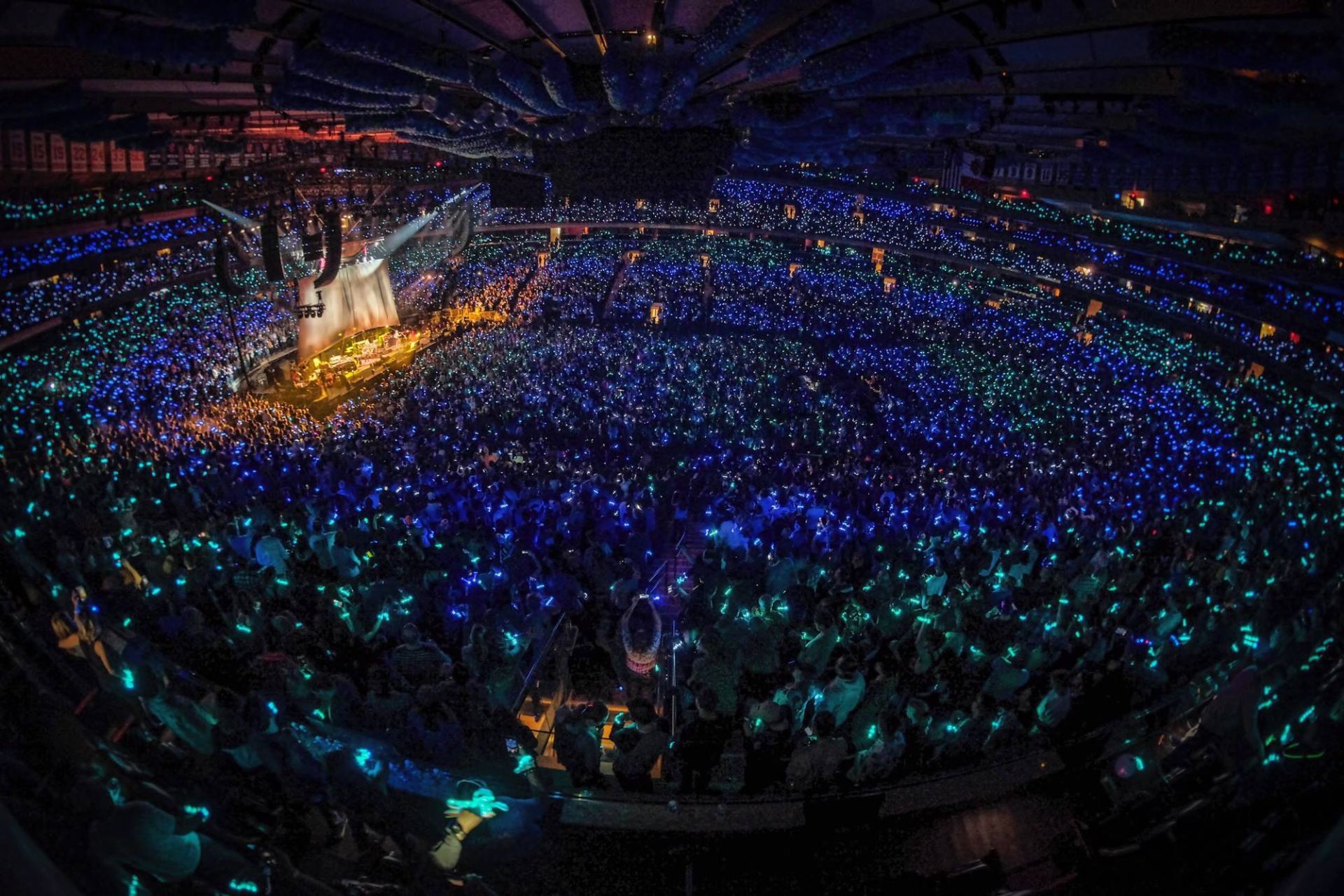
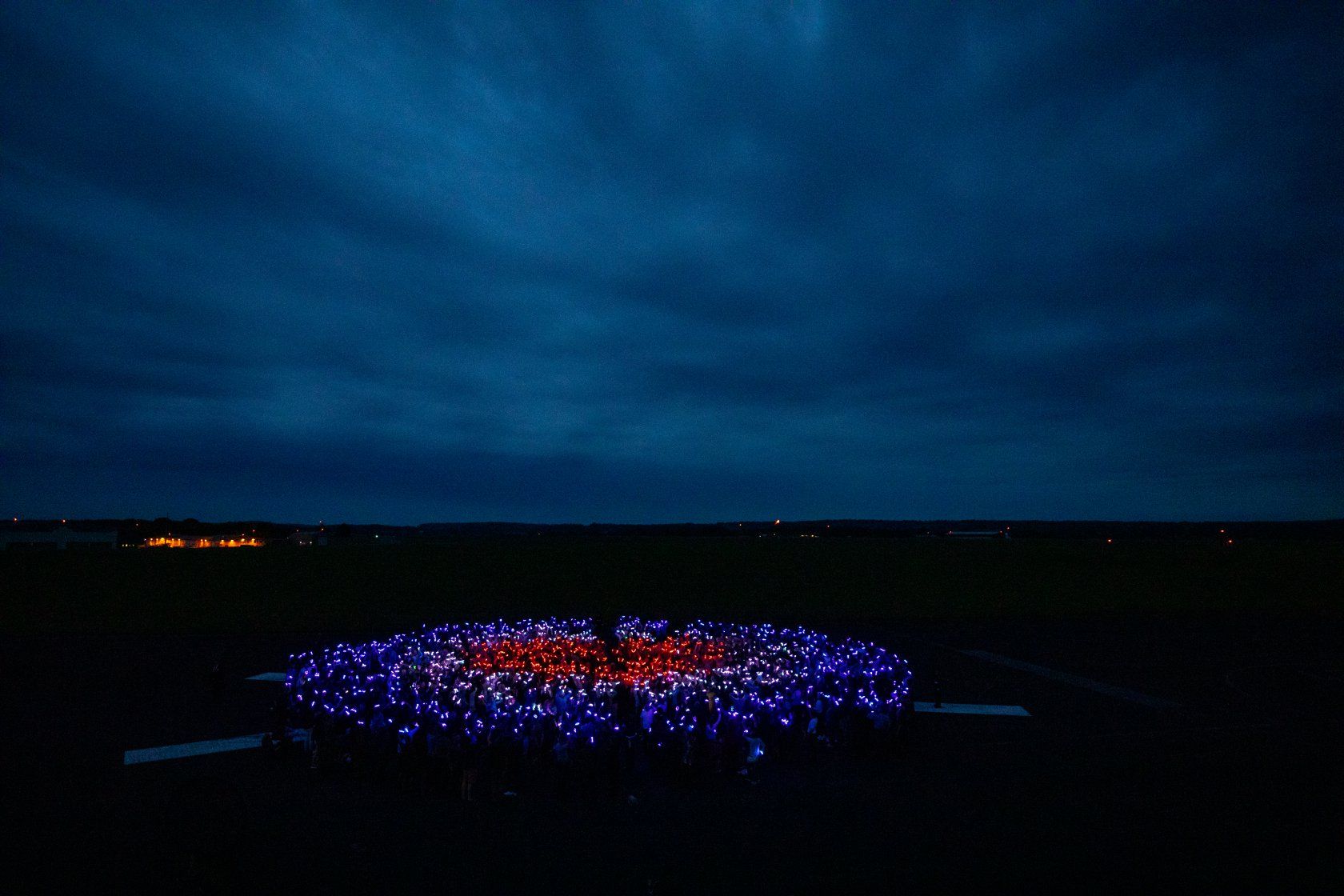
At Xylobands, we pioneered this technology, debuting it with Coldplay on their Mylo Xyloto tour. The principle is simple but the impact is monumental: every audience member becomes a pixel in a venue-wide light show. Suddenly, a lighting designer’s canvas extends beyond the stage and trusses, right to the very back wall of the stadium. This allows for unparalleled moments of unity and immersion. Imagine a slow, soulful ballad where 50,000 lights on people’s wrists pulse in a soft, warm glow, or a high-energy encore where the entire stadium erupts in a synchronized flash of color. These are no longer just concert wristbands; they are instruments of light, creating immersive events on a scale previously unimaginable.
The Broadcast Challenge: Lighting for Two Audiences
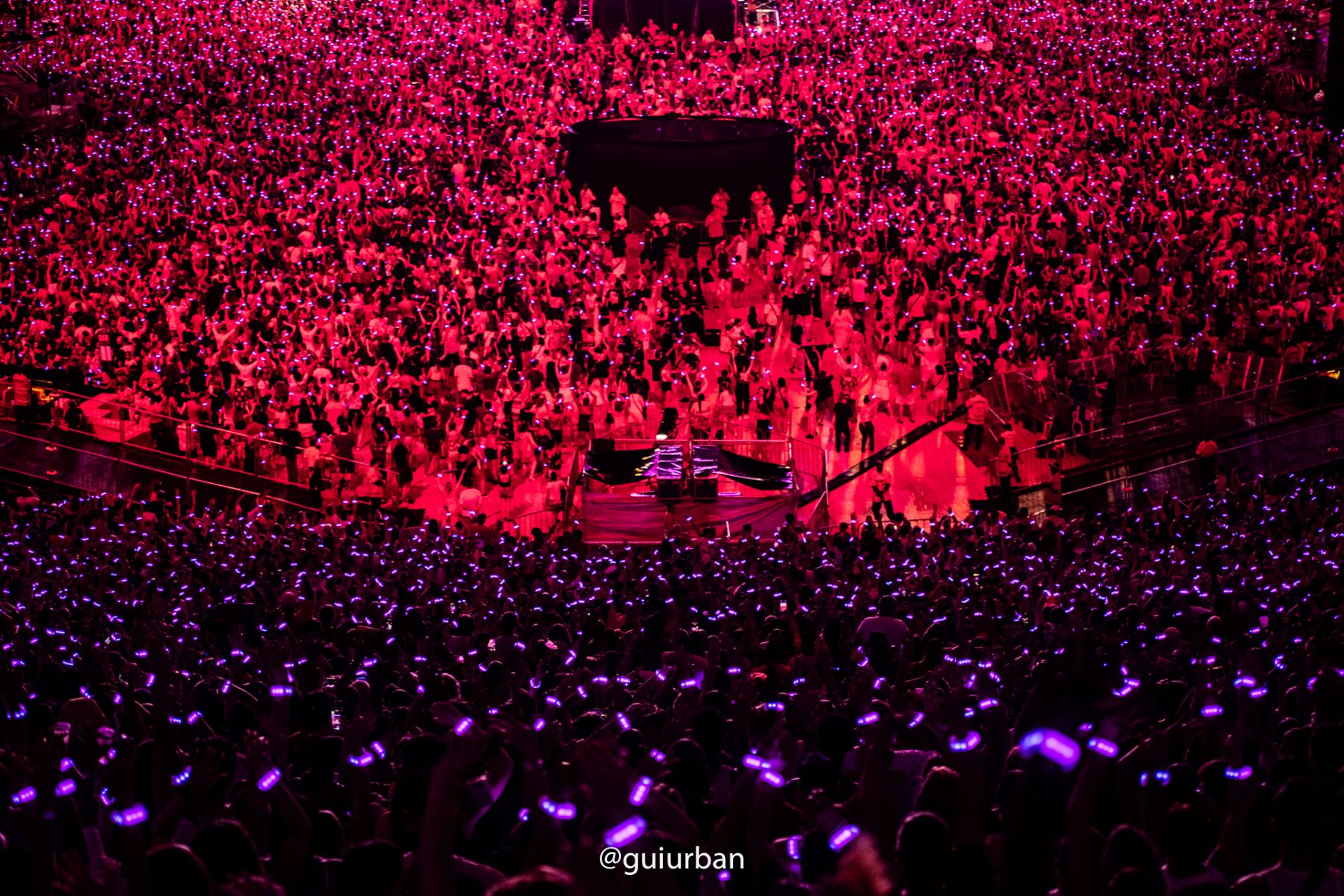
Many modern stadium tours, like Maluma’s iconic Medellín show, are also global broadcast events. This introduces a critical layer of complexity: lighting for the human eye and the camera lens simultaneously. What looks spectacular in person can appear blown-out or muddy on screen. This requires a delicate balancing act. Lighting levels must be high enough for broadcast-quality images without blinding the live audience. Colors must be chosen carefully, as some tones that are vibrant in person may not render well on camera. This is a challenge we’ve navigated with clients like ITV, where the demands of the live studio audience and the millions watching at home must be perfectly harmonized. It’s a discipline that requires a deep technical understanding of sensor dynamics, color science, and broadcast engineering, ensuring the LED crowd experiences translate flawlessly to screens worldwide.
Designing for the Road: Modularity and Scalability
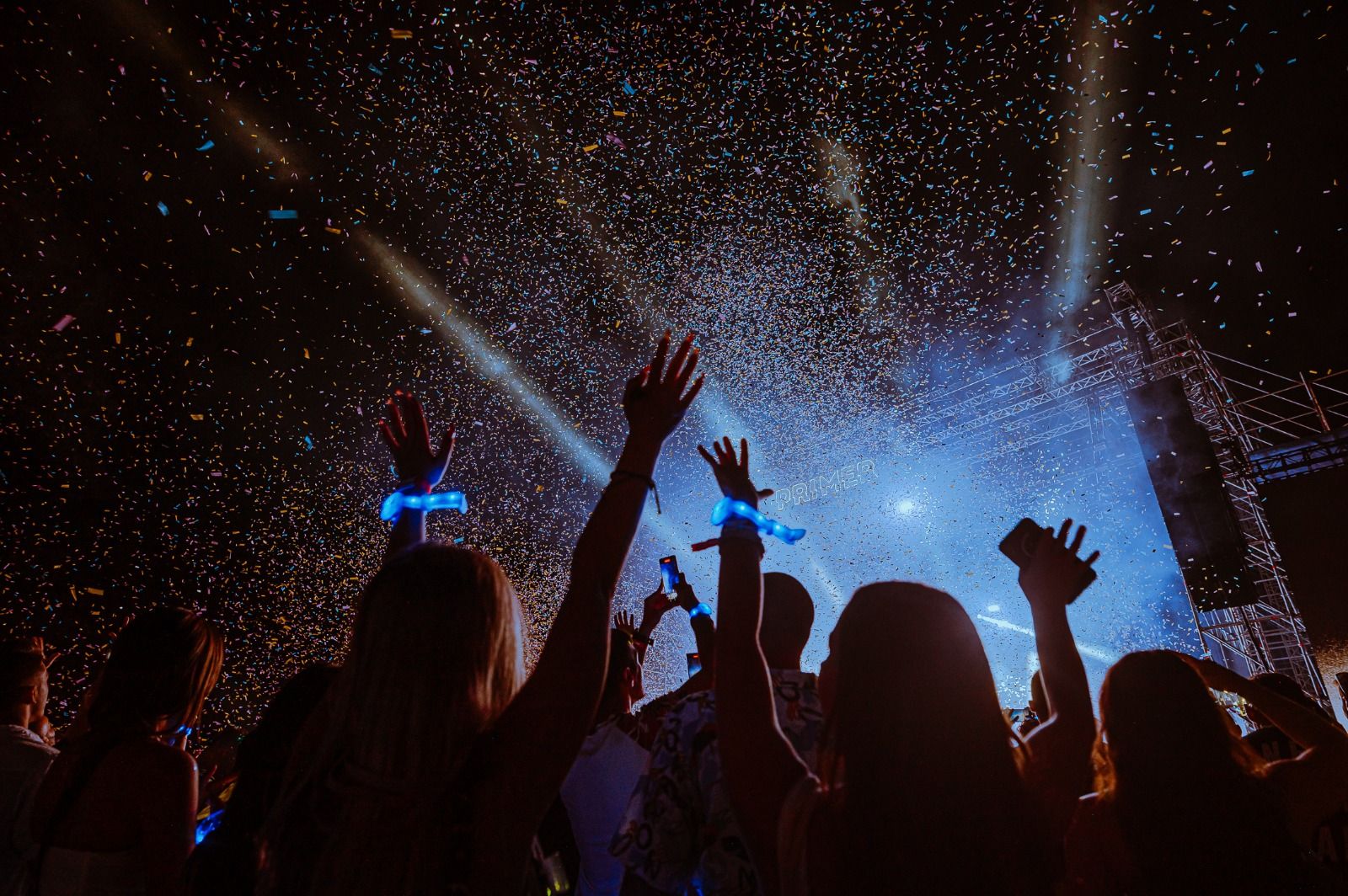
A stadium tour lighting rig is a marvel of logistics. It’s a touring city of steel, cable, and light that must be assembled, operated, and disassembled with military precision in dozens of cities. Therefore, the design must be modular and scalable. A rig designed for a 60,000-seat stadium must be adaptable enough to fit into a 20,000-seat arena without losing its impact. This means designing lighting pods, truss structures, and video elements that can be reconfigured, expanded, or reduced based on the venue. It’s a puzzle of geometry, weight, and power, solved by a team of production managers and technicians who are the unsung heroes of the live music industry. The rise of wearable LED technology also simplifies this, as the audience-lighting component is inherently scalable to the size of the crowd itself, from an intimate theater to a massive festival like Greece’s PRIMER Music Festival.
The Future is Immersive
The evolution of tour lighting is a story of ever-expanding canvases. From the simple PAR can to the moving light, from the video wall to the audience itself, the trend is always toward greater immersion. The goal is no longer just to light the artist, but to dissolve the barrier between the artist and the audience, creating a single, shared sensory world. As technology advances, we will see even more interactive and personalized LED experiences, further blurring the lines between spectator and spectacle. But the core principles will remain: serve the story, paint with layers, and never forget that at the heart of the spectacle is a simple, human connection between an artist, their music, and the crowd that came to be a part of it.