The Fourth Wall is Listening: An Unofficial History of Audience Participation
From the Colosseum’s Roar to the Synchronized Glow of the Stadium
The desire for shared experience is etched into our DNA. Long before the first stage was built or the first ticket was sold, humans gathered to share stories, rituals, and music. We have always sought to be part of something larger than ourselves, to feel the electric thrill of a collective moment. This fundamental human need is the driving force behind the evolution of audience participation, a journey from the raw, unamplified roar of ancient crowds to the sophisticated, synchronized light shows of today.
In the grand amphitheaters of the ancient world, the audience was an instrument of raw power. Their cheers and jeers were a direct, unfiltered measure of the spectacle. A performer, orator, or gladiator knew instantly where they stood. This was participation in its most primal form: a direct, vocal feedback loop. For centuries, this remained the primary mode of interaction. The technology was simple — the human voice and the architecture of the venue, designed to carry it.
The Rise of the Passive Audience
The advent of gas lighting, followed by electric light, in the 19th century began to shift this dynamic. For the first time, it was possible to plunge the audience into darkness and illuminate the stage, creating a clear and powerful focal point. This innovation gave birth to the concept of the “fourth wall”—an invisible barrier separating the performers from the observers. The audience’s role became more passive, their participation confined to applause at prescribed moments. The spectacle was something to be watched, not influenced.
This model dominated live entertainment for much of the 20th century. While rock and roll brought a new level of energy and vocal participation back to concerts, the fundamental relationship remained the same. The audience was a consumer of the experience, not a co-creator.
A Spark in the Crowd: The Return of Participation
The first significant technological shift in modern audience participation arrived with a simple, analog tool: the cigarette lighter. The iconic image of a sea of tiny flames held aloft during a ballad—a trend largely popularised in the 1970s—was a profound statement. It was a grassroots, audience-driven phenomenon, a way for individuals to collectively create a moment of shared beauty, reclaiming a small piece of the spectacle for themselves. It was a visual vote, a way to say, “We are here, and we are part of this.”
The mobile phone’s flashlight function became the 21st-century successor to the lighter, but the principle was the same. The desire for active participation was simmering, waiting for technology to catch up.
The Xylobands Revolution: Lighting the Way Forward
That technological leap arrived in 2011. While watching Coldplay at the Glastonbury Festival, our founder Jason Regler had a vision. As the band played "Fix You," he imagined the lyric “lights will guide you home” made real—not with thousands of random, disconnected points of light from phones or lighters, but with a unified, synchronized canvas of light covering the entire crowd. He envisioned every single person becoming a pixel in a grand, immersive light show.
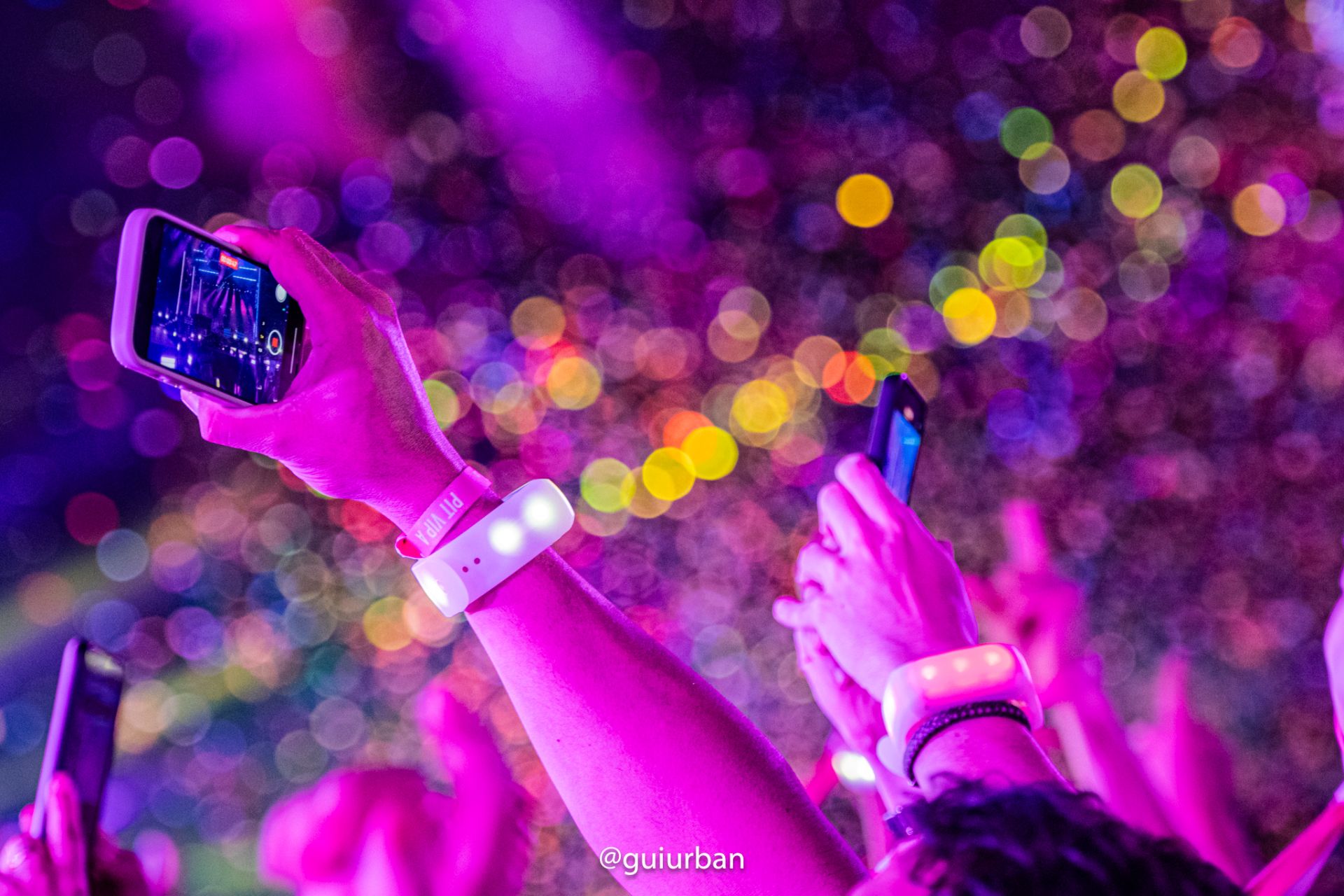
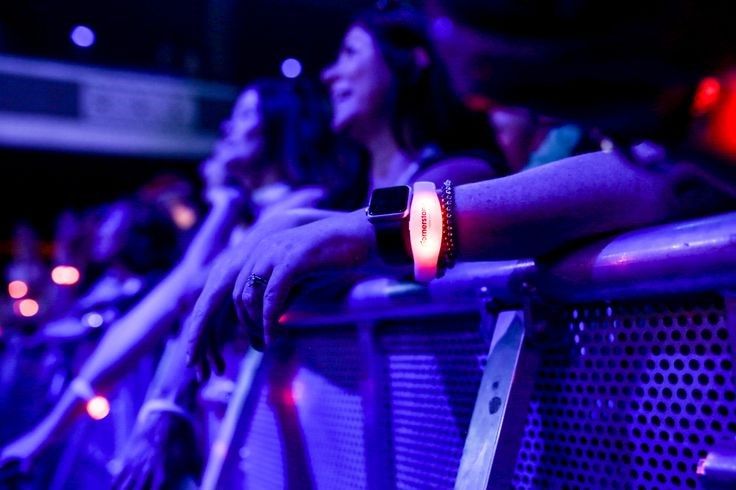
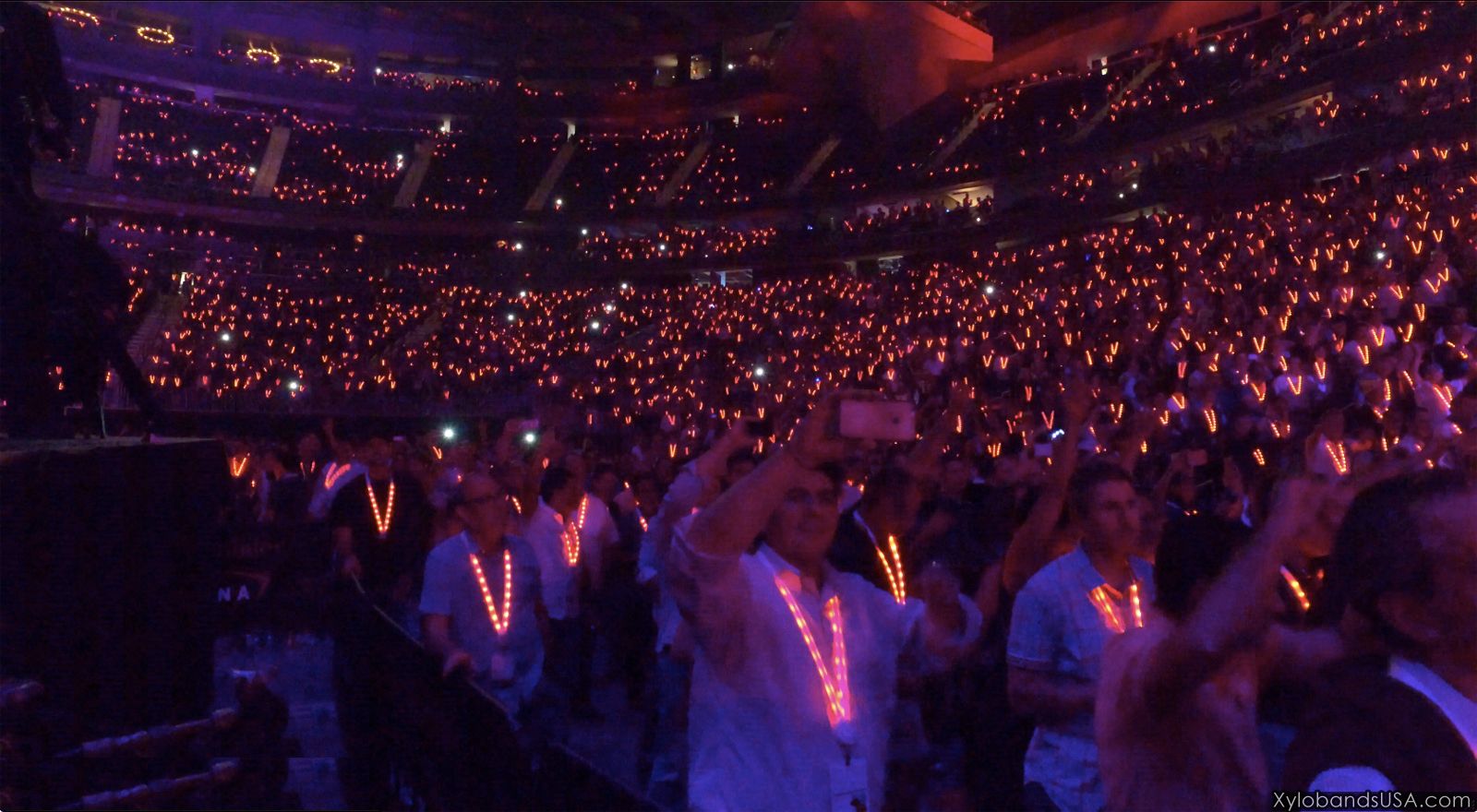
This was the birth of Xylobands. First deployed on Coldplay’s Mylo Xyloto tour, these radio controlled LED wristbands turned Jason’s vision into a global phenomenon. Suddenly, the audience wasn’t just watching the show; they *were* the show. The fourth wall didn’t just break; it dissolved into a sea of light. This was no longer passive observation. This was immersive event technology on a scale never seen before, turning tens of thousands of individuals into a single, cohesive, visual instrument played by the lighting designer.
The technology opened up a new dimension of creative expression for artists and producers. From transforming stadiums into pulsating canvases of color for artists like Maluma and Wizkid to adding a layer of broadcast-ready excitement for television events on ITV, wearable LED technology has fundamentally rewritten the rules of engagement. It’s a powerful tool for creating moments of genuine connection and collective joy.
Beyond the Wristband: The Future of Immersive Events
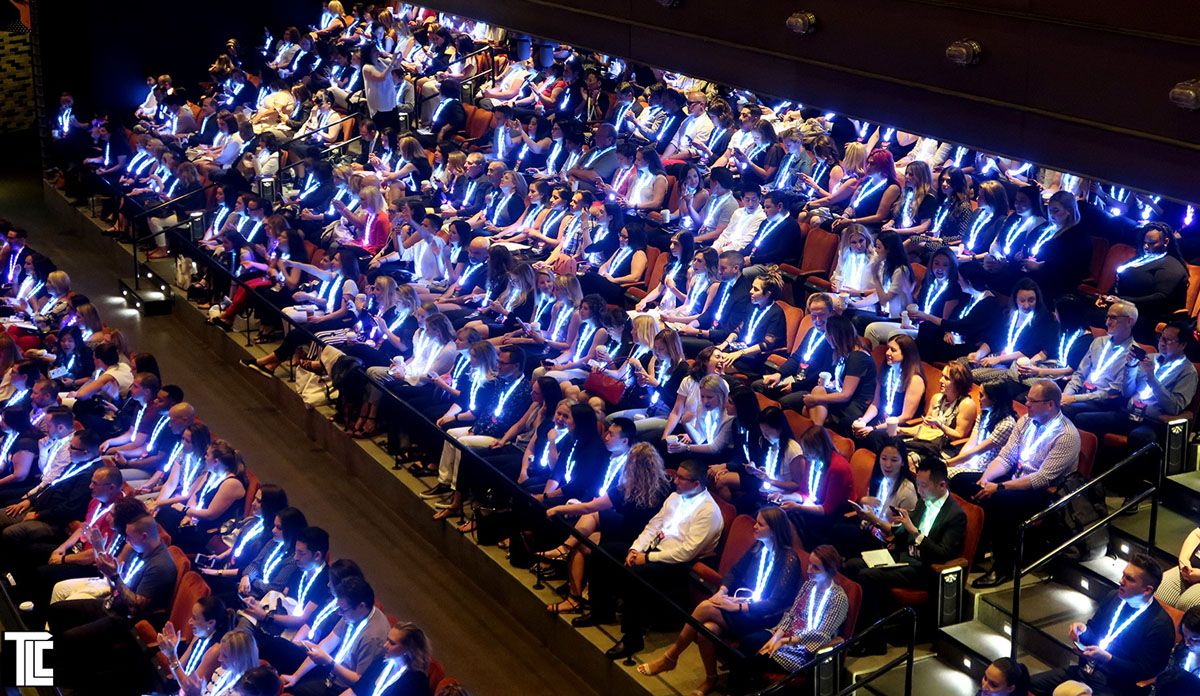
The success of LED bands has paved the way for a new ecosystem of LED crowd experiences. Today, the technology extends beyond the wrist to include LED lanyards, badges, and even LED orbs, creating ever more sophisticated and dynamic visual possibilities. At major sporting events like the Davis Cup or celebrations for Formula One, these tools are used to heighten drama and unify vast crowds. At festivals like Primer in Greece, they amplify the energy of the music, creating a truly immersive environment.
This evolution represents a full-circle return to the origins of live events. Technology has allowed us to move beyond the passive consumption model and back toward collective, active participation. We’ve traded the roar of the crowd for the synchronized glow of thousands of lights, but the underlying human impulse remains the same. We don’t just want to see the show. We want to be part of it.
The future of live events lies in deepening this connection, in finding new and innovative ways to make the audience the hero of the experience. The fourth wall is not just broken; it’s being actively dismantled, one pixel at a time, creating a future where the line between performer and audience, spectacle and participant, finally disappears.